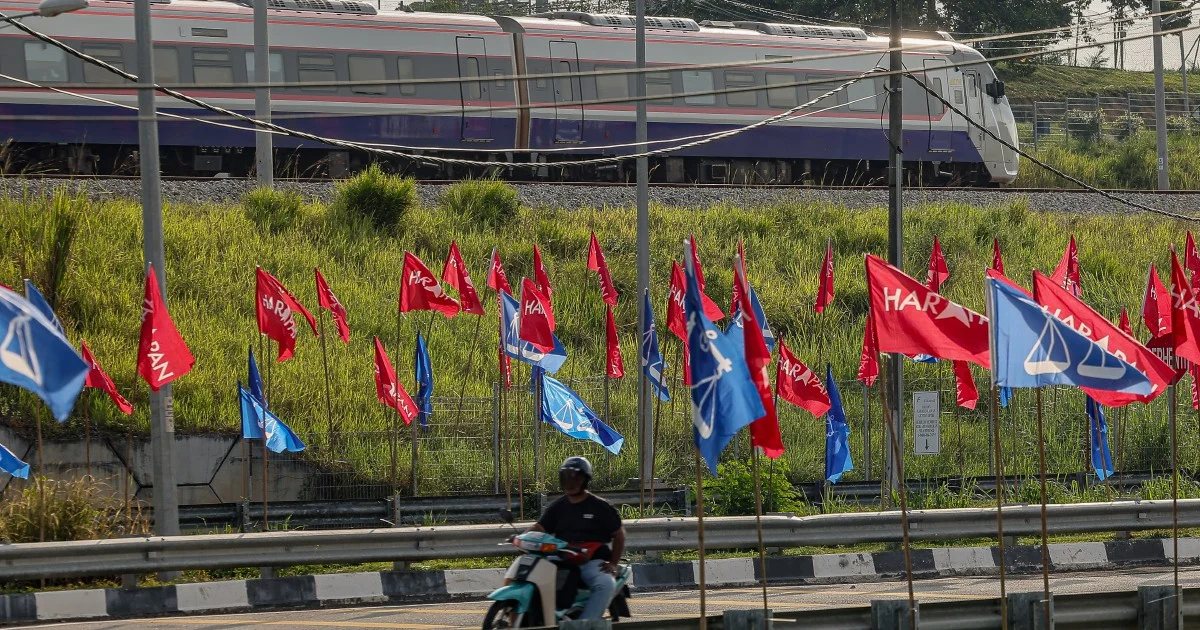
The youth division of Parti Islam Se-Malaysia has stepped forward to defend its decision to throw support behind Barisan Nasional contenders in districts where the Perikatan Nasional coalition has chosen not to field candidates, characterizing the move as part of a broader tactical framework designed to undermine Pakatan Harapan's electoral prospects across the country.
This clarification from PAS Youth emerged in Johor Baru, signalling that the Islamist party's willingness to back BN—Malaysia's longstanding ruling coalition—represents calculated positioning rather than a fundamental shift in political allegiances. The strategy reflects the complex and fluid nature of Malaysian electoral coalitions, where parties regularly navigate shifting alliances based on seat-by-seat considerations and broader tactical objectives.
The statement reveals how PN, which has positioned itself as an alternative to both BN and PH, is making selective decisions about where to invest its organizational resources and campaign efforts. By withdrawing from certain contests, PN creates space for its partner parties like PAS to pursue parallel strategies. This approach allows PN-aligned parties to prevent opposition gains without necessarily committing their own machinery everywhere.
For Malaysian observers, this dynamic underscores the sophisticated layer of political calculation beneath seemingly straightforward electoral campaigns. In constituencies where PN determines it lacks competitive viability, supporting BN becomes preferable to allowing PH a clear path to victory. This reasoning suggests PN's strategists have conducted detailed internal polling and demographic analysis to identify where their resources can achieve maximum impact.
The move carries particular significance for Johor, Malaysia's second-largest state by population and a traditional BN stronghold that has nevertheless seen increased competition from opposition forces in recent electoral cycles. Securing PAS Youth's support could prove decisive in marginal constituencies where community votes might otherwise fragment among multiple candidates. In state and federal politics, coalitions built through such tactical understandings have repeatedly determined parliamentary majorities and state government compositions.
PAS's dual role as both a PN component and a potential BN partner illustrates the party's attempt to position itself as an essential broker in Malaysian politics. By maintaining cooperative relationships across the political spectrum, PAS leadership gains negotiating leverage that translates into ministerial posts, resource allocation, and policy influence regardless of which coalition ultimately forms government after elections.
The explicit framing as an anti-Pakatan Harapan measure deserves scrutiny, as it indicates PN's primary strategic concern centres on containing the opposition coalition rather than advancing a coherent governing agenda distinct from BN. This mirrors broader patterns in Southeast Asian politics where ruling coalitions often bond more through shared opposition to rivals than through complementary policy visions.
For voters, particularly those in constituencies where this tactical arrangement applies, the development complicates electoral choice. Citizens must navigate multi-layered coalition dynamics and behind-the-scenes agreements that may not be transparent at the ballot box. The PAS Youth statement, by making these calculations explicit, at least provides some clarity about the logic guiding party decisions—though voters may legitimately question whether such pragmatic coalition-building serves their interests effectively.
The broader context involves ongoing regional restructuring within Malaysian politics. PN's relatively recent emergence as a cohesive force following the 2020 federal government formation created a three-way competition where previously BN and PH dominated contests. This triangulation has forced all three blocs to recalibrate strategies, and arrangements like PAS's BN support in select seats represent evolving responses to this changed landscape.
Southeast Asian analysts watching Malaysian political developments note that such coalition engineering reflects demographic diversity and ethnic-religious complexity across the country. Parties maintain multiple cross-cutting relationships rather than organizing into straightforward left-right ideological blocs. This fluidity generates both opportunity and instability, as governments can assemble and disassemble relatively rapidly when coalition partners reassess their electoral mathematics.
The PAS Youth statement also indicates internal party alignment, suggesting senior leadership has endorsed this tactical approach despite potential criticism from grassroots supporters who might view BN support as compromising. Securing organizational discipline around nuanced electoral strategies requires clear communication about underlying objectives, which the youth wing's clarification appears designed to facilitate.
Looking toward upcoming electoral contests, this arrangement provides useful strategic templates. Other PN-aligned components will likely implement similar calculations, potentially extending this pattern across multiple states and federal constituencies. The cumulative effect could substantially reshape competitive dynamics in marginal areas where BN faces its toughest opposition challenges from PH.

