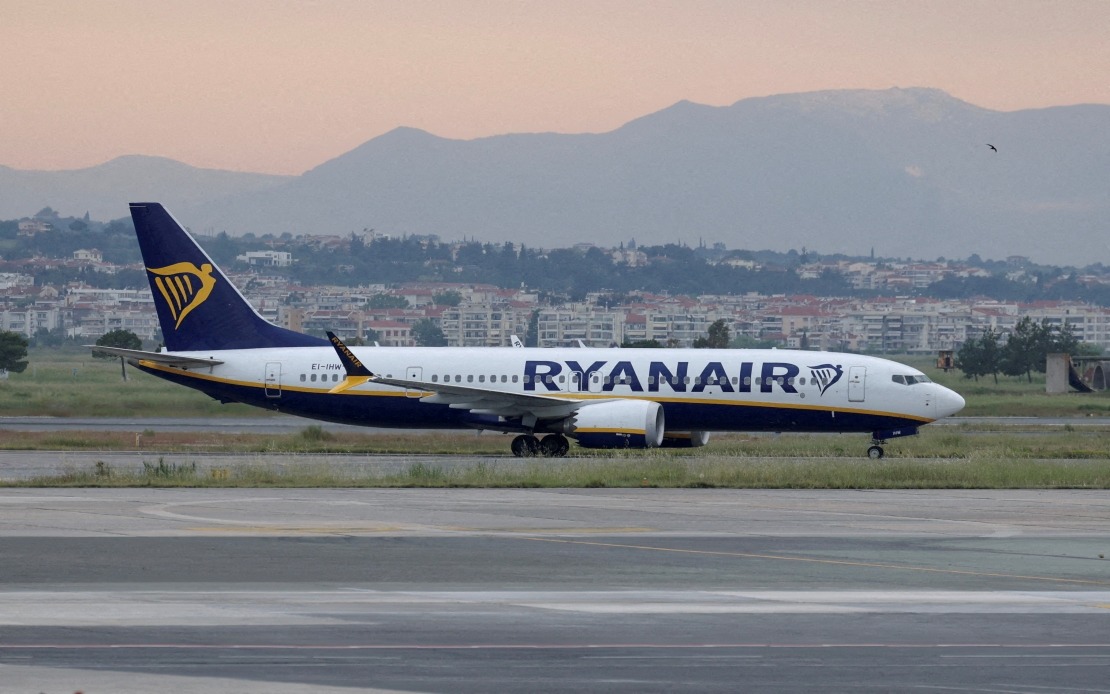
A routine flight from Thessaloniki to Memmingen turned into a nightmare for passengers aboard a Ryanair aircraft on Friday when a cabin window suddenly fractured, triggering an emergency descent and creating moments of extreme panic throughout the fuselage. The incident underscores ongoing concerns about aviation safety and the mechanical integrity of commercial aircraft, issues that resonate across European travel corridors frequently used by residents of Malaysia and the broader Southeast Asian region.
Accounts from those aboard the aircraft paint a harrowing picture of the seconds immediately following the structural failure. Witnesses reported hearing a loud, unmistakable bang that signalled the catastrophic rupture of a cabin window pane. The sudden decompression that followed created an immediate hazard for the passenger seated nearest to the compromised panel. According to eyewitness descriptions relayed to Greek broadcaster ERT, the force of the escaping air was so powerful that the affected passenger's head and shoulders were forced through the broken window opening, a situation that could have had fatal consequences at cruising altitude.
The swift action of nearby passengers prevented what could have become a tragedy. Other travellers in the immediate vicinity managed to physically restrain and pull the endangered man back into the cabin, working against the pressure differential that was attempting to draw him outward. This coordinated human response, captured in the panic of the moment, likely saved the passenger's life. Simultaneously, the aircraft's safety systems engaged, with oxygen masks deploying automatically throughout the cabin as the pilots initiated emergency procedures.
The flight deck responded immediately to the crisis. The captain made the decision to abort the planned journey to Memmingen in southern Germany and instead execute an emergency return to Thessaloniki Airport, the aircraft's point of origin. This prudent decision prioritised passenger safety over completing the scheduled route. The return journey, covering the distance the aircraft had travelled after takeoff, was accomplished in approximately twenty minutes—a remarkably brief interval that reflected both the urgency of the situation and the relative proximity of the airport to the point of incident occurrence.
The injured Serbian passenger was transferred to emergency medical care upon landing at Thessaloniki Airport. Greek authorities responded to the incident with full emergency protocols, and the passenger was conveyed directly to a hospital in the city for treatment and evaluation. Details regarding the severity of injuries sustained during the incident have not been formally disclosed, though the passenger's physical contact with both the window aperture and subsequent rescue efforts suggest the potential for significant trauma.
The incident has triggered formal investigation procedures, according to reporting from ERT. Such investigations typically examine multiple factors, including maintenance records for the specific aircraft, weather conditions at the time, manufacturing specifications for the window assembly, and any preceding damage or stress indicators that might have contributed to the failure. Aviation safety authorities throughout Europe maintain rigorous protocols for examining structural failures of this magnitude, as window integrity represents a fundamental safety requirement for pressurised aircraft operations.
At the time of reporting, neither Ryanair nor the competent aviation authorities had issued comprehensive public statements addressing the incident or its preliminary findings. The Irish low-cost carrier operates thousands of flights across European routes monthly, and any structural failure involving passenger safety typically prompts careful assessment and transparent communication with relevant regulatory bodies. The silence from the airline in the immediate aftermath is not unusual, as operators typically await completion of initial investigations before public commentary.
For Malaysian travellers and those from Southeast Asia who frequently utilise European budget carriers for regional transit and tourism, this incident raises important considerations about aircraft maintenance standards and passenger safety protocols across different operators. While modern commercial aviation maintains an exceptional safety record globally, such occurrences remind travellers of the critical importance of adhering to crew instructions, understanding emergency procedures, and recognising that even well-established airlines may experience mechanical challenges. The incident also highlights the value of passenger awareness and the collective responsibility for safety that exists within the aircraft cabin environment.
The structural failure of a cabin window at altitude represents an exceptionally rare event in modern commercial aviation, reflecting the redundancy and engineering standards built into contemporary aircraft design. However, the incident's occurrence underscores the necessity for continued vigilance in maintenance procedures, component inspection protocols, and the investigation of any anomalies that might suggest developing problems. Regulatory authorities across Europe, including those coordinating with Malaysian aviation oversight bodies through international safety frameworks, will likely utilise findings from this investigation to reinforce existing safety standards or implement enhanced procedural requirements where appropriate.

