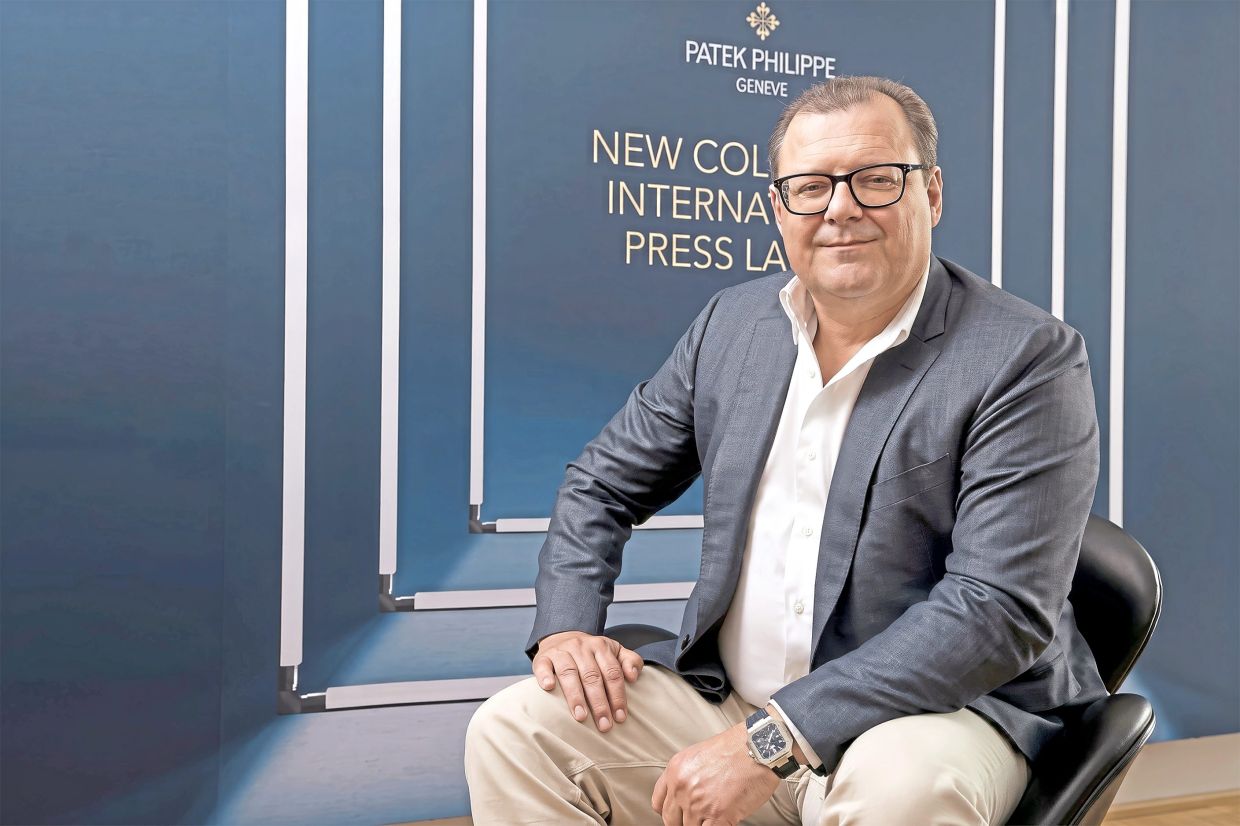
Thierry Stern, the fourth-generation president of Patek Philippe, breaks the mould of what one might expect from a luxury watchmaking executive. Rather than adopting the polished corporate vernacular typical of heritage brand leaders, he speaks with the unbridled enthusiasm of a dedicated horologist who has devoted his life to understanding the intricacies of mechanical timekeeping. This distinction, he argues, is not merely stylistic but foundational to his approach to stewarding one of watchmaking's most prestigious houses.
During an interview at Watches and Wonders 2026 in Geneva, Stern articulated a philosophy that sets him apart from many contemporary luxury industry figures: passion is not a marketing tool or internal motivational slogan, but rather a fundamental prerequisite for effective leadership in watchmaking. He bluntly states that no amount of intellectual capability or business acumen can substitute for genuine enthusiasm about watches themselves. His conviction stems from a clear-eyed observation of client dynamics in the luxury sector—informed collectors and discerning retailers possess sophisticated enough knowledge to immediately recognise when leadership lacks authentic engagement with their products.
The 55-year-old's conviction on this matter carries particular weight as Patek Philippe approaches a significant milestone. In 2026, the manufacture marks the 50th anniversary of the Nautilus, perhaps the most iconic sports watch ever created. When the Nautilus debuted in 1976, it represented a startling departure from conventional watchmaking wisdom. Its designer, the legendary Gerald Genta, created a timepiece featuring a distinctly industrial porthole-inspired case paired with an integrated bracelet—a combination that scandalized purists who deemed it incompatible with Patek Philippe's refined, classical heritage. The design felt almost brazenly contemporary for a house built on centuries of tradition.
The early reception proved divisive among traditionalists who viewed the Nautilus as an unwelcome violation of watchmaking norms. Stern recalls with amusement that when the Nautilus arrived on the market, he was merely six years old, a detail that underscores how distant that initial controversy now feels. He observes, with characteristic bluntness, that nearly all the vocal detractors from that era have passed from the scene. Today, the Nautilus occupies an entirely different position in the horological hierarchy. It has become arguably the most coveted contemporary wristwatch in existence, commanding years-long waiting lists and achieving auction prices that frequently transcend traditional valuation logic.
To honour this anniversary, Patek Philippe has introduced three limited-edition Nautilus references, including variants crafted from white gold and platinum, alongside a whimsical desk clock drawing inspiration from the watch's distinctive aesthetic. Stern's approach to marking this milestone reveals something important about his leadership philosophy. When asked about the anniversary collection, he notes that observers might reasonably have anticipated something more technically ambitious, perhaps featuring a tourbillon or other complex complication from the manufacture's considerable arsenal. Instead, he deliberately chose restraint, reasoning that the Nautilus itself requires protection from over-engineering.
This measured approach reflects Stern's conviction that the Nautilus possesses an essential identity that must be preserved. To his mind, the watch's DNA lies in its purity as a straightforward hour-and-minute timepiece—no extraneous complications obscure its fundamental purpose or design integrity. The new limited editions maintain this philosophical commitment while introducing refinements that required years of development. The cases measure just 6.9mm in thickness, achieving an ultra-slim profile, while internally they harness the historic Calibre 240 with its distinctive micro-rotor mechanism. Every element of the case and bracelet engineering underwent meticulous refinement to achieve what Stern considers the appropriate level of ergonomic sophistication.
Stern's philosophy regarding product development and strategic direction was shaped fundamentally by his early years working alongside his father Philippe Stern, who previously led the company. The elder Stern offered a single piece of guidance that became foundational to his son's approach: the necessity of deep, continuous engagement with consumers and retail partners. Rather than remaining ensconced in headquarters, leadership must travel constantly, listening intently to the experiences and needs of both end customers and the retailers who represent the brand. This ground-level understanding, Philippe Stern insisted, represents the most valuable education a luxury executive can receive.
Within the context of contemporary Swiss watchmaking, Patek Philippe occupies a unique position alongside a select handful of manufacturers—Rolex, Cartier, Audemars Piguet, and Omega—that truly command the designation of major luxury brands. Thierry Stern recognises that this prominence cannot be sustained through complacency or reverence for tradition alone. He articulates a clear-eyed assessment that evolutionary movement is essential; without embracing calculated risks, the manufacture cannot maintain its standing in a constantly shifting marketplace. His perspective rejects the notion that heritage houses should ossify around their historical achievements.
Still, Stern's approach to risk-taking remains disciplined and strategic rather than impulsive or experimental. He illustrates this balance through the example of the Aquanaut, introduced in the late 1990s as a deliberate counterpart to the Nautilus. Where the Nautilus projected refined sophistication with its distinctive integrated bracelet, the Aquanaut offered a sportier, more youthful aesthetic that appealed to a different clientele without diluting the house's core identity. This calculated expansion into adjacent market segments demonstrates how Patek Philippe can evolve while maintaining the fundamental values and aesthetic principles that define its heritage.
Stern's insistence on balancing tradition with measured innovation speaks to deeper currents within luxury watchmaking. Brands that remain frozen in historical amber risk irrelevance as generations of consumers seek contemporary relevance in their acquisitions. Conversely, those that pursue innovation without fidelity to core identity risk damaging the very heritage that creates their value. For Malaysian and Southeast Asian watch enthusiasts, Stern's philosophy carries particular resonance, as collectors in the region have become increasingly sophisticated and discerning, demanding not merely luxury status symbols but timepieces that genuinely reflect evolving tastes while honouring horological tradition.
The passion Stern demands from his team and models in his own approach ultimately stems from recognising that watchmaking transcends commercial transaction. For clients investing significant resources into mechanical watches—whether contemporary creations or vintage pieces—the purchase represents engagement with human craftsmanship, historical narrative, and personal identity. An executive who views watches primarily as profit-generating inventory cannot authentically communicate these deeper dimensions to customers who understand that horological excellence cannot be manufactured through cost-cutting or corners circumvented. This fundamental requirement for genuine enthusiasm thus becomes not merely an aspirational ideal but a practical necessity for sustaining Patek Philippe's position among the world's most respected watchmakers.

