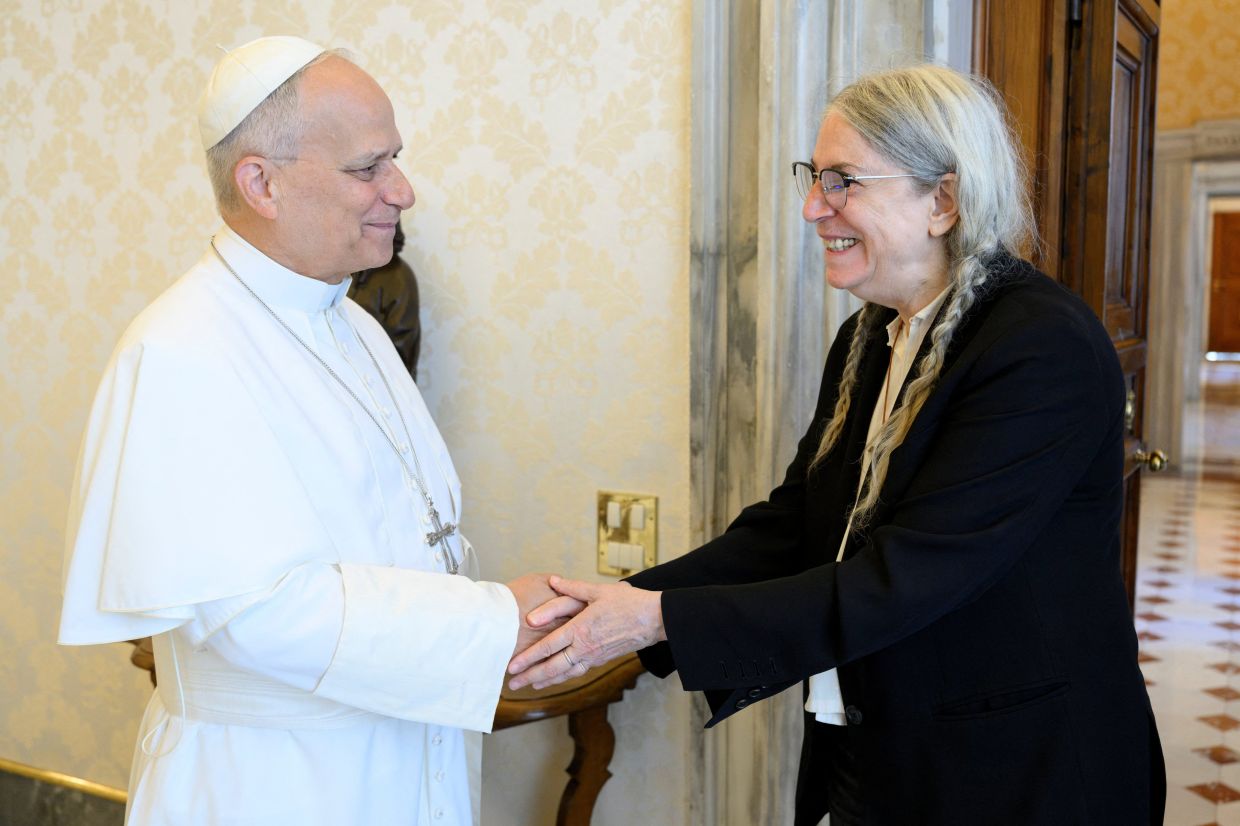
Rock icon Patti Smith enjoyed an intimate encounter with Pope Leo XIV on Friday, sitting across from the pontiff at his desk in the Apostolic Palace. The meeting, described by observers as an unexpectedly warm and natural exchange, saw Smith greet the pope with a simple "Hi" before settling into what became a substantive conversation. The ease of their interaction belied what might have been expected from such a formal occasion, suggesting a genuine rapport between the two figures who share Chicago roots.
Smith's increasing prominence within Vatican circles reflects a calculated broadening of the Holy See's cultural reach in recent years. The Grammy-winning musician has cultivated a relationship with Rev Antonio Spadaro, an influential undersecretary in the Vatican's culture ministry, who has actively facilitated her involvement in various papal and ecclesiastical events. This connection has positioned Smith as an unusual but valued cultural ambassador, bridging the worlds of contemporary music and religious authority in ways that appeal to younger and more secular audiences.
Despite her own admission that she does not practice Catholicism, Smith has consistently expressed profound admiration for recent papal leadership. She has articulated particular reverence for Pope Francis, whose tenure she characterised as embodying a "gentle, open, and steadfast sense of humanity." This attraction to Francis and his reformist outlook suggests that Smith's Vatican involvement transcends mere ceremonial courtesy, reflecting instead a deeper philosophical alignment with progressive approaches to faith and social responsibility.
Smith's relationship with the papacy extends back further than her encounters with Francis. Her 1979 musical composition demonstrated an early engagement with papal themes and imagery, a touchstone that clearly resonated with Leo XIV during their Friday meeting. When Smith referenced the song, the pope responded with enthusiasm, acknowledging its artistic merit and suggesting familiarity with her broader body of work. This exchange illustrated how cultural memory and shared aesthetic appreciation can forge unexpected connections across institutional and spiritual divides.
The timing of Friday's audience carried symbolic weight within Vatican calendars. Earlier this year, Smith performed during the inaugural ceremony for the Holy See's pavilion at the prestigious Venice Biennale contemporary art fair on May 8, which coincided with the anniversary of Leo's election. The Vatican's decision to feature Smith at such a prominent cultural moment underscores the institution's intentional investment in her artistic credibility and public visibility. By aligning papal celebrations with performances by a secular rock legend, the Vatican signals its desire to remain culturally contemporary and intellectually engaged.
Spadaro's characterisation of the meeting illuminated its unexpectedly intimate character. He described the 40-minute audience as unfolding like "a conversation between two people discovering they were old friends, sharing memories woven from words and music, dreams, visions, and hopes — both from yesterday and for today." This account moves beyond diplomatic pleasantries to suggest a meeting of minds and sensibilities. Both figures operate within realms where artistic expression and spiritual contemplation intersect, allowing for dialogue that transcends conventional hierarchies.
Smith's previous relationship with Pope Francis had prepared ground for such Vatican encounters. She first met Francis in 2013 and later performed for him in 2014, beginning an association that lasted until his death on April 21, 2025. Following his passing, Smith composed an elegiac poem that circulated on social media, comparing Francis to a dandelion—"humble yet strong"—and mourning the loss of "nature and poetry and the suffering" of their champion. These literary tributes revealed the depth of Smith's emotional connection to the previous pontiff and his legacy.
The Friday meeting also reflected Pope Leo XIV's broader engagement with artistic and cultural figures during his early papal tenure. Just two days prior, on Wednesday July 29, the pope had attended a concert honouring his election, performed by renowned Italian tenor Andrea Bocelli. This sequence of high-profile cultural encounters—with Bocelli and then Smith within the same week—suggests a deliberate papal strategy to cultivate relationships with internationally recognised artists. Such engagements serve multiple purposes: they humanise the papacy in the eyes of global audiences, they lend ecclesiastical authority a contemporary cultural veneer, and they allow the Vatican to project relevance beyond traditional religious constituencies.
For Malaysian and Southeast Asian observers of Vatican affairs, these developments carry particular significance. The Holy See's cultivation of relationships with secular artists and intellectuals reflects broader trends within global Catholicism toward greater openness and cultural dialogue. As the Catholic Church navigates declining adherence in many developed nations, such strategic partnerships with influential cultural figures become increasingly important for institutional vitality and public perception. Smith's continued Vatican presence exemplifies how religious institutions are adapting their approaches to engagement in an increasingly secularised world.
The meeting between Smith and Pope Leo XIV also invites reflection on the nature of spiritual seeking outside formal institutional frameworks. Smith's repeated visits to the Vatican, despite her non-Catholic status, suggest that many contemporary seekers find value in encounters with spiritual authority figures and sacred spaces without necessarily adopting the full doctrinal commitments that such institutions traditionally demand. This phenomenon—spiritual tourism and cultural pilgrimage combined with genuine intellectual curiosity—represents an evolving relationship between organised religion and contemporary culture that institutions like the Vatican are increasingly learning to accommodate.

