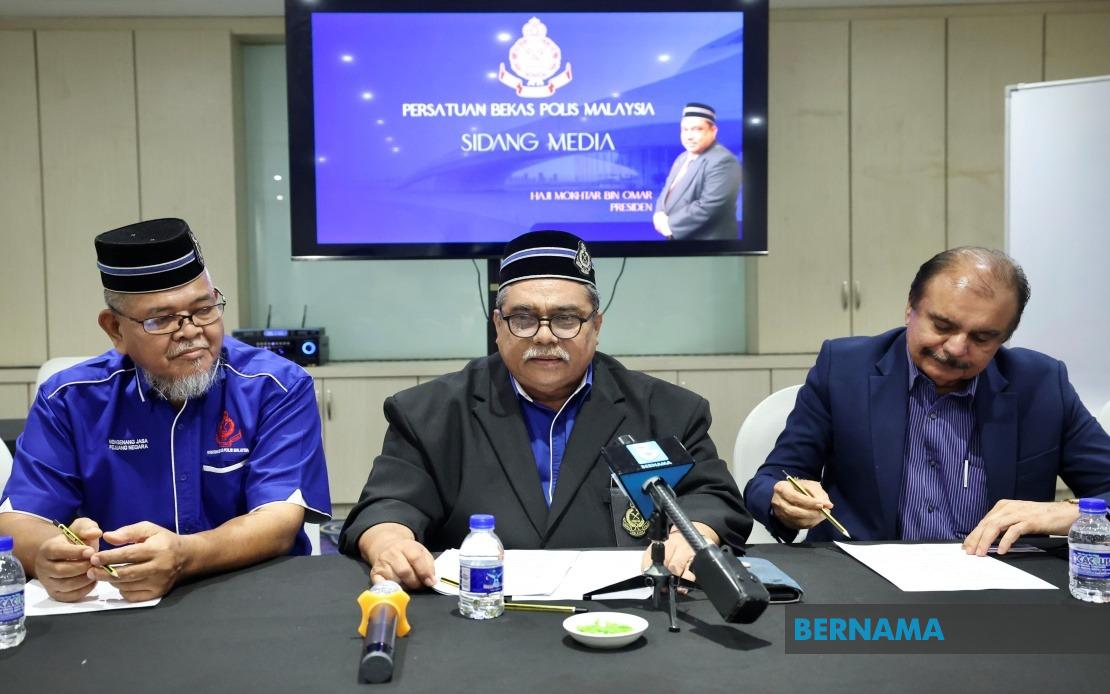
The Malaysian Ex-Police Association (PBPM) has launched a renewed campaign urging the government to introduce a monthly financial assistance programme targeting non-pensionable former police personnel, a segment of the country's security services workforce that has largely been overlooked in retirement welfare frameworks. The appeal comes as thousands of former officers who served without securing pension eligibility now grapple with dwindling resources and rising household expenses during their post-service years.
According to PBPM president Mokhtar Omar, administrative records extending back five decades reveal that roughly 40,000 of the association's 86,000 total members fall into the non-pensionable category. This substantial cohort encompasses individuals who served in diverse roles within the police apparatus, including personnel from the Special Squad, volunteers with the Home Guard, and officers engaged on contractual terms during the Emergency period. The diversity of these roles underscores how pension eligibility was fragmented across different service arrangements rather than universally extended to all who contributed to law enforcement operations.
The plight of these former officers reflects a broader policy gap in Malaysia's social security architecture. Many individuals who dedicated years to protecting national interests during turbulent periods found themselves excluded from standard pension schemes due to the nature of their employment contracts or the era in which they served. As inflation continues to erode purchasing power and cost-of-living pressures intensify across the nation, these retirees increasingly struggle to meet basic household needs without regular income streams. Mokhtar emphasised that this cohort warrants heightened government attention, particularly given their historical contributions during a critical period when Malaysia required substantial security personnel to maintain stability.
The PBPM's specific proposal centres on establishing a monthly allowance ranging between RM300 and RM500 for eligible recipients. While the proposed amount may appear modest compared to formal pension entitlements, PBPM's framing emphasises that the government would not face excessive fiscal burden in extending such assistance. This argument carries particular weight in the context of Malaysia's development trajectory and current fiscal capacity, positioning the measure as a proportionate acknowledgment of service rather than an extraordinary welfare expenditure.
Beyond the direct monthly allowance scheme, the association has articulated a comprehensive approach to former police personnel welfare. The PBPM is simultaneously advocating for a thorough restructuring of the Police Heritage Trust Fund (TAWP), which currently operates as a mechanism for distributing assistance to deserving former officers. The proposed reforms would increase benefit rates dispensed through this fund while simultaneously broadening its scope to encompass educational support for beneficiaries' families, subsidised healthcare access, and emergency relief provisions during disasters. Such expansion would transform the TAWP from a narrowly focused pension supplement into a multi-dimensional welfare instrument addressing diverse vulnerability points in former officers' lives.
Recognising that government budgetary processes move at variable speeds, the PBPM has initiated complementary private-sector fundraising efforts to address immediate welfare gaps affecting association members. Datuk Dr Basant Singh Sidhu, serving as the association's information chief, announced plans for a major fundraising dinner scheduled for October, targeting RM1 million in contributions from Malaysia's corporate ecosystem. By mobilising multinational enterprises, established private corporations, and philanthropically inclined individuals, the association aims to generate resources without placing entire dependency on government allocation cycles.
The fundraising initiative reveals the practical focus of PBPM's welfare interventions. Collected proceeds will directly finance the acquisition of medical equipment, mobility devices such as wheelchairs, nutritional supplements like fortified milk, hearing aids, and other essential items addressing the health vulnerabilities of ageing former personnel. This granular approach to welfare distribution demonstrates sophisticated understanding of the specific challenges confronting retired officers whose pension absence often correlates with inability to afford healthcare interventions or mobility aids that significantly impact quality of life.
The timing of PBPM's advocacy reflects accumulating pressures within this constituency. With the Emergency period now spanning decades of historical distance, the population of former officers who directly participated in that era continues to diminish. The association's emphasis that "only a small number of them left" strategically frames the assistance request as addressing an ageing demographic cohort rather than a perpetually expanding beneficiary pool. This framing acknowledges fiscal realism while underscoring moral urgency, particularly as surviving Emergency-era personnel represent a diminishing window for government recognition of their contributions.
For policymakers and the broader Malaysian public, the PBPM initiative raises fundamental questions about how societies honour security sector personnel whose service took place under different contractual frameworks than those offered to contemporary recruits. The existence of 40,000 non-pensionable former officers within the police services illustrates how historical employment practices created lasting inequities that persist across decades. Addressing this cohort's welfare needs involves not merely fiscal allocation but also acknowledgment of institutional inconsistency in how the security sector has been structured and compensated across different historical periods.
The PBPM's dual-track approach—simultaneously pursuing government policy reform while mobilising private sector resources—reflects pragmatic assessment that comprehensive welfare transformation requires both statutory frameworks and interim community-based solutions. Whether the government responds favourably to the monthly allowance proposal remains uncertain, but the association's persistent advocacy combined with private fundraising ensures that at minimum, immediate material needs of vulnerable former officers will receive targeted support throughout the remainder of 2024 and beyond.

