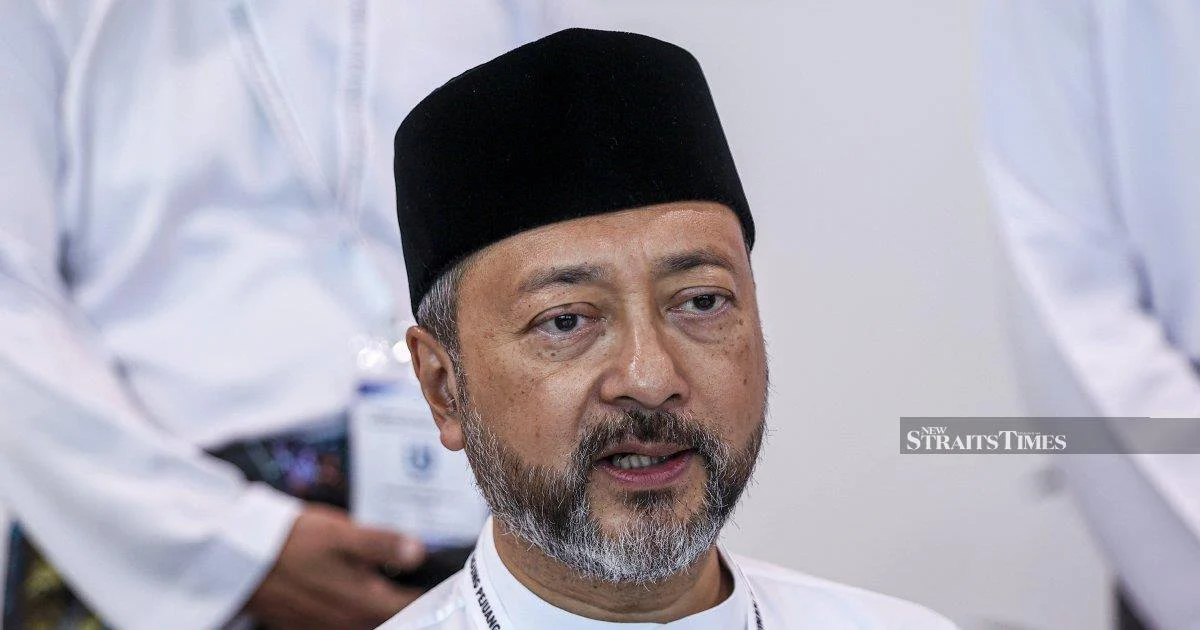
Pejuang's formal admission into Perikatan Nasional signals a pivotal moment in Malaysia's fractious opposition landscape, with the coalition seemingly intent on building a more cohesive alternative to the ruling government. The move, announced by party president Datuk Seri Mukhriz Mahathir, reflects an emerging recognition among non-governmental bloc parties that persistent fragmentation undermines their capacity to influence policy and deliver meaningful change on matters affecting ordinary Malaysians. By absorbing Pejuang into its structures, Perikatan Nasional demonstrates calculated ambition to expand its parliamentary footprint and consolidate voter bases that have previously scattered across multiple smaller formations.
The timing of Pejuang's incorporation carries political weight in a context where Malaysia's coalition mathematics remain notoriously volatile and legislative votes frequently hinge on paper-thin majorities. Mukhriz framed the development not merely as organisational tidying but rather as foundational groundwork for tackling systemic challenges that transcend party lines. His characterisation—emphasising unity over partisan advantage—suggests party strategists recognise that Malaysian voters increasingly demand cross-party cooperation on inflation, wage stagnation, public service competence, and institutional reform rather than traditional blame-trading. This rhetorical positioning allows Pejuang to present integration into PN as a principled sacrifice of autonomy toward collective problem-solving, potentially neutralising internal dissent from members concerned about loss of identity.
Pejuang's historical trajectory provides context for understanding this merger's significance. Established by Mukhriz in 2020 following his departure from Bersatu, the party struggled to establish meaningful electoral presence despite its founder's family pedigree and previous ministerial experience. Competition from larger opposition entities like DAP and PKR, combined with voter scepticism toward splinter organisations, confined Pejuang to marginal parliamentary representation. The party's inability to generate substantial fundraising momentum or cultivate grassroots infrastructure comparable to established rivals created structural vulnerabilities that leadership eventually acknowledged through this PN accommodation.
For Perikatan Nasional itself, incorporating Pejuang offers tangible parliamentary arithmetic advantages while simultaneously signalling receptiveness to broader coalition-building. The bloc, which has oscillated between governmental and opposition roles depending on shifting alliance arrangements, requires demonstrated capacity to expand beyond its current Bersatu-PAS core. Absorbing Pejuang members, particularly those with administrative experience and professional networks, theoretically strengthens PN's bench for potential future governance responsibilities. The coalition's strategic calculations likely extend beyond immediate seats, encompassing narrative control around unity and competence messaging that opposing formations struggle to articulate convincingly.
The consolidation also reflects PN's implicit acknowledgment that Malaysia's two-bloc competition—though still dominant in institutional terms—no longer fully captures political reality. Floating voters, particularly in urban constituencies, respond increasingly to performance-based governance appeals rather than ideological positioning. By visibly absorbing another formation, Perikatan Nasional attempts repositioning itself as a serious, inclusive alternative capable of attracting cross-factional talent and executing coherent policy platforms. Whether such repositioning translates into electoral gains remains uncertain, particularly given DAP-PKR's entrenched advantages in key urban areas.
For ordinary Malaysians, Pejuang's merger carries somewhat paradoxical implications. On one hand, reduced parliamentary fragmentation could theoretically streamline opposition scrutiny of government activities and improve legislative debate quality through consolidated rather than duplicative questioning. Opposition coalitions functioning with fewer constituent parties potentially make clearer demands on fiscal transparency, institutional accountability, and policy implementation timelines. Conversely, merger dynamics sometimes mute minority perspectives and subordinate smaller party constituencies' particular concerns—a tradeoff that Pejuang's absorption into PN embodies. Members accustomed to autonomous party structures must now navigate larger bureaucratic hierarchies where influence dilutes accordingly.
The broader national context shaping this realignment involves Malaysian society's simultaneous demands for political stability and fundamental reform. Voters frustrated by endemic corruption, bureaucratic inefficiency, and unequal economic opportunity increasingly view perpetual coalition instability as impediment to comprehensive governance transformation. Opposition movements perceiving this frustration calculate that demonstrating capacity for disciplined cooperation—through mechanisms like coalition mergers—strengthens their credibility as potential alternative governments. Mukhriz's emphasis on unity and addressing national challenges directly responds to this voter sentiment, positioning Pejuang's absorption as sacrifice toward larger purpose rather than administrative convenience.
Regional dimensions warrant consideration as well. Southeast Asian democracies increasingly experience opposition fragmentation as structural handicap against dominant incumbent coalitions commanding state machinery advantages. Malaysia's political trajectory, oscillating between one-bloc dominance and competitive multi-bloc systems, partly reflects opposition forces' chronic difficulty sustaining organisational discipline and voter loyalty across multiple electoral cycles. Pejuang's integration into PN could portend broader regional trends toward opposition consolidation as rational response to deepening incumbent institutional advantages and voter exhaustion with perpetual political turbulence.
Looking forward, success of this merger depends substantially on whether Perikatan Nasional can translate numerical expansion into coherent policy messaging that resonates beyond partisan cadres. Pejuang's absorption adds parliamentary seats and activist networks, but actual electoral impact remains contingent on PN's capacity to develop compelling alternatives to incumbent government priorities across education, healthcare, employment, and infrastructure domains. Early indications suggest the coalition intends leveraging Pejuang's incorporation as foundation for more ambitious opposition restructuring conversations, potentially signalling further consolidation discussions with other minor formations dissatisfied with current positioning.
Ultimately, Pejuang's entry into Perikatan Nasional exemplifies Malaysian opposition politics' perpetual tension between autonomy and effectiveness. Smaller parties chronically face choice between maintaining independent identity with marginal influence or sacrificing autonomy for inclusion within larger structures offering improved parliamentary and electoral prospects. Mukhriz's framing of Pejuang's merger as contribution toward unified governance reflects accepted wisdom among opposition strategists that fragmentation serves incumbent governments far better than cohesive alternatives. Whether this particular consolidation eventually strengthens opposition capacity to challenge incumbent dominance or merely reshuffles existing opposition weakness without fundamental alteration remains question only subsequent electoral cycles can definitively answer.