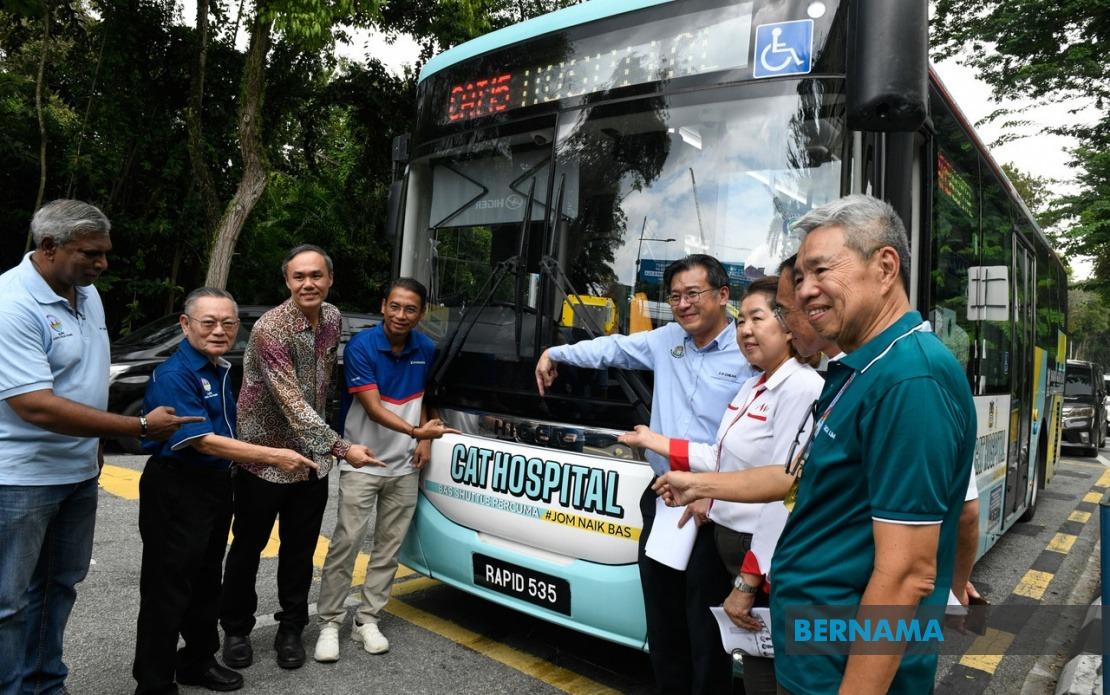
The Penang Island City Council (MBPP) has committed RM900,000 per year to operate a free shuttle bus service designed to improve access to Penang Hospital and other healthcare facilities in the city centre, addressing long-standing traffic and parking challenges that have worsened following the hospital's recent expansion. The Central Area Transit (CAT) service, which launched on January 1, links Komtar with Penang Hospital, three private medical institutions, and several healthcare providers across the downtown core, offering residents and patients a convenient alternative to private vehicles.
According to Cheah Chin Kooi, the MBPP Engineering Director, the initiative reflects the council's broader commitment to promoting public transport usage while tackling congestion around medical facilities. The underlying strategy recognises that healthcare destinations typically generate substantial vehicular traffic and parking demand, creating bottlenecks that compromise patient access and neighbourhood liveability. By removing cost barriers to transport, the scheme targets vulnerable groups including elderly patients, their caregivers, and lower-income individuals who might otherwise struggle with hospital visits.
The response to the service has exceeded initial expectations. Daily passenger numbers nearly doubled from approximately 300 users in early operations to around 600 currently, suggesting genuine demand for affordable transit connecting residential and commercial areas to medical hubs. This trajectory indicates that the investment may yield broader returns through reduced vehicle emissions and improved air quality, factors particularly relevant in urban areas already grappling with pollution concerns.
Operationally, three Rapid Penang buses service the eight-kilometre route throughout extended hours, running from 6 am to 8 pm daily with departures every 20 minutes, generating 36 trips per day. This frequency strikes a balance between accessibility and operational efficiency, ensuring passengers rarely wait longer than a quarter-hour while maintaining manageable costs for the service provider. The structured schedule also allows hospital staff and visitors to plan journeys with confidence, rather than encountering the uncertainty that sometimes accompanies infrequent transit options.
The service emerged from an MBPP survey commissioned after Penang Hospital's expansion project revealed mounting pressure on the surrounding area's transport and parking infrastructure. Rather than responding reactively with parking expansion or road widening, the council identified a complementary approach: enabling people to reach the hospital without personal vehicles. This reflects evolving urban transport philosophy in Malaysia and Southeast Asia more broadly, where cities increasingly recognise that building more parking spaces generates additional traffic rather than solving it.
Dr Goh Hin Kwang, the hospital director, has coordinated physical improvements to support the service, including an upgraded pedestrian walkway along Jalan Residensi. Concurrent work on the main entrance at Jalan Utama aims to create a seamless transition from the bus stop to the hospital entrance, addressing the reality that transit accessibility extends beyond vehicle arrival—it encompasses the final metres of the journey. Such attention to last-mile connectivity often determines whether potential users actually embrace public transport or abandon it for cars.
The initiative carries particular significance for Penang's healthcare ecosystem. The state has positioned itself as a regional medical tourism hub, attracting patients from across Malaysia and neighbouring countries. A free, reliable shuttle service enhances that proposition, reducing visitor friction and demonstrating quality-of-life infrastructure comparable to leading healthcare destinations in the region. For local residents, it represents acknowledgment that accessing medical care should not depend on vehicle ownership or disposable income for transport.
From a fiscal perspective, the RM900,000 annual commitment warrants consideration within Penang's broader budget priorities. However, framed as a public health investment rather than a transport subsidy, the economics shift. Healthcare access improvements, congestion reduction, and emissions cuts generate tangible benefits that extend beyond the direct rider population. Studies in other jurisdictions have shown that medical transit subsidies often reduce unnecessary emergency department visits and improve medication adherence by eliminating transport barriers.
The scheme also signals MBPP's willingness to experiment with innovative service delivery models. Collaboration with Rapid Penang and coordination involving hospital administration, private healthcare providers, and the Penang Women's Development Corporation demonstrates the multi-stakeholder approach increasingly necessary for addressing urban challenges that transcend single institutions. This cooperative framework may serve as a template for other Malaysian municipalities facing similar hospital access constraints.
Looking forward, the council should monitor ridership trends closely to assess whether the current service level meets demand or requires expansion. If the doubling trajectory continues, bottlenecks may emerge, potentially requiring additional vehicles or increased frequency. Conversely, if growth plateaus, the data will inform whether RM900,000 represents optimal resource allocation or whether adjustments could enhance value. Systematic performance tracking will strengthen future municipal transport decisions.
For Penang residents and patients, this service represents a tangible improvement in urban mobility and healthcare accessibility. As Malaysian cities grow denser and congestion worsens, such targeted transit interventions become increasingly vital. The CAT service demonstrates that addressing specific transport challenges—whether medical, educational, or commercial—through subsidised public services can yield meaningful improvements in quality of life and urban sustainability, offering lessons for peer municipalities across the peninsula and region grappling with comparable pressures.

