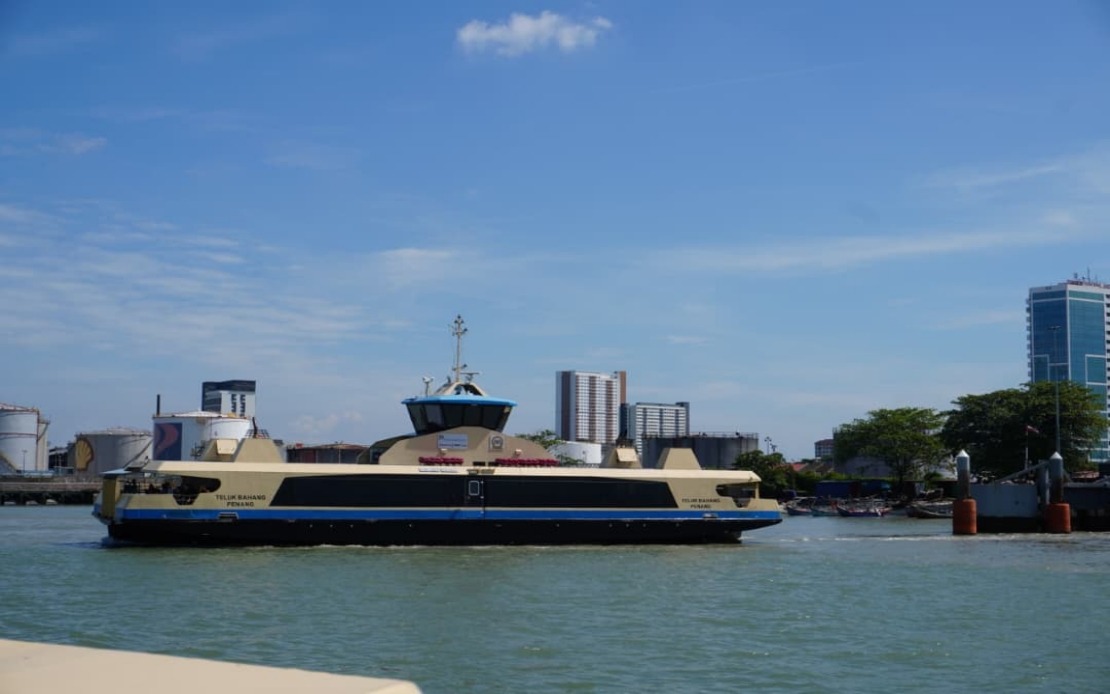
The Penang Port Commission (SPPP) has declared that ferry services connecting Penang island and Seberang Perai will operate free of charge for all Malaysian passengers on Aug 31, marking the country's 69th National Day. The announcement, made by SPPP chairman Datuk Yeoh Soon Hin, represents a collaborative effort with Penang Port Sdn Bhd (PPSB) to commemorate the national celebration while simultaneously addressing urban mobility challenges in the northern state.
The complimentary ferry service will maintain regular operating schedules across both Sultan Abdul Halim Terminal (PSAH) in Seberang Perai and Raja Tun Uda Terminal (PRTU) in George Town, ensuring seamless travel for commuters and visitors throughout the day. By eliminating fare barriers on this significant national occasion, the initiative seeks to encourage broader utilisation of the ferry network as an alternative to private vehicle use, which remains the dominant transport mode in Penang's congested urban corridors.
The financial relief for travellers is tangible: pedestrians will save RM2 per one-way journey, while two-wheeled vehicle users benefit from a RM2.50 saving per trip. For families and regular commuters who might ordinarily avoid ferry travel due to cumulative costs, the free service on National Day presents a valuable opportunity to experience this transport option and potentially reassess their daily commuting patterns. Such economic incentives, when tied to patriotic occasions, can effectively shift public perception and encourage sustainable transport adoption.
Earnings data from previous National Day celebrations illuminate the potential scale of this year's initiative. Statistics from last year's Aug 31 festivities showed that 9,185 pedestrians and 1,874 two-wheeled vehicles utilised the ferry service during the 69th National Day commemorations. These figures underscore the genuine demand for the crossing during national events, suggesting that this year's free service could potentially attract even larger passenger volumes as word of the initiative spreads through community networks and social media.
For Penang specifically, reducing vehicular congestion represents a critical policy objective. The state's geographic constraints—split between the island and mainland—create perpetual bottlenecks, particularly at the Penang Bridge and Sultan Halim Muadzam Shah Bridge. By redirecting a portion of vehicle traffic to ferry transport on a high-traffic day like National Day, SPPP and PPSB contribute meaningfully to congestion mitigation while simultaneously demonstrating the viability of maritime transport as a congestion-relief mechanism that planners might consider expanding.
The environmental dimension of this initiative carries particular significance for Malaysia's sustainable development agenda. Public ferry services represent one of the most efficient mass transport options available, generating minimal per-passenger emissions compared to individual vehicles. By offering free passage on National Day, the two organisations effectively advocate for environmentally conscious transport behaviour at a moment when Malaysians are collectively engaged in patriotic reflection, potentially fostering longer-term attitudinal shifts toward green commuting.
Complementing the ferry initiative, SPPP is leveraging its 70th anniversary—designated as the Platinum Jubilee year—to expand its community engagement through cultural programming. The collaboration with the Penang Ferry Museum to launch the 'Kids Go Free Merdeka Special' campaign extends the National Day celebration's reach to younger Malaysians. Between Aug 29 and 31, 2026, Malaysian children aged 12 and below will gain free museum admission, creating multi-generational engagement with Penang's maritime heritage and the role of ferry services in the state's historical and contemporary development.
This integrated approach—combining practical mobility solutions with cultural and educational programming—reflects evolving best practices in how state institutions can weave public services into national celebrations. Rather than treating National Day as a purely ceremonial occasion, SPPP and PPSB frame it as an opportunity to strengthen public attachment to essential infrastructure while highlighting the human and environmental benefits of collective transport systems. Such initiatives, when well-executed, can subtly reshape public understanding of what national celebration means beyond flags and formal ceremonies.
For Malaysia's broader maritime and transport sectors, the Penang initiative offers instructive lessons about leveraging special occasions to test and showcase alternative mobility solutions. As major cities across Southeast Asia grapple with congestion and emissions, successful proof-of-concept demonstrations of free public transport's demand-generation potential become increasingly valuable for policymakers considering permanent rate adjustments or expanded service offerings. Penang's data from National Day usage patterns could inform transport planning discussions across other Malaysian states and neighbouring countries.
The initiative also carries subtle commercial implications for local tourism and retail sectors. Increased ferry usage on National Day may generate spillover economic activity for businesses in both Penang Island and Seberang Perai, as visitors and commuters cross between precincts more easily. Merchants and hospitality providers benefit from enhanced foot traffic, creating localized economic multiplier effects that extend beyond the transport sector itself.
Looking forward, the success of this year's Aug 31 free ferry programme will likely influence SPPP's future strategic planning. If passenger volumes substantially exceed projections, or if user satisfaction surveys indicate strong demand for expanded free-fare periods, the commission may face pressure—both from the public and from sustainability advocates—to consider periodic or seasonal fare holidays that extend beyond national celebrations. Such incremental policy shifts often emerge from well-received temporary initiatives that demonstrate popular support for alternative approaches.
The announcement underscores a broader recognition among Malaysian transport authorities that public mobility must evolve beyond purely revenue-maximising models toward frameworks that balance financial sustainability with social objectives and environmental imperatives. By designating Aug 31 as a free-ferry day, Penang positions itself as a state where transport equity and environmental stewardship receive meaningful institutional support, a positioning that resonates with younger, urban voters increasingly concerned about climate action and liveable cities. This National Day initiative, though temporary, signals where transport policy might head as Malaysian society continues demanding solutions to congestion and pollution challenges.

