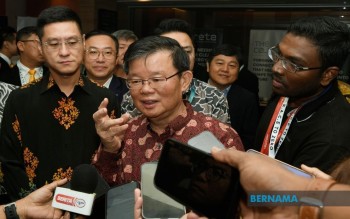
Twenty-five companies have lined up to tap financing from Penang's recently launched Climate Mitigation Fund, with the state government already processing applications from five firms seeking capital for their environmental transition projects. Chief Minister Chow Kon Yeow revealed the uptake figures at the R.A.C.E To Zero: Penang Edition forum in George Town, signalling early momentum behind the initiative that aims to reshape how manufacturers approach sustainability in Malaysia's most industrialised northern state.
The fund, established through a partnership between the state government and Alliance Bank under the broader Penang Green Industry Programme, commenced operations with RM20 million in combined capital—RM5 million contributed by the state and RM15 million from the financial institution. However, the scheme carries considerably greater ambitions, with both parties committing to expand the available pool to as much as RM100 million, suggesting confidence in sustained demand from the business community. This graduated funding model reflects recognition that climate adaptation among manufacturers cannot be tackled through a one-time injection but requires sustained financial infrastructure.
The financing structure targets small and medium enterprises alongside mid-tier companies, offering preferential loan terms of up to RM500,000 per applicant. Critically, the fund extends beyond simple credit provision. Participating companies gain access to sustainability assessments conducted by expert advisors and technical grants, transforming the initiative from a conventional lending mechanism into a comprehensive support ecosystem. This holistic approach addresses a fundamental challenge facing Malaysian manufacturers: many possess limited in-house capacity to evaluate their environmental footprint or design credible transition pathways.
Chow framed the fund's significance within a shifting competitive landscape that transcends environmental virtue signalling. Global multinational corporations increasingly embed carbon performance requirements into their supply chain procurement decisions, making emissions reduction a commercial necessity rather than optional corporate policy. Penang's position as the epicentre of Malaysia's electrical and electronics sector—accounting for RM436.9 billion in exports annually, equivalent to 68 per cent of the nation's total E&E shipments—renders this transition especially consequential. When international buyers conduct factory audits, they now routinely demand transparency regarding the energy sources powering production facilities, a line of questioning that would have seemed irrelevant a decade ago.
The Chief Minister emphasised that energy procurement has joined the traditional competitive calculus alongside labour availability, port infrastructure, and operational expenses. Companies shopping for manufacturing locations still evaluate the established fundamentals, but the question "Where does your electricity originate?" now carries weight equivalent to logistics efficiency or workforce skills. This reframing reflects the genuine commercial penalties increasingly imposed on suppliers with high-carbon supply chains, particularly within sectors like consumer electronics where brand reputation proves sensitive to environmental criticisms.
Penang has responded by codifying ambitious energy transition targets within its Penang Energy Framework, unveiled in November 2024. The roadmap commits the state to reducing energy intensity by 25 per cent while expanding renewable energy's share of the overall electricity mix to minimum 10 per cent by 2030. These figures occupy the ambitious end of the spectrum, especially considering the compressed timeframe and the state's existing industrial base. The targets represent a deliberate effort to position Penang as Southeast Asia's climate-conscious manufacturing hub, a differentiation strategy that could prove valuable as multinational facility expansions increasingly factor environmental credentials into location decisions.
Given Penang's geographical constraints—the state's limited landmass rules out utility-scale solar farms—rooftop installations emerge as the most pragmatic renewable energy avenue. New building codes now mandate that commercial and industrial structures dedicate at least 75 per cent of available roof space to photovoltaic panels or demonstrate equivalent renewable energy sourcing aligned with their Tenaga Nasional Berhad tariff classification. This regulatory approach converts architectural design decisions into climate policy instruments, embedding environmental considerations into the development approval process rather than treating them as peripheral concerns.
Parallel initiatives underscore the comprehensiveness of Penang's climate strategy. The state's water utility, Penang Water Supply Corporation, is investigating floating solar installations across its reservoir network—a technique that simultaneously generates electricity while reducing evaporation losses, exemplifying how environmental solutions can address multiple challenges simultaneously. Silicon Island, a major industrial development project, will integrate renewable capacity into its master plan, including a dedicated Green Tech Park powered by on-site solar generation. These projects transform climate mitigation from a regulatory compliance exercise into development infrastructure.
Energy efficiency constitutes the complementary pillar of Penang's transition blueprint. The state is establishing energy intensity measurement frameworks that enable factories to benchmark consumption against peer facilities and identify improvement opportunities. Government buildings and local authority properties face mandatory assessments of their renewable energy and efficiency potential, with new public facilities expected to source minimum five per cent of electricity from renewable sources. This leadership-by-example approach acknowledges that government operations, whilst a modest proportion of total state energy demand, carry symbolic significance in signalling commitment to sustainability principles.
Penang's energy policies align deliberately with the federal government's National Energy Efficiency Action Plan 2.0, which targets 11.6 per cent reduction in national energy demand by 2035. This vertical policy coherence proves important; manufacturing investment decisions increasingly consider whether state-level environmental targets align with or contradict national energy strategy. Dissonance between different governance levels creates investor uncertainty and dilutes credibility. By anchoring Penang's initiatives to federal frameworks, the state strengthens the coherence and longevity of its climate commitments, reassuring companies that energy policies will remain stable across political cycles.
The Climate Mitigation Fund's early popularity among company applicants suggests manufacturers perceive genuine competitive advantage in early-mover status. Firms securing renewable capacity and demonstrating carbon reductions now can market themselves to global buyers seeking lower-emissions suppliers. The convergence of state financial support, expert technical guidance, and aligned regulatory frameworks creates conditions where sustainability improvements become economically rational rather than merely ethically defensible—a distinction that determines whether climate action achieves scale or remains marginal.
For Malaysia's broader industrial policy, Penang's approach offers a instructive model. The state has translated climate imperatives into competitive strategy, positioning environmental leadership as a magnet for high-value manufacturing capable of meeting sophisticated buyer requirements. As global supply chains increasingly segregate based on carbon performance, states that build credible green industrial ecosystems early will capture disproportionate shares of investment from multinationals seeking certified low-carbon production locations. Penang's investment in institutional infrastructure—the fund, the technical advisory apparatus, the regulatory framework—represents exactly the type of patient public-sector commitment necessary to establish genuine competitive advantage in the clean economy.

