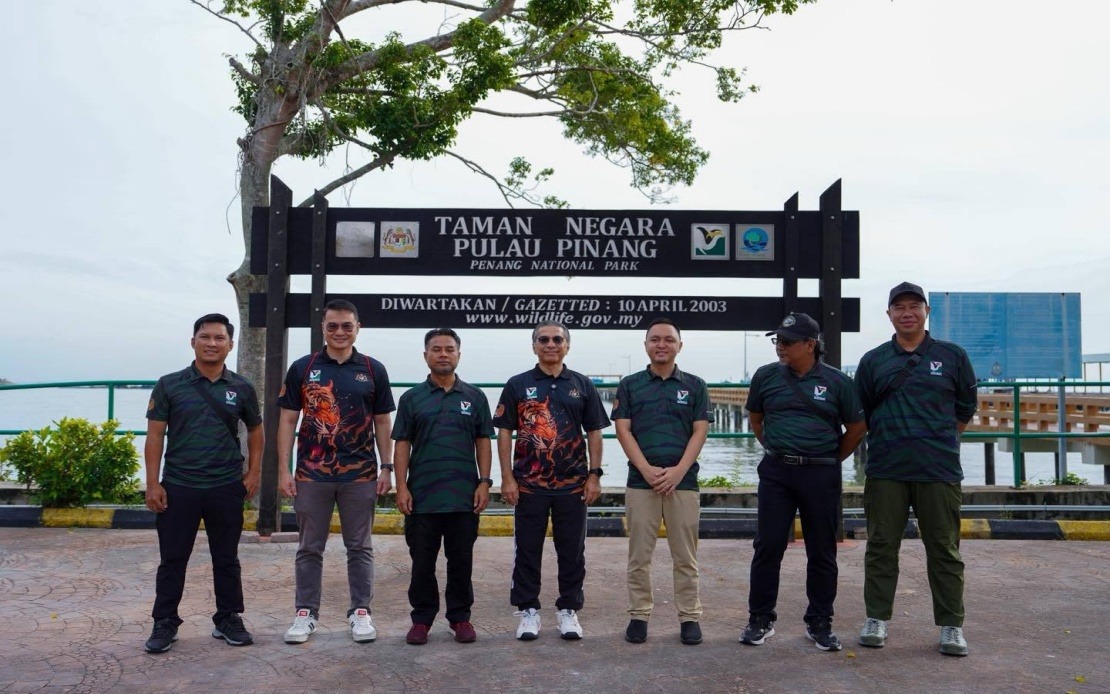
The preservation of Penang National Park's distinctive natural environment—encompassing mangrove forests, pristine coastal zones, abundant wildlife, and the park's rare meromictic lake—demands a conservation strategy that extends beyond traditional protection measures to actively involve local communities. This approach was underscored during a recent visit by Deputy Minister of Natural Resources and Environmental Sustainability Syed Ibrahim Syed Noh to the 2,560-hectare park in Teluk Bahang, where he observed firsthand the diverse ecological features and ongoing management initiatives that keep this biodiverse haven functioning.
Syed Ibrahim's inspection tour reflected a broader philosophy within the Ministry of Natural Resources and Environmental Sustainability: that safeguarding the nation's biological wealth cannot be achieved through top-down preservation alone. Speaking to this perspective, he emphasised that contemporary conservation must integrate environmental stewardship with meaningful public participation, recognising that ecosystems thrive when communities understand their value and become custodians rather than mere observers. This integration represents a significant shift from earlier conservation models that often kept nature reserves at arm's length from surrounding populations.
During the visit, Syed Ibrahim received a detailed briefing from the Penang Department of Wildlife and National Parks on the park's comprehensive management framework and the intricate web of ecological relationships that define the reserve. The coastal areas of Penang National Park support numerous species and natural processes that are increasingly recognised as vulnerable to external pressures, making the case for enhanced stewardship all the more pressing for Malaysian biodiversity authorities and environmental advocates.
A guided boat tour of the marine environment allowed the Deputy Minister to assess coastal conservation conditions and understand the park's role as a refuge for species dependent on the intersection of land and sea ecosystems. Penang's coastal zones represent transition spaces where marine and terrestrial biological communities overlap, creating ecological complexity that demands specialised management knowledge and sustained protective effort.
The visit included an inspection of the Turtle Conservation Centre at Kerachut Beach, where the Department of Fisheries Malaysia coordinates efforts to safeguard Green Turtles and Olive Ridley Turtles—both species facing global population pressures. By establishing dedicated conservation facilities within accessible park locations, authorities create visible demonstrations of environmental commitment that can shift public perception and encourage voluntary participation in protection efforts. The centre embodies the principle that conservation becomes most effective when communities witness tangible results and understand their connection to global species survival.
The meromictic lake within Penang National Park represents a particularly significant conservation focus. This unusual water body—where layers of salt and fresh water remain permanently separated due to density differences—showcases the ecological diversity contained within a relatively compact area. Understanding and protecting such distinctive features requires scientific expertise and long-term commitment, yet their very uniqueness makes them powerful educational tools for conveying how interconnected habitats sustain overall ecosystem health.
Syed Ibrahim visited Entopia Penang, an interactive facility that translates scientific biodiversity knowledge into experiential learning opportunities. The Deputy Minister stressed that such educational initiatives prove essential for cultivating environmental awareness, particularly among younger Malaysians who will inherit responsibility for protecting natural assets. Educational approaches that combine hands-on discovery with structured learning can reshape attitudes toward nature conservation, moving beyond abstract environmental rhetoric to demonstrate concrete ecological relationships.
The concept of responsible ecotourism emerged as a central theme during the visit. Rather than viewing tourism and conservation as competing interests, Syed Ibrahim articulated a vision where well-managed visitor experiences serve as a bridge between preservation objectives and community engagement. When people can directly observe and appreciate biodiversity—whether observing turtle hatchlings or exploring forest trails—they develop personal investment in protection outcomes. This approach recognises that sustainable conservation requires public buy-in, which develops most effectively when individuals experience nature's value firsthand rather than learning about it through prohibitions and restricted access.
The Ministry of Natural Resources and Environmental Sustainability's emphasis on grounding conservation in practical realities reflects recognition that environmental protection succeeds only when strategies align with community capacities and interests. By positioning communities as solution-providers rather than obstacles to conservation, the ministry acknowledges that Malaysia's ecosystems ultimately depend on millions of individual decisions made by citizens who live alongside these environments.
Syed Ibrahim's articulation of conservation as a legacy—emphasising that present-generation stewardship determines what heritage future Malaysians will inherit—frames environmental protection as an intergenerational responsibility. This framing potentially resonates more powerfully than purely scientific arguments, connecting environmental preservation to broader values around family obligation and cultural continuity. For Penang specifically, this approach suggests that national park management success depends not only on technical expertise and governmental resources, but fundamentally on cultivating a constituency of residents and visitors who recognise themselves as custodians of shared natural patrimony.

