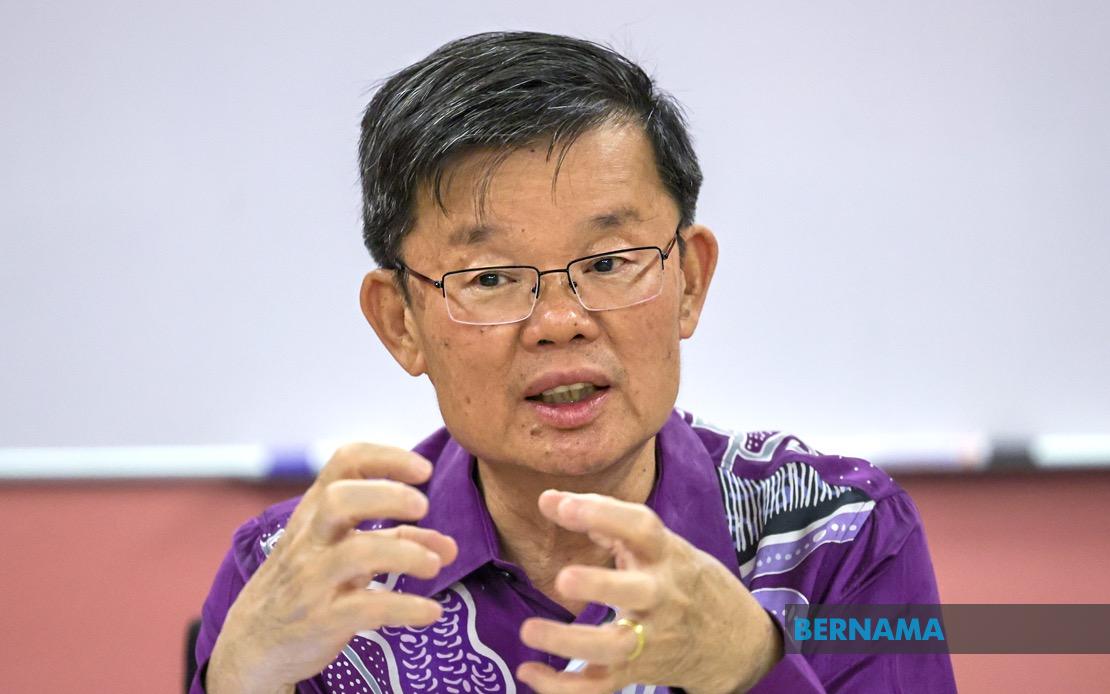
Penang's Pakatan Harapan coalition has committed to preserving its partnership with Barisan Nasional by retaining the BN-linked state executive councillor in the Penang administration until the 16th general election, according to a decision announced by Chief Minister Chow Kon Yeow following a PH meeting in George Town on August 8. The determination underscores the continuation of the power-sharing framework that emerged from the 2023 state election, when both coalitions jointly secured governance of the northern state through their electoral understanding.
The coalition's endorsement of this arrangement reflects an assessment that maintaining the existing partnership structure offers strategic advantages as Malaysia approaches its next nationwide electoral contest. Chow explained that the decision emerged from deliberations at the Penang PH meeting and represents a considered approach to managing the political landscape, rather than a move toward confrontation with the BN component within the state government. This posture suggests that internal cooperation, despite occasional tensions between PH and BN at the federal level, remains workable at the state administration level in Penang.
Datak Rashidi Zinol, who chairs the State Rural Development, Agrotechnology and Food Security Committee, represents the single BN presence at the executive council table in Penang. His continued tenure signifies that the 2023 Unity Government framework—which paired PH's dominant 29-seat majority with BN's two seats—will persist through the present political cycle. This arrangement has given Penang a stable, bipartisan executive structure, though the symbolism of retaining a BN member carries weight in a state traditionally governed by DAP and its allies.
Chow acknowledged that the Penang leadership had examined outcomes from recent state elections in Johor and Negeri Sembilan to inform strategic calculations for the general election. The results in those states signalled shifting voter behaviour and provided instructive lessons about campaign messaging, ground mobilisation, and coalition dynamics. For Penang, which has remained a PH stronghold, such analysis becomes crucial to understanding whether the party's support base remains robust or faces erosion in specific constituencies.
The PH chairman indicated that the coalition intends to strengthen its competitive positioning through enhanced political communication and deepened engagement with younger voters. Acknowledging weaknesses, rather than glossing over them, will form part of a revised narrative strategy. Digital platforms will receive greater emphasis as channels for reaching voters, particularly as online engagement increasingly shapes political discourse across Malaysia. The recognition of a growing Undi18 demographic—voters aged 18 and above who entered the electoral roll in recent years—signals an understanding that PH must appeal to constituencies with different priorities and communication preferences from older voter groups.
Chow highlighted the administration's track record in governance, emphasising achievements in economic growth, investment attraction, employment creation, and the implementation of policies that benefit residents. These claims appear designed to provide a positive foundation for the coalition's election campaign, demonstrating that PH-led administration has delivered tangible outcomes beyond rhetoric. Yet he tempered optimism by cautioning against complacency, acknowledging that public perception and sentiment can shift more rapidly than objective improvements in governance or service delivery.
The decision to retain the BN executive councillor reveals a pragmatic political calculation within Penang's PH structure. Rather than viewing the coalition as temporary and seeking to eject BN from government at the earliest opportunity, PH appears committed to the stability that a continuing partnership provides. This approach differs from aggressive electoral strategies that might prioritise maximising seat counts over maintaining functional administration. For voters in Penang, the implication is relative continuity in government composition and executive functioning, even as campaign rhetoric intensifies heading into the general election.
The 2023 Penang state election results that created the current setup demonstrated the electorate's preference for PH governance, with DAP's 19-seat sweep, PKR's seven seats, and Amanah's single seat far outpacing BN's two seats. That lopsided distribution meant PH could govern unilaterally if it chose to exclude BN. The decision to retain BN's representation suggests the coalition values coalition-building as a principle, or perhaps seeks to demonstrate unity and maturity in governance as it campaigns federally.
For Malaysian observers, Penang's approach carries broader significance. The state has traditionally served as a bellwether for national political trends, and its coalition governance model offers insights into how different political forces might coexist post-election. As the 16th general election approaches, the continuation of PH-BN cooperation in Penang signals that neither coalition has entirely closed the door to working relationships, despite adversarial national politics. This could influence negotiations in other states where election results produce hung legislatures or closely divided outcomes.
Chow's emphasis on analysing every state seat from multiple perspectives suggests that PH recognises the competitive intensity of the coming election. Seat-by-seat strategy, rather than blanket campaign messaging, may prove essential in an increasingly fragmented electoral landscape. The coalition's commitment to strengthening ties with younger voters and embracing digital engagement reflects acknowledgment that traditional mobilisation methods alone cannot secure victory in an evolving media environment.
The decision ultimately represents a statement that Penang's PH leadership views stability and demonstrated administrative competence as assets heading into the general election. By retaining BN's representation and emphasising ongoing cooperation, PH sends a message that it prioritises governance functionality over maximising partisan advantage in the short term. Whether this measured approach resonates with voters or is perceived as hesitation will become clearer as the general election campaign unfolds and Penang's role as a potential bellwether becomes more pronounced.

