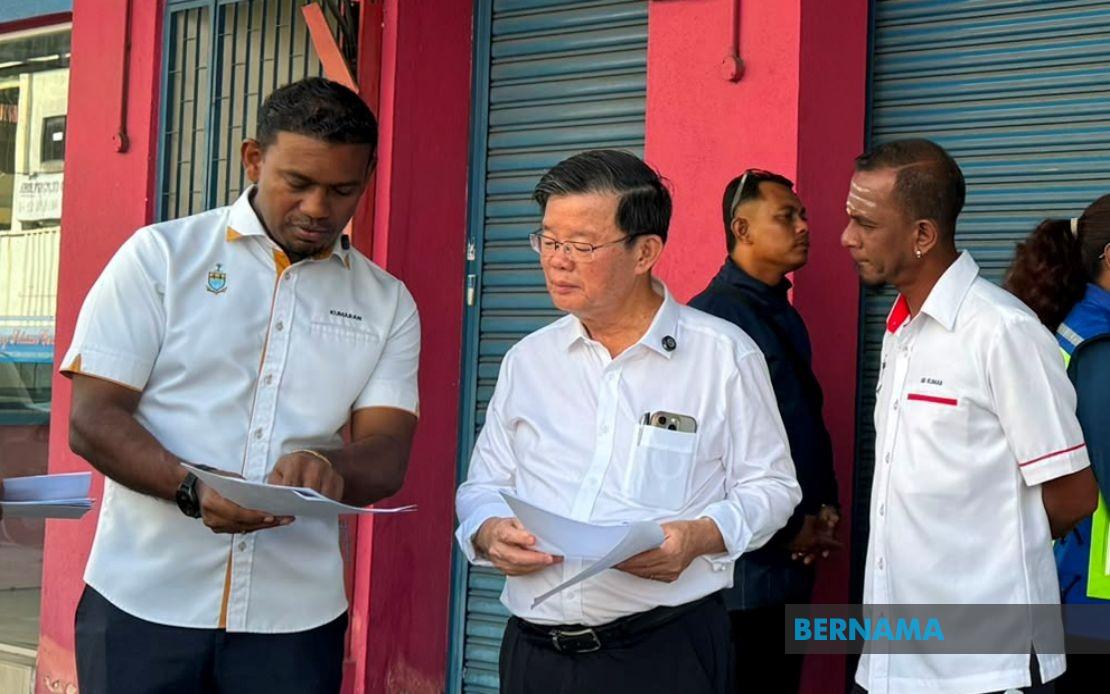
Penang will move forward with its new water tariff structure despite growing calls for a delay, Chief Minister Chow Kon Yeow announced in Butterworth on July 17. The tariff increase, which came into effect on July 1, had already been deferred by nearly a year from its originally planned implementation date of July 30, 2025, but the state government believes further postponement would undermine critical water security initiatives.
The decision reflects a careful balancing act between public pressure and the state's immediate infrastructure needs. Though the Federal Government initially set the new tariff framework through the National Water Services Commission (SPAN) for mid-2025, Penang's administration had already extended a grace period by pushing implementation to July. Chow's statement signals that the state has reached the limits of its flexibility on this matter, viewing any additional delay as counterproductive to long-term water supply planning.
The financial arithmetic behind the tariff decision is substantial. The new rates are projected to generate approximately RM20 million in additional annual revenue—funds that the Penang Water Supply Corporation (PBAPP) views as indispensable for addressing the state's water security challenges. These resources will help finance a portfolio of capital-intensive projects that extend far beyond routine maintenance, reaching nearly RM2 billion in total expenditure across multiple initiatives designed to safeguard Penang's water future.
Beyond immediate costs, Penang faces major investments in its water supply infrastructure from Perak, an undertaking that will require billions of ringgit in additional investment. This multi-billion-ringgit commitment underscores why state officials argue that the tariff increase cannot be deferred without jeopardizing funding timelines and project schedules. The Water Contingency Plan 2030 (WCP 2030), a comprehensive roadmap for addressing future water demand, sits at the centre of these capital requirements.
Crucially, PBAPP chief executive officer Datuk K. Pathmanathan stressed that the tariff mechanism is not unique to Penang but rather a standardized framework adopted across Malaysia. SPAN establishes the methodology used by all state water operators, with tariff adjustments permitted every three years based on demonstrable operating costs and infrastructure development needs. This regulatory architecture ensures that rate-setting decisions rest on technical and financial grounds rather than political discretion alone.
The cross-subsidy structure embedded in Penang's water tariff reveals the social calculus underlying the increase. Domestic consumers continue to pay well below the actual cost of water production, which exceeds RM1 per cubic metre. Under the new rate structure, residential users pay only approximately 65 sen per cubic metre, a figure cushioned by higher charges imposed on industrial and commercial users who effectively subsidize household consumption. This arrangement reflects a deliberate policy choice to protect residential affordability while placing the burden on business users with greater capacity to absorb costs.
The impact on most households remains modest in absolute terms. Approximately 82 per cent of Penang households, those consuming 35 cubic metres or less monthly, will face an additional daily charge of just RM0.08, translating to roughly RM2.55 per month. Commercial customers using 500 cubic metres per month will encounter steeper increases of RM2.59 daily or RM77.70 monthly, reflecting the differential pricing strategy. These figures position Penang's tariff levels within the regional context of water affordability, though they have nonetheless provoked political opposition.
That opposition crystallized when Bagan Member of Parliament Lim Guan Eng publicly appealed for a one-year postponement, citing the burden on households already contending with rising living costs. His intervention illustrates the political sensitivity surrounding utility tariffs in Malaysia, where water supply decisions intersect with broader concerns about cost-of-living pressures. However, Chow's firmness suggests that state officials have calculated that the political costs of proceeding exceed those of yielding to delay requests.
The projects funded by tariff revenue reveal the state's infrastructure priorities. PBAPP plans to construct new water treatment plants at Mengkuab Dam and Sungai Perai, upgrade and acquire land for the Sungai Dua facility, secure land for the Sungai Muda Water Treatment Plant, and enhance the Macallum-Bukit Dumbar pipeline network. These initiatives directly address water security by diversifying supply sources and expanding treatment capacity, addressing vulnerabilities that have periodically affected Penang's ability to meet demand during dry seasons.
For Malaysian readers, the Penang case offers insights into the tension between short-term affordability and long-term infrastructure sustainability. As Malaysia's urban centres grow and climate variability increases pressure on water resources, similar tariff battles will likely emerge in other states. The question of how to finance essential water infrastructure while protecting household budgets remains unresolved across the region, with Penang's approach—accepting the political friction while prioritizing capital investment—representing one viable but contested strategy.
The implementation also highlights the regulatory role of SPAN in standardizing water pricing across Malaysia. By establishing a national framework rather than allowing ad hoc, state-by-state decision-making, the commission aims to ensure consistency and transparency in tariff-setting. Yet this centralized approach can create friction when local political preferences diverge from national cost-recovery principles, as evidenced by Lim Guan Eng's appeal.
Moving forward, Penang's commitment to the tariff increase signals that state policymakers have prioritized infrastructure security over short-term political comfort. Whether this proves vindicated depends largely on whether the funded projects successfully address supply challenges and whether economic conditions ease the sting of higher water bills. For now, the state has essentially placed its bet on the premise that securing Penang's water future justifies the immediate household expense.

