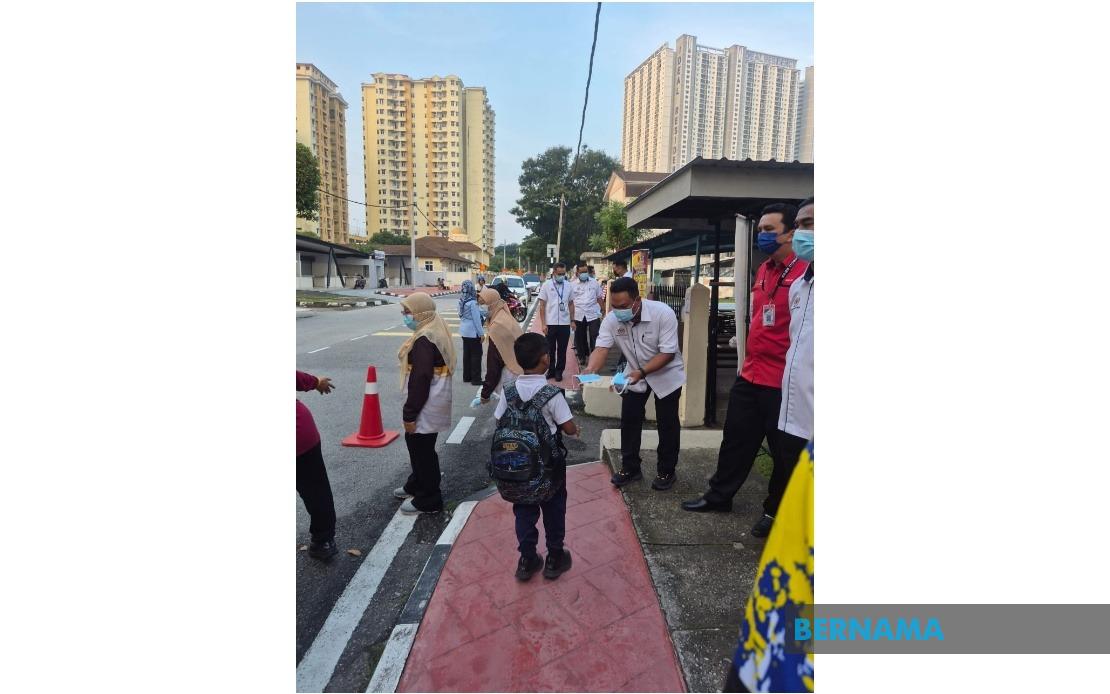
Penang's Education Department has confirmed it will transition all schools to home-based teaching and learning (PdPR) if the Air Pollutant Index climbs to 200 due to haze, signalling a coordinated approach to safeguarding student health during Southeast Asia's seasonal air quality crises. The decision reflects mounting concerns over transboundary haze, a recurring challenge that affects millions across the region, and demonstrates how Malaysian authorities are tightening protocols to minimize disruption while prioritizing wellbeing.
Director Mohamad Dziauddin Mat Saad outlined that the threshold-based response aligns with directives from the Ministry of Education, developed collaboratively with the Ministry of Health and the National Disaster Management Agency. This cross-agency coordination underscores Malaysia's institutional learning from previous haze episodes, when reactive decisions often created confusion among parents and educators. By establishing clear numerical benchmarks, the framework removes ambiguity and allows schools to pivot swiftly without last-minute scrambling that characterised earlier responses.
The department's monitoring strategy relies on four API tracking stations strategically positioned across Penang's geography: Minden, Balik Pulau, Seberang Jaya and Perai. By assessing readings at either 6 pm or 8 pm each evening, officials gain sufficient lead time to notify the district education offices, which then cascade information to individual schools. This sequential communication approach, while appearing bureaucratic, ensures standardized decision-making and prevents individual schools from acting independently, which could fracture the school system and create legal ambiguities.
Recognizing that preparation trumps crisis management, the Education Department established a dedicated 'war room' as early as August 13 to maintain constant surveillance of atmospheric conditions. This proactive infrastructure development contrasts sharply with past responses that often felt improvised. The war room's existence signals institutional readiness and provides a coordinated nerve centre from which real-time data can inform decisions affecting hundreds of thousands of students, teachers and parents across Penang.
Modamad Dziauddin's reassurance to parents that student safety remains paramount reflects growing public anxiety about long-term health impacts of repeated haze exposure. Southeast Asian students, particularly those in affected regions, face cumulative respiratory risks from seasonal air quality degradation, and medical evidence increasingly links childhood exposure to pollutants with reduced lung function. By flagging respiratory-vulnerable students early and recommending precautions, the department acknowledges this medical reality rather than treating haze as merely an inconvenience.
Beyond classroom management, the haze contingency extends to major national events. The Malaysia Schools Sports Council Football Championship and the 15th Malaysian Scout Jamboree, both scheduled for late August, face potential disruption if air quality deteriorates sharply. Officials are contemplating tactical adjustments, such as scheduling football matches during morning hours when API readings typically remain lower, rather than cancelling events altogether. This demonstrates pragmatic problem-solving: recognizing that major sporting and cultural events carry symbolic importance for national youth development, authorities seek flexibility rather than binary yes-or-no decisions.
The Malaysian Scout Jamboree carries particular significance as Prime Minister Datuk Seri Anwar Ibrahim is slated to officiate proceedings on August 29. With more than 5,000 domestic scouts and over 450 international participants from eleven countries—including South Korea, Indonesia, Singapore and Sri Lanka—the gathering carries diplomatic weight and represents Malaysia's regional leadership in youth development. A haze-induced cancellation would damage Malaysia's image and disappoint international delegations, making contingency planning essential to both participant safety and national interests.
The national scouting organization has independently established its own operations room to monitor haze impacts throughout the Jamboree, adding a second layer of preparedness beyond the Education Department's oversight. This institutional redundancy, while appearing inefficient, actually strengthens resilience: multiple organizations tracking conditions reduces the risk that critical information slips through bureaucratic cracks or that a single authority's judgment error cascades into widespread harm.
For Malaysian parents and educators, this framework represents incremental maturation of crisis response protocols. Unlike earlier haze episodes when schools closed suddenly, leaving families scrambling for childcare, current arrangements provide advance notice and structured alternatives. The PdPR infrastructure—now routine post-pandemic—offers schools a proven remote-teaching mechanism rather than requiring improvisation. Digital learning platforms that were hastily deployed during COVID-19 lockdowns now serve as permanent institutional capacity.
The haze issue also illuminates regional interdependencies that individual nations cannot resolve unilaterally. Penang's air quality depends partly on atmospheric conditions originating from Indonesian Sumatra, where agricultural burning drives seasonal pollution spikes. Malaysian contingency planning therefore operates within constraints beyond its direct control. This reality underscores why regional cooperation—through ASEAN frameworks and bilateral pressure on transboundary pollution sources—matters as much as domestic preparedness.
For students preparing for examinations or competitive academic calendars, uncertainty about school closures creates additional stress. The clear API threshold of 200 provides predictability, allowing families to plan study schedules and revision timelines with greater confidence. This transparency, though procedurally straightforward, addresses an often-overlooked psychological dimension of crisis management: uncertainty about institutional responses generates anxiety independent of the actual hazard.
Looking ahead, Penang's approach may serve as a template for other Malaysian states facing similar challenges. By documenting decision criteria, establishing dedicated monitoring infrastructure, and building contingency protocols into institutional practice rather than treating them as emergency improvisation, the state demonstrates that haze management can transition from reactive crisis response to predictable, transparent governance. As climate change intensifies seasonal weather volatility across Southeast Asia, such institutional maturity becomes increasingly valuable.

