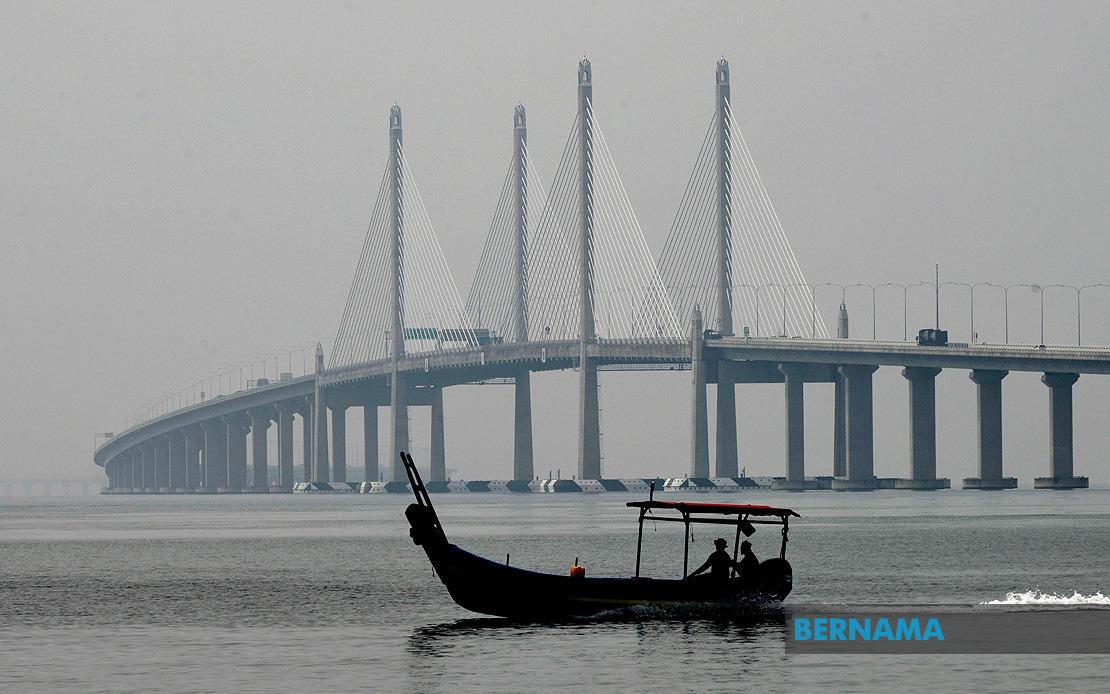
Penang's state government will convene discussions with stakeholders next week to determine how best to implement fishing restrictions under the Penang Bridge and the Sultan Abdul Halim Mu'adzam Shah Bridge, seeking an approach that acknowledges both security imperatives and the economic consequences for local communities. Datuk Rashidi Zinol, chairman of the Penang Rural Development, Agro-technology and Food Security and Entrepreneurship Committee, indicated that the deliberations would carefully weigh safety considerations, regulatory obligations, and the welfare of those whose livelihoods depend on maritime activities in the affected waters.
The impetus for reviewing the current restrictions emerged from representations made by operators of both fishing vessels and tourist boats at a recent meeting with Rashidi. These maritime sector participants articulated substantial concerns about how the enforcement has altered their operational environment and financial viability. According to their accounts, the prohibition on fishing under both bridges has created a direct contraction in fishing-related demand and, by extension, reduced bookings for recreational boat services that typically operate in proximity to these installations.
The two bridges hold critical strategic significance within Malaysia's infrastructure landscape. Both the Penang Bridge and the Sultan Abdul Halim Mu'adzam Shah Bridge, commonly referred to as the Second Penang Bridge, have been formally designated as restricted areas and prohibited places under the Protected Areas and Protected Places Act 1959 (Act 298). This legal classification reflects their status as National Key Points, a designation reserved for installations of vital importance to national security and economic continuity. Such formal recognition underscores why authorities have imposed stringent controls over activities within the vicinity of these structures.
The ramifications of the fishing ban extend considerably beyond the immediate operators of boats and vessels. Rashidi emphasised that the economic consequences ripple through an intricate network of related enterprises and service providers throughout the broader supply chain. Businesses supplying fishing equipment and tackle have witnessed reduced orders, while ice vendors, food processors, and numerous small-scale commercial operations dependent on the fishing industry have experienced corresponding declines in revenue. This multiplier effect demonstrates how sectoral restrictions in port towns can create cascading economic pressures across multiple business categories.
The tension between regulatory enforcement and economic welfare reflects a broader governance challenge facing port cities throughout Southeast Asia. Penang, historically one of the region's most important maritime trading hubs, continues to serve as a crucial junction for commerce and fishing activities. The necessity of protecting critical infrastructure from potential security threats must be weighed against the livelihoods of communities whose survival depends on unrestricted access to fishing grounds. This balancing act becomes increasingly complex in developing economies where alternative employment opportunities may be limited and where informal maritime sectors employ substantial numbers of workers.
Rashidi's commitment to seeking a balanced approach suggests that Penang authorities recognise the legitimacy of concerns raised by the maritime community whilst remaining cognisant of national security imperatives. The forthcoming consultations will likely involve representatives from multiple government agencies, including those responsible for security and infrastructure protection, alongside representatives of the boat operators and fishing communities. Such multi-stakeholder discussions are essential for developing solutions that do not simply impose costs on vulnerable populations but rather seek genuine accommodation where possible.
The regulatory framework governing these restricted areas has existed since 1959, long predating contemporary concerns about maritime security and port safety. However, enforcement intensity may have increased in response to evolving security threats or operational requirements. Any revision to current practices would need to maintain the protective objectives that prompted the designation whilst exploring whether modifications to operational procedures might mitigate economic harm. This could potentially include designated fishing hours, designated zones within the broader restricted area, or enhanced screening and registration processes that preserve security while permitting limited economic activity.
For Malaysian policymakers, the Penang situation exemplifies the practical difficulties of implementing security measures in economically active regions. The state government's willingness to engage in substantive discussion rather than simply maintaining the status quo suggests recognition that sustainable policy requires buy-in from affected communities. Tourism and fishing represent significant economic sectors for Penang, and the loss of income from both leisure activities and commercial operations carries real social consequences for thousands of families dependent on maritime employment.
The outcome of next week's consultations will likely establish precedent for how other maritime restricted areas across Malaysia address similar tensions between security protocols and economic activities. Neighbouring Kedah and other port states that host critical infrastructure face comparable challenges, and any innovative solutions developed in Penang may inform policy approaches elsewhere in the region. The case also underscores broader questions about how Southeast Asian economies can maintain competitive maritime sectors whilst simultaneously enhancing security protections for critical national infrastructure in an era of heightened transnational security concerns.

