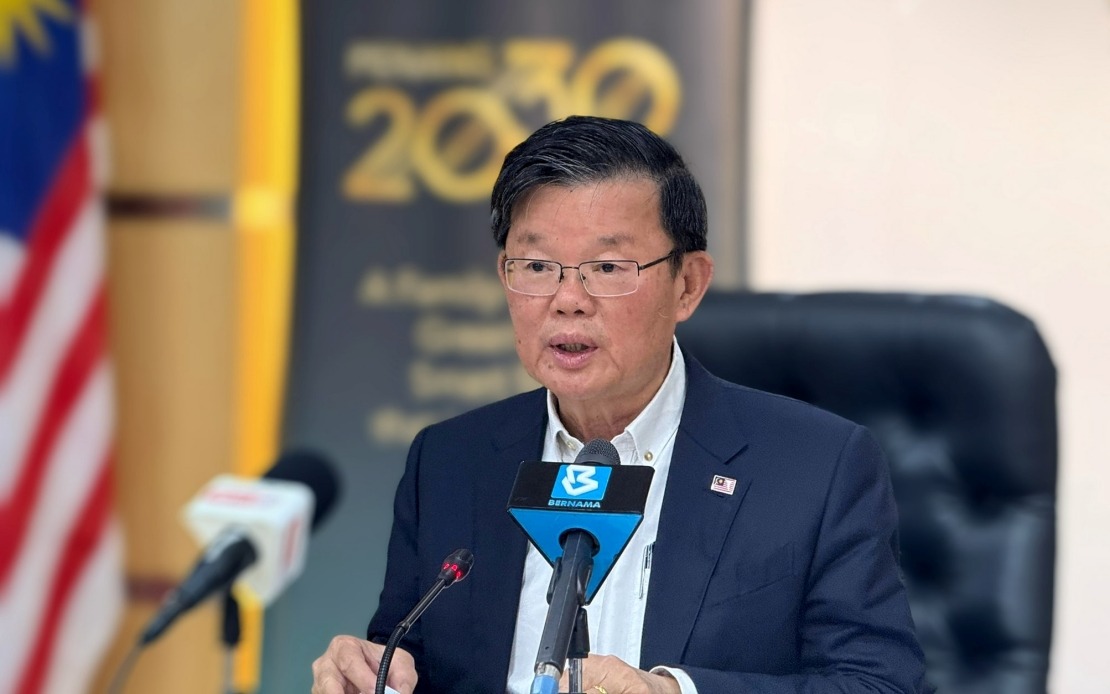
The Penang government has taken a significant step toward realising its vision of establishing a regional financial hub by hiring global advisory firm PricewaterhouseCoopers Advisory Services Sdn Bhd (PwC) to develop the foundational strategy for the Penang International Financial Centre (PIFC). Chief Minister Chow Kon Yeow announced the appointment, which was formalised through a letter issued on June 15 and approved by the PIFC Special Task Force Committee. The consultancy has been given a 20-week mandate to complete three critical documents that will guide the initiative forward.
The scope of PwC's engagement encompasses preparing a comprehensive White Paper that articulates the strategic rationale underpinning the PIFC concept, alongside detailed specifications of the regulatory framework and long-term direction for the endeavour. Complementing this foundational document, the firm will also produce a Strategic Blueprint and Action Plan that addresses governance structures, physical and digital infrastructure requirements, fiscal incentives for market participants, and a phased rollout strategy for bringing the centre to operational maturity. This multi-layered approach reflects the complexity of establishing a modern financial centre that must balance regulatory rigour with competitive market conditions.
According to Chow, PwC submitted an interim progress report to the committee during its July 17 meeting, revealing that preliminary analysis identifies considerable potential for the PIFC to capitalise on Penang's existing competitive advantages. The state's deeply entrenched position within the global electrical and electronics supply chain represents a natural platform upon which to build financial services and innovation-related offerings. Rather than attempting to create a financial centre in isolation, the strategy envisions leveraging decades of manufacturing expertise and global business relationships that multinational corporations have established in Penang.
The proposed centre is positioned as a catalyst for economic diversification rather than a departure from Penang's manufacturing heritage. By creating a dedicated ecosystem for financial services, fintech innovation, and technology-enabled commerce, the state aims to unlock additional value from its existing industrial base. Companies embedded within Penang's electronics and supply chain networks would gain proximity to specialised financing, venture capital, and business advisory services tailored to their operational needs. This integrated approach potentially makes the PIFC more commercially viable than standalone financial centres that lack underlying industrial anchors.
Beyond the immediate confines of Penang's economy, the initiative carries implications for Malaysia's broader development agenda and regional competitiveness within Southeast Asia. The country faces intensifying competition from established financial centres in Singapore, Hong Kong, and Shanghai, while emerging competitors in Bangkok, Jakarta, and Vietnam are rapidly expanding their financial services capabilities. A successful PIFC could position Penang as Malaysia's gateway for technology-enabled finance and supply chain innovation, complementing rather than competing with the Kuala Lumpur financial ecosystem. This geographic and functional specialisation reflects modern thinking about financial centre development, where multiple hubs serve distinct market segments rather than attempting to replicate a single dominant model.
PwC's engagement extends beyond document preparation to encompass comprehensive stakeholder consultation. The firm has been tasked with conducting extensive outreach to strategic partners, both domestic and international industry practitioners, regulatory authorities at federal and state levels, academic institutions, and other relevant constituencies. This engagement process serves multiple purposes: it validates preliminary findings against real-world experience, identifies potential obstacles early in the planning phase, builds buy-in from organisations whose cooperation will be essential for implementation, and ensures the final framework aligns with Malaysia's broader national strategies for technology ecosystem development. Such consultation is particularly important given that financial services are heavily regulated and require coordination among multiple government agencies.
The timeline for delivering these strategic documents carries both symbolic and practical weight. Preliminary completion is targeted for end-July or early August, underscoring the government's urgency in moving from concept to implementation phase. This accelerated schedule reflects the opportunity cost of delay—every quarter that passes without establishing the PIFC allows competing regional centres to further entrench their market positions and attract talent and capital. For Malaysia, where policy implementation often extends across multiple election cycles and undergoes substantial revision through successive administrations, maintaining momentum on a major development initiative requires early conversion of strategic vision into concrete operational plans.
Chief Minister Chow expressed confidence that the PIFC initiative would catalyse development of a technology-centred financial ecosystem, thereby elevating competitiveness across Malaysia's northern region. This framing acknowledges that the PIFC's success depends not merely on regulatory arbitrage or tax incentives but on creating genuine value for market participants. By positioning Penang as a centre for financial innovation tied to real economic activity, the state offers multinational corporations, regional fintech entrepreneurs, and venture investors access to specialised expertise, streamlined regulatory pathways, and a critical mass of peers and complementary services. Such ecosystem dynamics have proven instrumental in the rise of financial centres from Dubai to Singapore to Shenzhen.
The state government's appreciation for ongoing cooperation from task force members and strategic partners reflects an implicit acknowledgment that complex development initiatives require alignment among multiple institutional actors. The PIFC Special Task Force Committee structure itself suggests coordination between government departments, industry bodies, and possibly federal authorities. Successfully translating the PwC-developed strategy into operational reality will require sustained commitment from these entities through budgeting decisions, regulatory amendments, physical infrastructure investment, and international marketing campaigns. Institutional commitment at this level cannot be taken for granted, particularly if economic conditions deteriorate or political priorities shift.
As Malaysia navigates post-pandemic economic recovery and intensifying regional competition for financial services talent and capital, initiatives like the PIFC represent strategic bets on future growth sectors. The electronics and semiconductor supply chains that anchored Penang's prosperity over recent decades remain important but face structural challenges from automation, geopolitical fragmentation, and shifting labour cost dynamics. Diversifying into technology-enabled financial services offers a pathway for Penang to maintain economic relevance while accommodating workforce transitions and attracting higher-value-added employment. Whether the PIFC ultimately achieves its ambitions will depend not only on the quality of PwC's strategic recommendations but on sustained political will, adequate resource allocation, and the state's ability to execute a complex multi-year implementation agenda.

