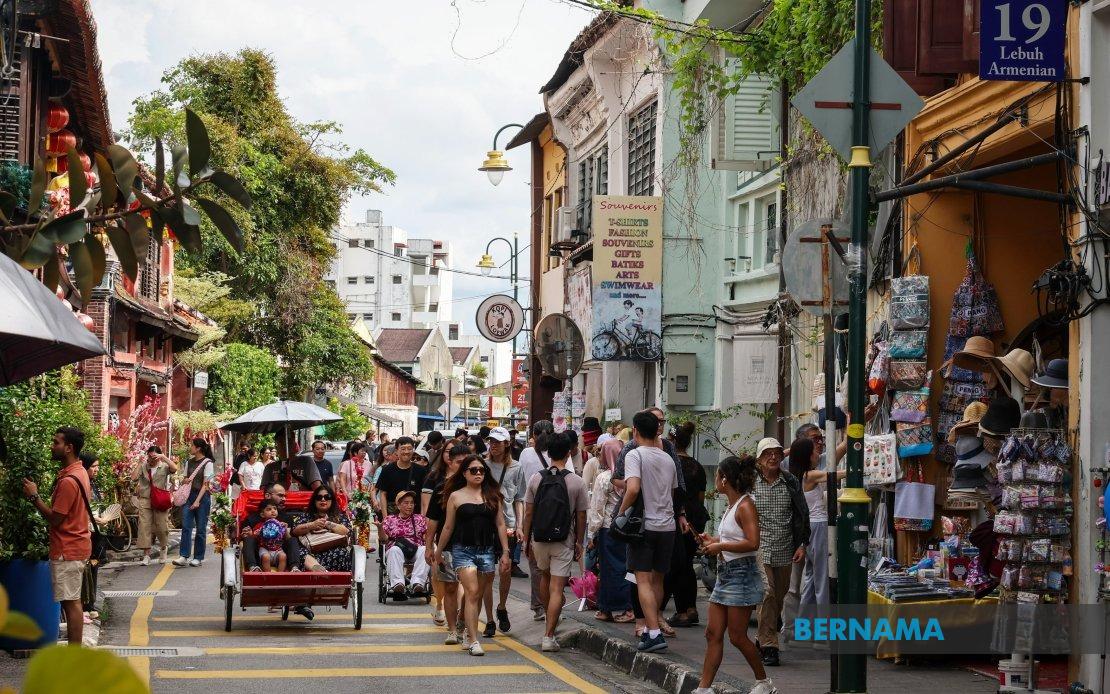
Penang's state government has committed to launching a comprehensive structural safety assessment of heritage buildings across the state following an incident on Armenian Street where falling debris from a deteriorating shophouse caused injuries to two visiting tourists. The collapse, which resulted in damage from a wooden beam and concrete fragments, has prompted authorities to re-examine how the state balances heritage preservation with public safety obligations.
State Local Government and Town and Country Planning Committee chairman Jason H'ng Mooi Lye announced that Penang will collaborate with the National Heritage Department to appoint an independent structural engineer who will systematically evaluate buildings of heritage significance. The findings from this comprehensive study will identify structures at immediate risk and those requiring urgent remedial intervention. This collaborative approach underscores recognition that heritage conservation is no longer a purely aesthetic concern but a matter of public welfare that demands technical expertise and coordinated planning.
The study's conclusions are expected to inform regulatory action by the Penang Island City Council, which may subsequently issue formal notices to building owners requiring them to implement necessary restoration work. This enforcement mechanism represents an important step toward making heritage preservation a shared responsibility between government authorities and private property holders. The framework acknowledges that while many owners understand their custodial role, others may lack financial resources or technical knowledge to address structural deterioration independently.
The incident itself involved two Sri Lankan tourists, Mohamad Ammtar, 66, and Fatimah, 55, who were struck by falling structural elements. Preliminary investigations determined that termite damage was the underlying cause of the collapse, a common problem in Malaysia's humid tropical climate where wooden components in older buildings face persistent biological degradation. This finding carries broader significance for other shophouses and heritage properties across George Town's historic districts, many of which share similar construction methods and materials vulnerable to similar pest damage.
Initial medical response to the incident was swift, with both victims receiving treatment at the scene before transfer to Penang Hospital. The male victim was discharged after receiving appropriate care, while Fatimah underwent further assessment including a computerised tomography scan to evaluate the extent of her injuries. The relatively positive medical outcome, however, should not obscure the potential for far more serious consequences had the debris struck individuals more forcefully or had falling material been heavier.
H'ng's public statements have emphasised a critical principle that must guide future conservation efforts: heritage preservation cannot be permitted to compromise the safety of residents and visitors who interact with these structures daily. This represents a necessary recalibration of conservation philosophy that traditionally prioritised historical authenticity above all other considerations. The challenge facing Penang is ensuring that restored buildings maintain their character and historical integrity while incorporating safety measures and materials appropriate for contemporary use.
The authority has acknowledged that conservation protocols often mandate retention of original construction materials and methods to preserve authenticity. However, H'ng has signalled willingness to consider more pragmatic approaches where original materials such as wood have demonstrably deteriorated beyond safe functionality. This flexibility opens possibilities for hybrid restoration approaches that employ durable, structurally sound materials while maintaining visual and architectural fidelity to original designs. Such solutions require sophisticated conservation planning and specialist expertise to implement successfully.
State Tourism and Creative Economy Committee chairman Wong Hon Wai highlighted the incident's implications for George Town's status as a UNESCO World Heritage Site. The authority has directed George Town World Heritage Incorporated and the Penang Island City Council to issue formal advisories to building owners across the state, urging awareness of structural safety obligations. These communications serve both to inform property holders of expectations and to signal government commitment to addressing the problem systematically rather than reactively.
The Armenian Street incident arrives at a critical juncture for heritage conservation in Malaysia. George Town's historic district attracts significant tourist interest and generates economic value through heritage tourism, yet this same success places ongoing pressure on ageing structures that accommodate visitors, businesses, and residents. The collapse underscores how deferred maintenance on heritage buildings can accumulate into serious public safety hazards that threaten the very attractions and livelihoods that heritage preservation was intended to protect.
For Malaysian heritage towns beyond Penang, this incident and the government's response offer valuable lessons about proactive infrastructure management. Many historic districts across Malaysia contain similar building stocks with comparable vulnerability to termite damage, structural decay, and material degradation. A systematic approach to assessing and remediating heritage buildings before incidents occur represents a more effective long-term strategy than responding to emergencies after injuries happen.
The upcoming structural assessment will require coordination between engineering expertise, heritage conservation specialists, and local authorities. This multidisciplinary approach acknowledges that heritage building safety cannot be addressed through narrow technical analysis alone but requires integration with conservation principles, economic feasibility studies, and community engagement. Property owners will need support mechanisms including guidance on appropriate restoration practices and potentially financial assistance programs to facilitate compliance with safety standards.
Penang's commitment to this comprehensive audit sends an important signal about the evolving understanding of heritage stewardship in Malaysia. Effective preservation of historic buildings depends not merely on preventing demolition or maintaining facades but on ensuring these structures function safely for contemporary users. By establishing systematic safety assessment protocols and enforcement mechanisms, Penang is establishing a model that other heritage-rich states and cities across Southeast Asia may appropriately adapt to their own circumstances.

