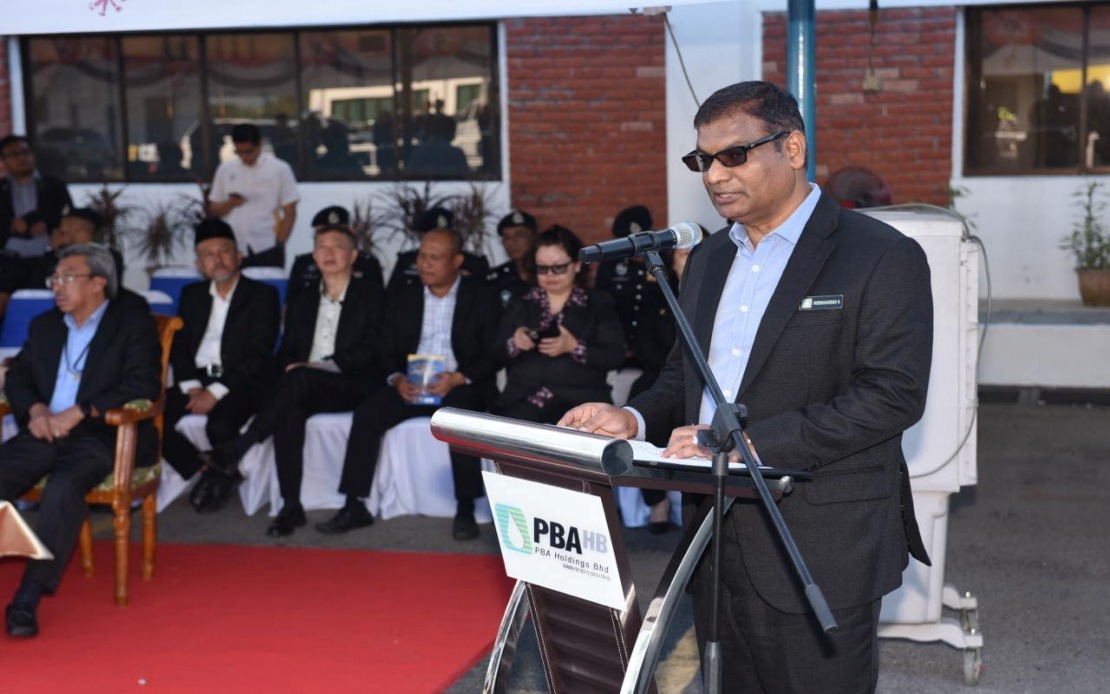
Penang Water Supply Corporation (PBAPP) is moving ahead with an ambitious infrastructure project to address mounting water pressures in Seberang Perai Selatan, announcing plans to bring an 80 million litres-per-day (MLD) water treatment facility online by 2027. The initiative forms part of a multi-layered strategy to secure the region's water supplies amid rapid economic development and demographic expansion, with PBAPP chief executive officer Datuk K. Pathmanathan emphasizing that the state's growth trajectory cannot be constrained by resource scarcity.
The new treatment plant will operate under a Build-Operate-Transfer (BOT) framework, drawing raw water from Sungai Kerian to serve the southern portion of Seberang Perai. This procurement model allows for private sector involvement in construction and initial operation while ultimately transferring the facility to public control, a structure increasingly favoured by Malaysian water authorities seeking to distribute capital costs and operational risks. While further specifics regarding the project's commercial arrangements and technology specifications remain pending official disclosure, the BOT approach has proven effective in similar water infrastructure projects across Southeast Asia.
Demand dynamics in Seberang Perai Selatan paint a picture of a district under significant infrastructural stress. Current figures show 87,611 registered water users consuming an average of 116.8 MLD annually in 2025, accounting for approximately 13.5 percent of Penang's total water usage. Yet these baseline numbers mask the intensity of future demand trajectories. The district is undergoing rapid industrialization that will substantially amplify consumption requirements throughout the remainder of this decade, necessitating proactive supply expansion well ahead of actual shortages.
The catalyst for this urgency lies partly in the RM2.2 billion Batu Kawan Industrial Park 3 (BKIP3) development, which encompasses 165 hectares and is projected to generate water demand of approximately 220 MLD by the 2030s—nearly double current regional consumption. Such industrial facilities, particularly those involved in manufacturing and processing, typically exhibit far higher per-unit water consumption than residential areas, rendering industrial park development a critical variable in water planning calculations. Beyond BKIP3, additional developments including SkyWorld Cassia and the proposed Siliconware Precision semiconductor manufacturing plant will compound demand pressures during the same period, creating a confluence of consumption needs that existing infrastructure cannot adequately serve.
PBAAPP has already begun bridging the gap through intermediate measures. Since March 2024, the corporation has operated a compact treatment facility in Seberang Perai Selatan, constructed at a cost of RM8.1 million and capable of producing 6.4 MLD of treated water from Sungai Kerian sources. This smaller installation serves approximately 4,000 users and was explicitly conceived as a temporary solution to accommodate rising demand over a three-year window, effectively buying time while larger infrastructure projects progress through planning, financing, and construction phases. The facility demonstrates PBAPP's commitment to incremental supply augmentation even as it pursues longer-term capacity expansion.
The 80 MLD plant planned for 2027 represents the first major milestone in a staged expansion strategy. Penang's Water Contingency Plan 2030 incorporates an additional facility at Sungai Kerian with 114 MLD capacity slated for operational launch by 2030, which will substantially reinforce supply stability across Seberang Perai Selatan. This cascading approach to infrastructure development allows authorities to align capacity additions with gradually materializing demand while preserving fiscal flexibility and reducing the risk of over-investment in underutilized facilities.
Yet the most transformative initiative remains the Perak-Penang Water Project, which is expected to commence delivery of between 300 and 500 MLD of treated water from Perak to Seberang Perai Selatan by 2031, simultaneously supporting Seberang Perai Tengah. This inter-state water transfer scheme represents a substantial infrastructure undertaking that will fundamentally reshape water security across northern Selangor and southern Perak, leveraging raw water resources from Perak's river systems to service the more densely populated and economically dynamic regions of Penang. For Malaysian water planners, such inter-regional collaboration provides important lessons regarding the necessity of coordinated resource management across state boundaries, particularly as urbanization concentrates in specific geographic corridors.
Chief Minister Chow Kon Yeow has positioned water infrastructure expansion as essential to Penang's broader socio-economic development agenda, with PBAPP framing current investments as building blocks for a sustainable and resilient supply network capable of supporting the state's anticipated trajectory through the 2030s. This integration of water security with development planning reflects international best practice, where infrastructure investments are explicitly tied to economic objectives and demographic forecasts rather than treated as reactive crisis management.
The strategic sequencing of these projects—the 80 MLD facility in 2027, the 114 MLD Sungai Kerian plant by 2030, and the Perak-Penang Water Project by 2031—demonstrates sophisticated long-term planning by PBAPP. Each addition aligns with forecast demand escalation, ensuring that supply grows in tandem with consumption rather than lagging behind or creating premature overcapacity. For Malaysia's broader water sector, Penang's approach offers a template for structured infrastructure development that accommodates industrial growth, population expansion, and developmental ambitions without perpetually operating in crisis mode.
The reliance on Sungai Kerian as a primary raw water source across multiple treatment facilities underscores the importance of watershed management and environmental protection in water security frameworks. Sustained productivity from this river system depends on adequate catchment area management, prevention of upstream pollution, and potentially seasonal flow regulation through appropriate storage infrastructure. As Penang experiences intensifying resource competition, protecting source water quality and quantity becomes increasingly critical to the viability of all downstream treatment and distribution systems.
For businesses and investors contemplating operations in Seberang Perai Selatan, particularly those with significant water requirements, PBAPP's explicit commitment to expanding supply capacity through 2031 provides reasonable confidence regarding long-term resource availability. However, the staggered introduction of new capacity underscores the importance of water efficiency measures and demand management strategies at the facility level, as the period between now and 2027 will remain characterized by relatively constrained supplies relative to anticipated industrial growth.
Penang's experience with water infrastructure expansion carries implications beyond the state's borders. As other Malaysian states grapple with similar pressures from industrialization, urbanization, and climate variability, Penang's multi-phase approach to capacity development and inter-state resource sharing offers practical insights. The recognition that single large projects cannot address mounting demand, and that distributed, sequentially deployed facilities provide greater operational flexibility and reduced financial risk, aligns with contemporary infrastructure development philosophy.
Looking ahead, the success of these initiatives will depend on timely project completion, effective demand management across consumer categories, and sustained investment in water quality assurance and distribution network efficiency. PBAPP's current trajectory suggests that Penang's water sector is approaching a more strategically managed posture, where expansion is data-driven, phased appropriately with anticipated consumption, and integrated with broader developmental objectives. For a state increasingly positioned as a major industrial and technological hub within Southeast Asia, such disciplined infrastructure planning is indispensable.

