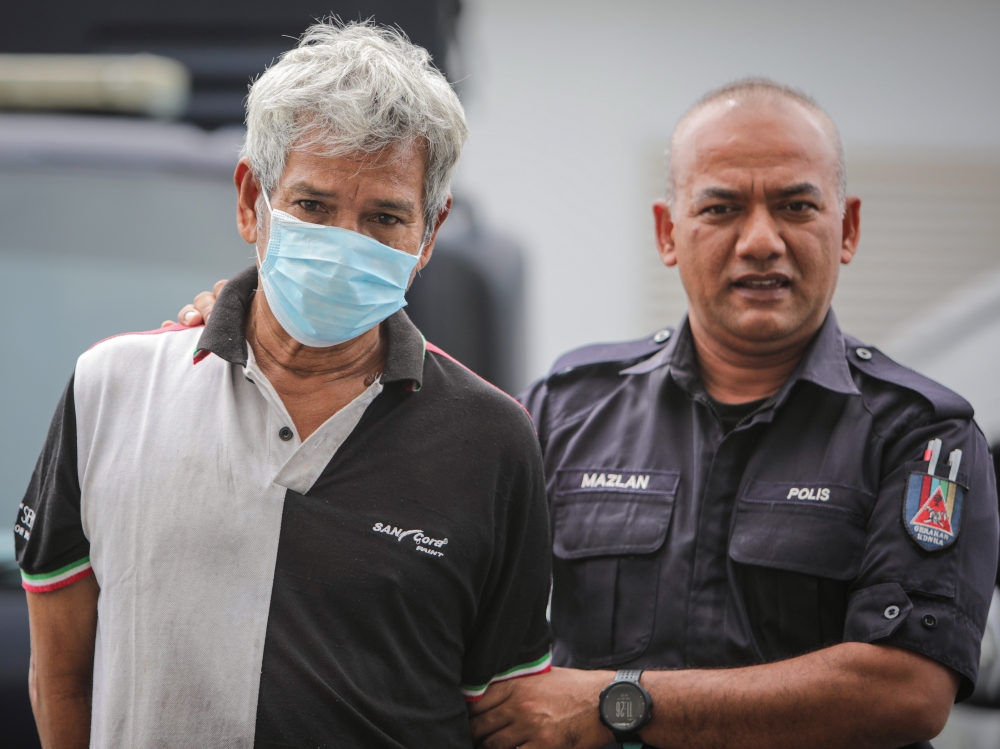
A pensioner was brought before Kangar Magistrate's Court to face charges related to one of Malaysia's most significant fentanyl seizures in recent years. The 65-year-old man stands accused of trafficking 39.9 litres of the potent synthetic opioid, an enormous quantity that underscores the escalating scope of drug trafficking operations across Southeast Asia and the critical vulnerabilities that persist despite intensified enforcement efforts.
The case represents a watershed moment in Malaysia's ongoing battle against synthetic drug proliferation. Fentanyl, a pharmaceutical-grade opioid approximately 50 to 100 times more potent than morphine, has emerged as a catastrophic public health threat across developed and developing nations alike. The sheer volume seized—nearly 40 litres—suggests a supply chain organised at a substantially higher level than typical street-level distribution, raising serious questions about how such quantities could penetrate Malaysian borders and reach distribution networks.
The defendant's age itself warrants scrutiny. At 65 years old, he represents an unusual demographic profile for major drug trafficking charges, yet such cases are not unprecedented in Southeast Asia. This pattern suggests sophisticated criminal enterprises sometimes employ elderly individuals as primary defendants, potentially to exploit judicial leniency considerations or to insulate younger operatives managing core supply operations from direct legal exposure. Law enforcement agencies must therefore interrogate whether this arrest represents a significant disruption to trafficking infrastructure or merely the apprehension of a peripheral figure within a larger distribution network.
Perlis, situated at Malaysia's northern frontier with Thailand, occupies a critical geographic position in regional drug trafficking corridors. The state's maritime access through the Strait of Malacca and its land borders create multiple vectors for contraband movement. Historically, this region has served as a transit zone for narcotics flowing from the Golden Triangle—the opium-producing region encompassing areas of Myanmar, Laos, and Thailand—into Malaysia and onwards to international markets. The seizure in Kangar therefore reflects broader patterns of pharmaceutical and chemical smuggling that exploit Perlis's geographic vulnerability.
The potency and accessibility of fentanyl distinguishes this crisis from traditional heroin trafficking. Fentanyl requires only microscopic quantities to produce lethal doses, making it extraordinarily dangerous for street users who cannot accurately gauge consumption levels. In Malaysia, where methamphetamine and heroin have historically dominated drug seizures, the emergence of fentanyl trafficking represents a qualitative shift towards more dangerous, harder-to-intercept synthetic alternatives. This transformation reflects global supply chain reorganisation among traffickers responding to increased regulation of pharmaceutical precursors and stricter enforcement in traditional drug-producing regions.
The liquid form of the seized fentanyl also merits consideration. Liquid fentanyl can be more readily concealed than solid or powder forms, more easily diluted with other substances for distribution, and sometimes more efficiently transported across borders concealed within conventional pharmaceutical or industrial chemical shipments. This particular seizure therefore reveals how traffickers continuously adapt their methods to exploit regulatory and enforcement gaps. Liquid fentanyl also poses distinctive hazards during handling and seizure operations, demanding specialised training and equipment among law enforcement responders.
Malaysia's Dangerous Drugs Act establishes mandatory minimum sentences for trafficking offences involving controlled substances, with penalties escalating substantially based on quantity thresholds. The 39.9-litre seizure places this case well into the highest severity category, potentially exposing the defendant to substantial prison sentences. However, sentencing outcomes will depend upon judicial interpretation of aggravating and mitigating factors, including the defendant's role within the alleged trafficking network, his prior criminal history if any, and whether cooperation with authorities influences the court's assessment.
The arrested individual's cooperation status remains unclear from available information, yet represents a critical variable for understanding the broader significance of this case. If he provides substantive intelligence regarding supply sources, distribution networks, financial arrangements, or co-conspirators, the case could generate cascading investigations that dismantle larger trafficking infrastructure. Conversely, if he maintains silence or provides limited cooperation, the seizure may represent a significant law enforcement success with limited investigative follow-on consequences.
This seizure illuminates persistent challenges within Malaysia's counter-narcotics apparatus. Despite substantial enforcement investments and increasingly sophisticated detection technologies, traffickers continue introducing unprecedented quantities of synthetic opioids into the Malaysian market. The case suggests that border security screening, port authority vigilance, and customs procedures remain vulnerable to determined smuggling operations. It also highlights an uncomfortable reality: that organised trafficking networks possess superior resources, intelligence, and adaptability compared to the fragmented institutional responses attempting to intercept them.
Regionally, the fentanyl trafficking phenomenon poses escalating dangers across Southeast Asia. The Association of Southeast Asian Nations (ASEAN) countries lack harmonised regulatory frameworks and enforcement protocols for synthetic opioid interdiction, creating jurisdictional gaps that sophisticated traffickers routinely exploit. Intelligence sharing among national agencies remains inconsistent, and extradition arrangements between nations facilitate criminal mobility. Thailand's porous borders, Laos's limited enforcement capacity, and Cambodia's institutional challenges collectively create a permissive environment for pharmaceutical smuggling operations that ultimately supply Southeast Asian street markets.
The implications for Malaysia extend beyond immediate public safety concerns into economic and political dimensions. The country's international standing as a serious enforcer against drug trafficking influences foreign investment decisions, bilateral relations with narcotics-focused allies like the United States, and Malaysia's credibility within international drug control frameworks. High-profile trafficking cases therefore become contested terrain where law enforcement agencies, judicial institutions, and political leadership negotiate Malaysia's identity within global counter-narcotics governance structures.
Moving forward, this case should catalyse comprehensive policy reassessment regarding synthetic opioid regulation, border security modernisation, and regional intelligence cooperation. Malaysia cannot effectively address fentanyl trafficking through domestic enforcement alone. Meaningful progress requires coordinated action with Thailand, Singapore, Indonesia, and other regional partners to establish unified protocols for precursor chemical regulation, shared intelligence networks, and harmonised criminal penalties. Without such structural reforms, seizures of this magnitude will likely become increasingly routine rather than exceptional.

