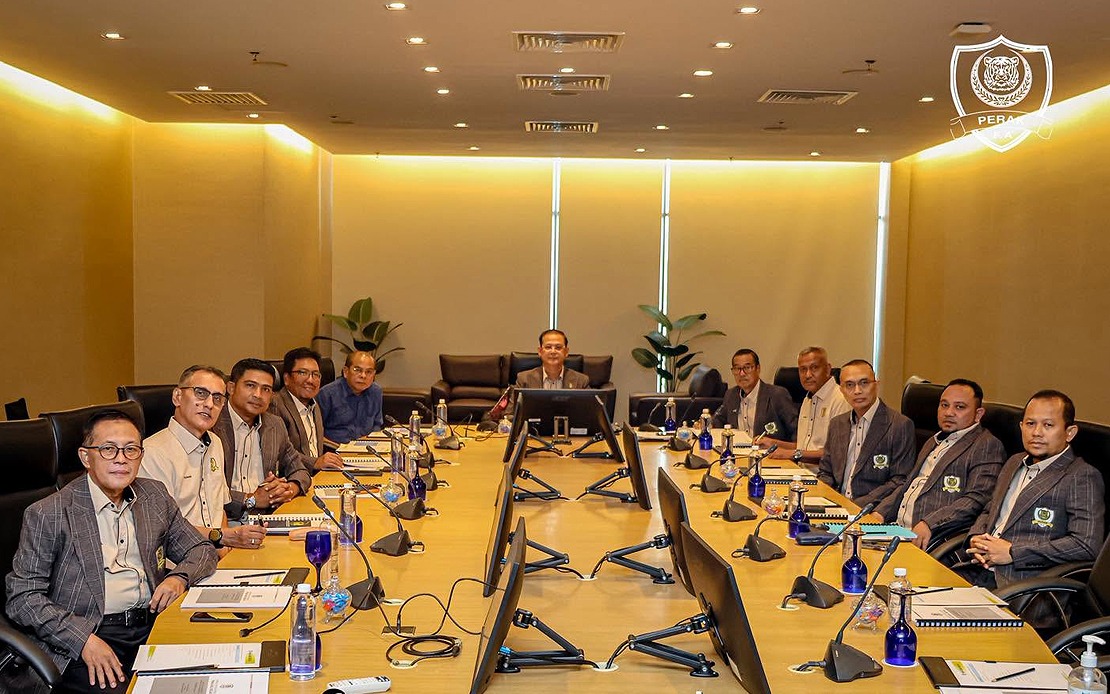
The Perak Football Association will begin recruiting a new head coach to lead the state's football team through the 2026-2027 Liga A1 Semi-Pro campaign, marking a significant shift in the association's technical direction following updated regulatory mandates from the national governing body. The decision, announced in Ipoh on June 28, reflects stricter licensing standards introduced by the Amateur Football League that require every competing team to field a head coach holding an AFC Pro Diploma Coaching License, commonly referred to as the Pro-A qualification. This alignment with international coaching standards represents an elevation in the technical requirements for semi-professional football administration across Malaysia's competitive structure.
PAFA's recruitment strategy prioritizes candidates who exceed the minimum licensing threshold by demonstrating substantial experience in youth player development, contemporary coaching methodologies, and a documented history of success at state, national, and international competition levels. The association emphasized that the upcoming appointment will be carefully considered against Perak's broader football development roadmap, which integrates with the Perak Sejahtera 2030 Plan. This connection to state-level development objectives indicates that the football association views technical coaching excellence as integral to wider regional governance priorities, suggesting football development has become embedded within the state's long-term planning frameworks.
The transition marks a departure from the previous management structure, where Syamsul Saad, a former player-turned-coach, oversaw operations during the 2025-2026 season. Under Saad's leadership, Perak achieved a fifth-place league position while simultaneously reaching the semi-finals of the MFL Challenge Cup and progressing to the Malaysia Cup quarter-finals. These accomplishments demonstrated competitive capability within the semi-professional tier, yet the association has determined that the new regulatory environment and aspiration for sustained improvement justify bringing in an externally recruited coach with enhanced credentials and broader international exposure.
Crucially, PAFA committed to retaining the existing coaching support staff rather than implementing wholesale changes to the technical team. This measured approach suggests the association recognizes the institutional knowledge and developmental relationships established within the current structure, choosing instead to create a collaborative coaching environment where the new head coach operates alongside proven assistants. This integration of fresh leadership with continuity in support functions aims to balance innovation with stability, potentially reducing disruption to player development pathways and team culture during the transition period.
Player retention will also feature prominently in the upcoming season's preparations. PAFA announced that contracted athletes from the previous campaign who successfully completed performance evaluations will receive new contracts, ensuring a degree of squad continuity while maintaining standards for selection. This policy signals confidence in the existing player pool's capabilities whilst establishing transparent performance benchmarks that all athletes must meet to remain within the professional setup.
Beyond the Liga A1 Semi-Pro framework, Perak's football program will expand horizontally to encompass participation in the Liga A2 Amateur competition and the President's Cup during the upcoming cycle. These additional competitions serve as development platforms specifically designed to provide competitive exposure for emerging talents identified through grassroots initiatives. By competing across multiple tiers simultaneously, Perak creates a coherent pathway through which young players from development academies and state-level tournaments such as SUKMA can experience competitive football at progressive levels of intensity and technical demand.
The association's comprehensive development architecture has already demonstrated tangible results, with approximately seventy players aged between eighteen and twenty-four having graduated through the integrated system encompassing SUKMA participation, Liga A1 Semi-Pro competition, and the Liga Perak Sejahtera 2030 framework. This substantial youth cohort represents the foundation upon which Perak's medium-term competitive ambitions rest, and the incoming head coach will inherit responsibility for accelerating these players' development trajectories toward national team consideration and professional club opportunities.
The strategic emphasis on youth development and grassroots football integration reflects broader trends within Southeast Asian football administration, where semi-professional leagues increasingly function as talent incubators rather than standalone competitive entities. Malaysia's Amateur Football League has positioned its affiliated teams as essential components within a pyramidal system designed to produce players capable of representing clubs and country at elite levels. Perak's explicit alignment of its Liga A1 participation with grassroots development objectives demonstrates institutional acceptance of this structural logic.
Menteri Besar Datuk Saarani Mohamad received acknowledgment from PAFA for his sustained political support of the association's football initiatives. This public recognition of governmental backing reflects the degree to which Malaysian football development has become intertwined with state administration, with regional leaders viewed as stakeholders in competitive outcomes. The elevation of football to a meaningful component within broader state planning frameworks suggests Perak's football association operates within a political and administrative context that extends beyond purely sporting considerations into regional development and international representation.
The recruitment of a Pro-A licensed head coach positions Perak to operate within FIFA and AFC-compliant technical frameworks that increasingly characterize professional and semi-professional football globally. Malaysian football's gradual adoption of international coaching standards creates opportunities for knowledge transfer and alignment with global best practices, though implementation challenges remain regarding the availability of qualified candidates within the regional coaching market. The new appointment will effectively test the depth and competitiveness of Malaysia's coaching talent pool at the semi-professional tier.

