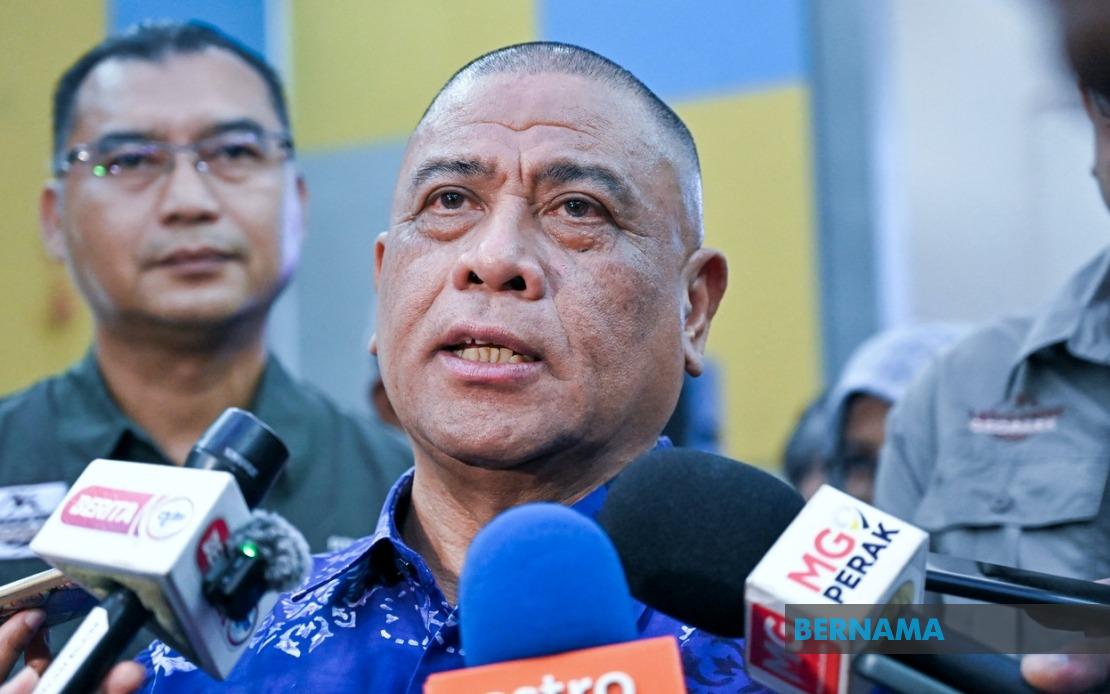
Perak continues to maintain control over the proliferation of unorthodox Islamic teachings within its borders, according to state leadership, even as purveyors of such doctrines increasingly exploit online channels and international networks to spread their message. Menteri Besar Datuk Seri Saarani Mohamad made the assertion on Tuesday, underscoring the state government's resolve to contain what religious authorities classify as teachings that diverge from accepted Islamic principles and practice.
The monitoring apparatus guarding against theological deviation in Perak operates through multiple institutional layers. Saarani chairs the State Security Committee, which oversees surveillance activities in coordination with two specialist agencies: the Perak Islamic Religious Department, commonly known as JAIPk, and the office of the Perak Mufti. This triangular arrangement ensures information flows upward to Sultan Nazrin Shah, who holds the constitutional position of Perak's religious head. The Sultan has been briefed in recent weeks by the Deputy Mufti Datuk Zamri Hashim and JAIPk Director Datuk Harith Fadzilah Abdul Halim regarding the current landscape of heterodox teachings within the state.
Sarawak's experience illustrates the complexity facing authorities across Malaysia. The challenge has fundamentally transformed in character over recent years. What once involved clandestine physical assemblies has migrated substantially toward virtual spaces where enforcement becomes considerably more difficult. Social media platforms, instant messaging applications, and encrypted communication channels now serve as primary distribution networks for ideological content that state religious authorities consider problematic. The opacity and transnational reach of these digital mechanisms complicate the traditional investigation and interdiction approaches that worked effectively against organized face-to-face groups.
The architecture of dissemination has also become more sophisticated in its disguise. Groups promoting teachings deemed deviant frequently operate under institutional facades that obscure their actual theological nature and aims. These organizations position themselves as self-improvement initiatives, charitable foundations, wellness centres offering alternative therapies, or informal Islamic study circles. This camouflage presents particular difficulty for state authorities tasked with identifying and investigating potentially heterodox content before it takes root within communities.
At the federal level, the Minister in the Prime Minister's Department responsible for religious affairs, Senator Datuk Zulkifli Hasan, has articulated a nationwide response framework. The government is institutionalizing what officials term a whole-of-government approach, strengthening cooperation mechanisms among federal and state religious institutions. The Department of Islamic Development Malaysia, known as JAKIM, maintains a coordinating function while working alongside the various State Islamic Religious Departments across the country. This collaborative posture reflects recognition that controlling theological deviation in an integrated way requires institutional alignment across federal-state lines.
The enforcement environment has grown measurably more difficult for religious authorities across Malaysia. The Ministry's description of current conditions emphasizes that digital dissemination, particularly through social media and cross-border networks, has introduced variables that traditional enforcement tools struggle to address effectively. Once authorities locate problematic content on a platform, it may already have proliferated beyond their immediate jurisdictional reach. The speed and ease with which information travels internationally compounds the challenge for state-level authorities operating within defined territorial boundaries.
For individuals and institutions in Perak, the formal investigative pathway remains straightforward in theory though potentially complex in practice. Any resident who observes teachings or practices they believe contravene orthodox Islamic doctrine may lodge a complaint with either JAIPk or the Perak Mufti Department. These agencies then conduct inquiries following established procedural protocols before determining whether enforcement action is warranted. This complaint-driven mechanism places considerable investigative burden on state authorities who must evaluate reports while simultaneously conducting proactive monitoring.
The implications for Malaysian society extend beyond theological debate into matters of social stability and religious cohesion. Communities that embrace teachings significantly diverged from mainstream Islamic understanding can experience internal fragmentation and conflict with broader society. Family relationships sometimes fracture when members adopt heterodox positions. Integration challenges emerge when groups become insular and disconnected from wider religious and civic institutions. Religious authorities thus view their containment efforts not merely as doctrinal policing but as protective measures safeguarding community harmony and family integrity.
Regional considerations add another dimension to Perak's situation. Southeast Asia contains numerous Islamic communities and organizations, some of which promote interpretations that Malaysian religious authorities classify as deviant. The geographical proximity and cultural connections between Malaysia and neighbouring countries mean that theological ideas and organizational structures flow across borders with relative ease. Perak, as a state with significant urban centres and transportation infrastructure, may experience particular exposure to such cross-border theological influence, requiring heightened vigilance from state authorities.
The digital transformation of religious dissemination presents a genuine governance challenge that extends well beyond Perak's boundaries. Governments and religious institutions across the Muslim world struggle with comparable issues. The tools available to authorities, developed during an era of primarily physical organization and face-to-face recruitment, often prove inadequate when confronting algorithmic content distribution, anonymous posting, and encrypted communications. Malaysian authorities must continuously adapt their investigative methodologies and technical capabilities to remain effective.
For residents of Perak and indeed all Malaysians, the landscape of religious regulation requires navigation between competing values. The state has legitimate interests in protecting communities from teachings it deems harmful and in maintaining religious orthodoxy as an element of national stability. Simultaneously, questions of religious freedom, state power, and the boundaries of acceptable theological diversity remain live issues warranting thoughtful public discourse. The coordination mechanisms being strengthened between federal and state authorities should ideally operate with transparency about their methods and clear standards for what constitutes prohibited teaching versus legitimate doctrinal difference.

