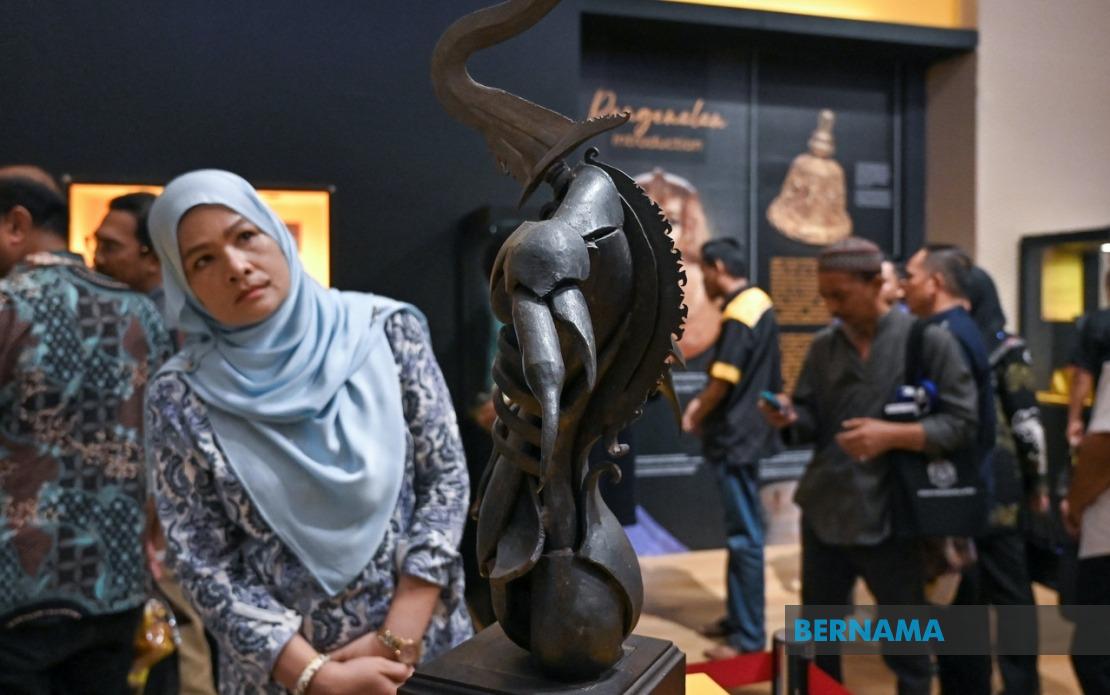
The Perak Museum in Taiping has opened an ambitious exhibition that brings together 140 metal artefacts of considerable historical, cultural and artistic importance. Titled 'Magic and Metal: Spirit, Power and Art', the showcase will remain open to the public until December 31 and represents a significant undertaking in Malaysia's heritage preservation efforts. The exhibition was officially opened by Datuk Kamarul Baharin A. Kasim, director-general of the Department of Museums Malaysia, underscoring the national importance of the collection being displayed.
Museum director Mohd Nasrulamiazam Mohd Nasir explained that the exhibition's conceptual framework centres on three interconnected themes: spirit, power and art. This triadic approach enables visitors to examine how metal functioned within Malay societies not merely as a practical material, but as a vessel for spiritual belief, symbolic authority and aesthetic expression. By organising the collection around these themes rather than chronologically or by object type, the museum invites a deeper understanding of how metalwork reflected the worldview and values of Malay communities across different historical periods.
What distinguishes this exhibition is its collaborative curatorial approach, which extends the Perak Museum's own collections through strategic partnerships with significant private collectors and cultural institutions. The acquisition of sculpture pieces from Raja Syahriman Raja Aziddin, silver ornaments sourced from Yayasan Al-Amin, and an extensive Malay weaponry collection belonging to Nor Azahar Ibrahim has substantially enriched the exhibition's scope and depth. This networking model reflects contemporary museum practice in Southeast Asia, where institutions increasingly recognise that comprehensive cultural narratives require pooling resources and expertise across institutional and private boundaries.
Among the most historically significant items on display is a 19th-century Malay traditional weapon featuring a distinctive snail-shell hilt, which once belonged to Sultan Abdullah Muhammad Shah II, the 26th Sultan of Perak. The presence of artefacts directly connected to Perak's royal lineage adds considerable cultural weight to the exhibition, as these objects embody the intersection of political authority, martial prowess and artistic refinement that characterised royal Malay courts. Alongside this regal piece, visitors can examine an 18th-century suit of Bugis warrior armour, evidence of the extensive maritime trading networks and military interactions that connected the Malay archipelago with distant regions.
Another notable acquisition is a spoon and fork set that belonged to Raja Laut Ibni Sultan Muhammad Shah, the second son of the third Sultan of Selangor. Such domestic metalware, often overlooked in favour of weapons or religious objects, provides valuable insights into the material culture and daily life of the Malay elite. These utensils illustrate how metal craftsmanship extended into intimate spaces of consumption and courtly ceremony, revealing the pervasiveness of metal's symbolic and practical importance across all dimensions of royal and aristocratic existence.
The exhibition serves as a platform for advancing the Department of Museums Malaysia's broader strategic objectives, which increasingly emphasise museums as intellectual spaces dedicated to knowledge production, scholarly investigation and cultural stewardship. Rather than functioning simply as repositories for objects, contemporary Malaysian museums are positioning themselves as active participants in national conversations about heritage, identity and historical understanding. This exhibition exemplifies that evolution by presenting metal artefacts not as isolated curiosities but as interconnected evidence of how Malay communities understood and engaged with the material world.
From a visitor engagement perspective, the Perak Museum has established an ambitious target of 100,000 visitors throughout the exhibition's seven-month run. With nearly 20,000 visitors already recorded by the time of the official opening announcement, the institution appears well-positioned to achieve this goal. For Malaysian residents and international tourists alike, the exhibition offers an accessible yet sophisticated entry point into understanding the aesthetic sophistication, technological capabilities and spiritual worldviews that characterised pre-modern and early modern Malay societies.
The timing and location of the exhibition carries additional significance. Taiping, as the former capital of Perak state, possesses deep historical associations with Malay governance and cultural development. By situating this major heritage exhibition in Taiping rather than in Kuala Lumpur, the Perak Museum reinforces the importance of regional cultural institutions and encourages visitors to engage with heritage narratives embedded in local geography and history. This curatorial decision reflects a broader movement across Malaysia to decentralise cultural authority and validate the contributions of state-level museums to national heritage discourse.
For Southeast Asian readers and heritage professionals, the exhibition demonstrates how regional institutions are increasingly addressing questions of material culture, aesthetics and belief systems through sophisticated interpretive frameworks. The emphasis on metal as a medium possessing spiritual and symbolic dimensions resonates with broader scholarly conversations about how pre-modern societies in the region integrated craft, cosmology and power. By making this scholarship accessible to general audiences, the Perak Museum contributes to public understanding of the intellectual and artistic achievements of Malay-Muslim civilisations across centuries.
The collaborative model employed by the Perak Museum in assembling this collection also offers instructive lessons for other institutions across Malaysia and the wider region. By actively engaging private collectors and establishing partnerships with cultural organisations, the museum has expanded its interpretive reach without necessarily requiring massive capital investment in new acquisitions. This approach suggests sustainable pathways for regional institutions to produce world-class exhibitions that serve both educational and economic functions by attracting visitors and stimulating local tourism.
Looking forward, the success of 'Magic and Metal' may encourage the Department of Museums Malaysia to support similar thematic exhibitions across different state museums, each drawing on regional collections and local partnerships. Such an approach would strengthen Malaysia's overall heritage infrastructure while celebrating the distinct cultural contributions of different regions. For the Perak Museum specifically, this exhibition represents an opportunity to establish itself as a centre of excellence for the study and presentation of Malay material culture, positioning the institution as a destination for scholars, students and heritage enthusiasts throughout Asia and beyond.

