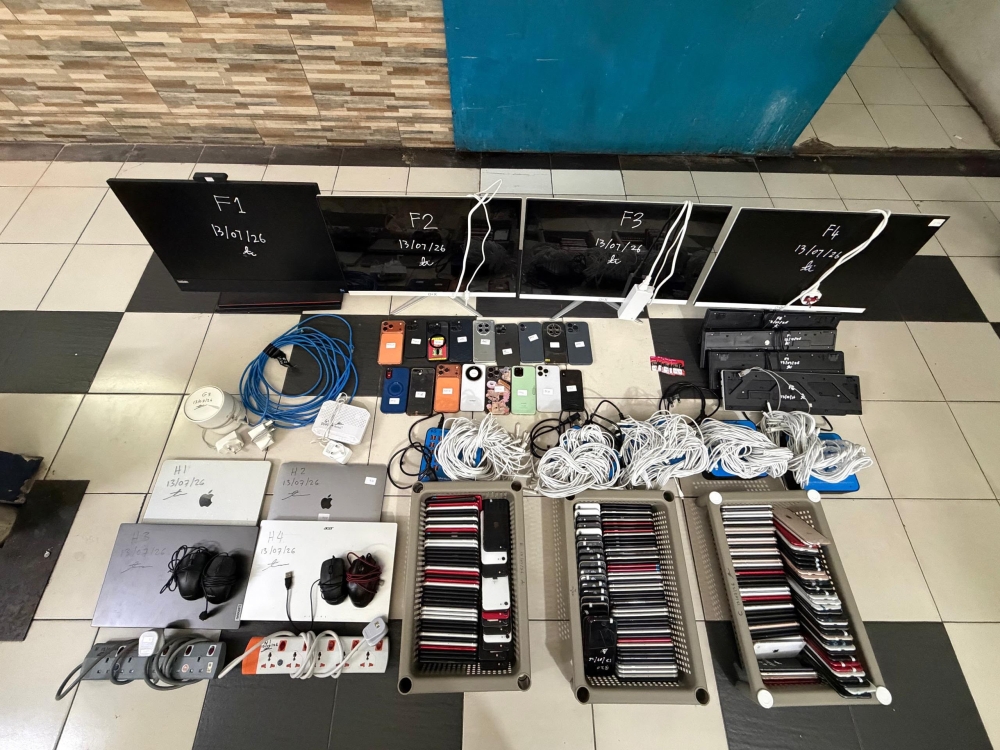
Perak police have arrested 18 Chinese nationals in two coordinated raids conducted around Ipoh, dismantling what authorities believe is a sophisticated online fraud syndicate. The operations, carried out in mid-July, highlight the continuing challenge Malaysian law enforcement faces in combating organised crime networks that exploit digital platforms to victimise unsuspecting members of the public.
The simultaneous enforcement actions demonstrate a strategic shift towards greater coordination between Perak state police and federal authorities in targeting transnational criminal enterprises. These syndicates typically operate by establishing false online personas and conducting elaborate schemes designed to extract money from victims through romance frauds, investment scams, or fictitious loan arrangements. The involvement of foreign nationals suggests these operations are part of larger regional networks with operational bases in multiple countries.
Online fraud has emerged as one of Malaysia's most pressing security challenges, with victims losing millions of ringgit annually to sophisticated scammers who leverage social media, messaging applications, and dating platforms to build false relationships and trust before requesting funds. The Perak operation underscores how criminal elements have adapted to digitalisation, establishing command-and-control centres in urban areas where they can maintain anonymity while coordinating fraud activities across borders. The dual-location raids indicate authorities had been conducting surveillance operations to map the full extent of the syndicate's infrastructure before moving in.
The arrest of 18 individuals from the same nationality suggests a pattern increasingly seen in Malaysian police operations: organised crime groups operating on ethnic lines, with clearly defined hierarchies and specialised roles. Some members typically handle victim recruitment and psychological manipulation, while others manage financial transfers and money-laundering aspects. The scale of this particular operation—involving nearly two dozen suspects—indicates it likely generated substantial proceeds, making it commercially viable for the criminal organisation to maintain permanent bases in Malaysia.
Authorities have not yet disclosed the full scope of the investigation, including the total number of alleged victims or the financial value involved. However, preliminary assessments by the Commercial Crime Investigation Department typically reveal that such operations generate losses running into millions of ringgit across victim populations spanning multiple countries in Southeast Asia. The methodology employed by these syndicates—with tiered victim targets and varying fraud schemes—maximises revenue while distributing risk across numerous victims and jurisdictions, complicating victim compensation efforts.
The timing of the Perak raids aligns with increased police attention to online scam networks following public complaints and growing media coverage of fraud cases. Malaysian authorities have intensified efforts to share intelligence with regional counterparts, particularly in Thailand, Indonesia, and the Philippines, where similar criminal networks operate. This collaborative approach recognises that modern fraud syndicates transcend borders and that their dismantling requires coordinated action at ASEAN level.
For Malaysian readers, these arrests carry significant implications regarding personal cybersecurity and digital literacy. The proliferation of such syndicates reflects broader vulnerabilities in how people engage with strangers online, particularly through social media and messaging platforms. Victims of online fraud frequently report initial encounters that seemed entirely plausible, with scammers investing weeks building credibility before requesting money. This sophistication means awareness campaigns must move beyond simplistic warnings to educate the public about psychological manipulation tactics and verification strategies.
The enforcement action also raises questions about the enabling infrastructure these syndicates require. Access to banking services, both legitimate and compromised accounts, remains essential for transferring proceeds out of Malaysia. Money-laundering consultants and corrupt financial intermediaries likely form part of the operational ecosystem, suggesting that addressing the problem requires disrupting not just the fraud operators but also the financial facilitators who enable capital flight. Perak police's approach to this particular case may provide insights into which financial institutions or money-transfer systems were exploited.
Moving forward, the success of this operation will be measured not only by the charges brought against the 18 detainees but also by whether authorities can follow the money trails back to higher-level organisers and financiers. Regional scam networks typically have command structures based outside Malaysia, directing operations while remaining geographically distant from frontline activities. The cooperation of arrested individuals, coupled with financial analysis and digital forensics, may help authorities identify these upstream connections and coordinate transnational prosecutions.
The Perak police operation exemplifies the cat-and-mouse dynamic between law enforcement and organised crime in the digital age. As authorities develop stronger detection capabilities and enforcement coordination, criminal networks adapt by changing platforms, modifying schemes, and rotating personnel. Sustainable progress against online fraud requires not just periodic law enforcement successes but sustained investment in digital policing capacity, cross-border information-sharing protocols, and public education initiatives designed to reduce victim vulnerability and environmental conditions enabling these criminal enterprises to flourish in Malaysian communities.

