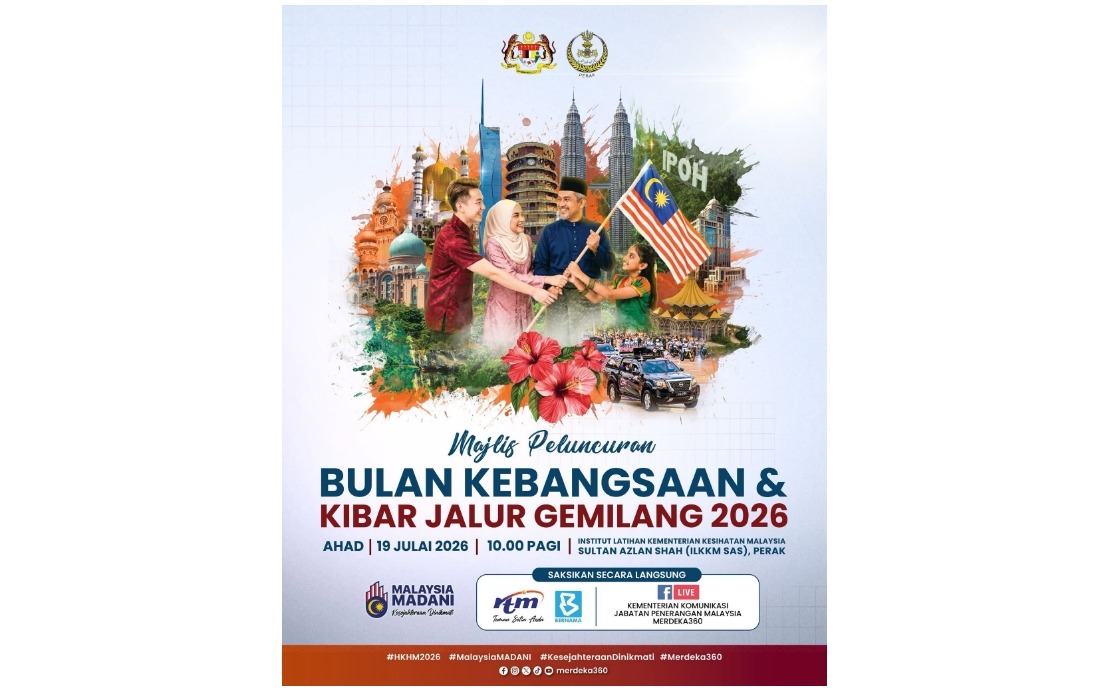
The National Month and Fly the Jalur Gemilang 2026 launch ceremony will take place on July 19 at Institut Latihan Kementerian Kesihatan Malaysia Sultan Azlan Shah in Perak, inaugurating the nation's official celebrations for this year. Commencing at 10 am, the event will be transmitted across multiple platforms including Radio Televisyen Malaysia, BERNAMA TV, and via Facebook Live streaming through the Merdeka360, Ministry of Communications, and Department of Information Malaysia channels, ensuring widespread reach across the country's population.
The chosen theme for this year's National Day and Malaysia Day celebrations—"Malaysia MADANI: Kesejahteraan Dinikmati"—encapsulates the government's vision of building a progressive, inclusive and prosperous nation. This thematic direction is grounded in the Malaysia MADANI framework, which prioritises values of justice, humanity and public welfare. The underlying message emphasises that national progress and economic gains should be distributed equitably among all Malaysians, reflecting a commitment to shared prosperity rather than concentrated benefits among an elite few.
Communications Minister Datuk Seri Fahmi Fadzil had previously disclosed that the primary National Day commemoration will occur at Dataran Putrajaya on August 31, presented as a scaled-down yet vibrant celebration reflecting contemporary sensibilities. The celebrations will extend to Malaysia Day on September 16, with Sarawak designated as the host state for this significant observance. This geographical distribution of celebrations across the peninsula and East Malaysia symbolises national unity and recognises the equal importance of all component states within the federation.
To amplify engagement during the National Month period, the government has organised seven complementary programmes and patriotic activities across Malaysia. These initiatives include Kembara Bahasa HKHM, which celebrates Malaysia's linguistic heritage; Quran Hour, promoting religious and cultural values; Ambang Merdeka, engaging communities in pre-celebration activities; Merdeka Countdown, building anticipation through sequential countdown events; RIUH Merdeka, fostering vibrant public participation; and the National Statesmen Commemoration Ceremony, honouring the nation's founding figures and past leaders who contributed to national development. These multifaceted programmes are designed to cultivate patriotic sentiment across diverse demographics and geographic regions.
The Merdeka360 platform serves as a centralised repository for National Month materials, inviting citizens and organisations to download the official logo, patriotic songs, and an extensive array of promotional content. This resource hub facilitates grassroots participation, enabling schools, businesses, communities and government agencies to integrate standardised patriotic elements into their own celebrations while maintaining consistency with the national campaign. The availability of digital resources democratises access to celebration materials regardless of geographic location or organisational capacity.
The Malaysia MADANI logo, retained as the official emblem through 2026, provides visual continuity and reinforces the government's overarching policy framework beyond the annual National Month observance. This decision signals that the Malaysia MADANI vision is not merely a temporary campaign slogan but rather a sustained commitment to governance philosophy that will guide national policy implementation across multiple years. The logo's prominence during National Month celebrations serves to entrench this philosophy within public consciousness.
For Malaysian readers and regional observers, the emphasis on inclusive prosperity carries particular significance given Southeast Asia's diverse socioeconomic contexts. The theme's focus on equitable distribution of national gains reflects responses to growing income inequality concerns across the region. By centring National Month celebrations around this message, Malaysia seeks to reinforce social cohesion and demonstrate governmental commitment to broadening economic opportunity beyond traditional beneficiaries. This positioning carries implications for how Malaysia presents itself regionally as a model balancing development aspirations with social equity considerations.
The choice of Institut Latihan Kementerian Kesihatan Malaysia Sultan Azlan Shah as the launch venue also carries symbolic weight. Locating the ceremony at a health ministry training institute emphasises the government's prioritisation of healthcare and human capital development as foundational to national prosperity. The Perak location, as a central peninsular state, provides geographic accessibility for media and participants while representing neither the most developed nor least developed regions, thus embodying a middle-path national narrative.
The live broadcasting strategy across RTM, BERNAMA TV and social media platforms reflects modernised approaches to national commemoration, ensuring accessibility across demographics spanning traditional television audiences, digital natives, and those utilising multiple information channels simultaneously. This multimedia dissemination strategy acknowledges diverse consumption patterns within contemporary Malaysian society and maximises the ceremony's reach and impact beyond those physically present at the venue.
As Malaysia approaches its independence commemoration period, these preparations demonstrate sustained institutional effort toward maintaining patriotic engagement within the population. The structured approach—combining ceremonial launches, supporting programmes, distributed celebrations across states, and accessible digital resources—suggests recognition that contemporary national unity requires multifaceted strategies rather than singular flagship events. For regional observers, Malaysia's National Month framework offers insights into how federal systems balance central governmental messaging with distributed local autonomy in celebrating national identity.

