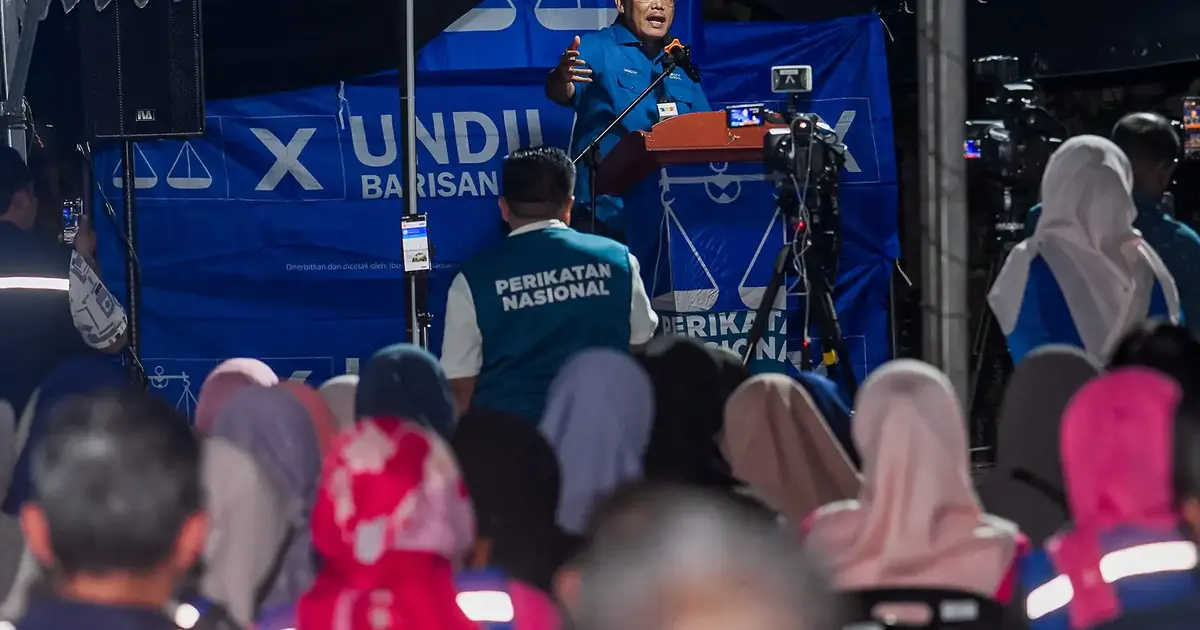
Perikatan Nasional's presidential council has floated a fresh branding strategy for its ongoing electoral cooperation with Barisan Nasional, suggesting the coalition be formally called 'Perikatan Barisan Nasional'. The proposal, aired by a senior party official, reflects efforts to create a unified identity for the partnership as the two major political blocs prepare for the Negeri Sembilan state election scheduled for August 1.
The naming convention carries symbolic weight in Malaysian politics, where coalition nomenclature often signals the power distribution and ideological balance within an alliance. By suggesting 'Perikatan Barisan Nasional'—essentially placing Perikatan first—PN appears to assert its position within the partnership while simultaneously acknowledging BN's institutional significance. This linguistic positioning matters in a political landscape where even the ordering of coalition partners sends messages to grassroots supporters about hierarchies and influence.
Central to the proposed arrangement is PN's commitment that should their combined electoral slate prevail in the August 1 voting, Barisan Nasional would assume the chief minister's position and lead the state government. This concession represents a strategic calculation by PN, which has grown substantially since the 2020 general election and has governed several states. By ceding the executive role in Negeri Sembilan, PN appears to prioritize securing a decisive electoral victory and maintaining coalition cohesion over claiming the top post itself.
The Negeri Sembilan state election carries significance beyond its immediate electoral stakes. The state, often viewed as a bellwether for broader political trends, has experienced considerable volatility in recent years. The willingness of PN and BN to cooperate represents a departure from the fractious competition that characterized earlier periods, suggesting both coalitions view unified opposition to the Pakatan Harapan-led state administration as strategically preferable to fragmenting votes across multiple contestants.
For Malaysian readers, this development illustrates the pragmatic realignment occurring within the country's political ecosystem. The original Barisan Nasional, which governed Malaysia for six decades until 2018, has undergone significant rehabilitation since its electoral defeat and the subsequent reformation of government under various coalitions. Its partnership with Perikatan Nasional—which itself emerged from the collapse of PAS's cooperation with PKR and Amanah—demonstrates how Malaysian politics continues to experience fluid configurations as parties calculate electoral advantage and power-sharing arrangements.
The timing of this announcement matters considerably. With just weeks remaining until the election date, the formal articulation of the PN-BN pact's name and leadership arrangement aims to provide clarity to voters about what to expect should the coalition succeed. In Malaysian electoral politics, voters frequently cite uncertainty about post-election government formation as a deterrent to supporting coalitions, particularly when the identity of the chief minister or prime minister remains ambiguous. By frontloading these arrangements, PN and BN attempt to eliminate such hesitation.
For Negeri Sembilan specifically, the state has experienced considerable administrative transitions. The current government's performance record and public satisfaction levels will inevitably factor into voter calculations. The PN-BN coalition's case to voters will rest partly on their ability to present a coherent vision for state development while also demonstrating that the leadership arrangement—with BN assuming the chief minister role despite PN's substantial contribution—represents a fair and strategically sound configuration.
The broader regional context deserves consideration. Negeri Sembilan's electoral outcome could carry implications for political calculations in other states, particularly those where PN and BN might explore similar arrangements or where opposition coalitions assess the viability of competing against unified blocs. The relative strength demonstrated in August 1 polling will likely influence discussions about potential alliances or confrontations in future state elections across Peninsular Malaysia and East Malaysia.
From a governance perspective, the arrangement raises questions about internal coalition management and decision-making protocols. When two significant political forces agree to cooperate while designating one as the executive authority, clear mechanisms for policy coordination and dispute resolution become essential. The success of the Perikatan Barisan Nasional model will partly depend on how effectively PN and BN can harmonize their governing approaches and ensure that backbench representation and portfolio allocation satisfy both coalition components.
For business and investor communities monitoring Malaysia's political landscape, coalition stability directly affects policy continuity and economic planning horizons. A successful PN-BN arrangement in Negeri Sembilan could demonstrate the viability of similar partnerships elsewhere, potentially creating more predictable governance frameworks. Conversely, any tensions or fractures within the alliance during governance could undermine confidence in coalition-based administration more broadly.
The proposal to adopt 'Perikatan Barisan Nasional' as the coalition's formal designation reflects sophisticated political branding. Rather than simply referring to the arrangement as 'PN-BN' or using purely functional terminology, the creation of a unified name seeks to foster a sense of cohesion and joint identity among supporters of both parties. This psychological dimension of political communication matters substantially in shaping voter perceptions and campaign momentum.
As Negeri Sembilan voters prepare for the August 1 election, the clarity provided by this arrangement and naming announcement offers them concrete information about the governance structure they would be choosing. The PN-BN coalition's willingness to settle leadership questions in advance distinguishes this partnership from previous instances where post-election negotiations determined crucial executive positions, sometimes generating controversy about legitimacy and mandate interpretation.

