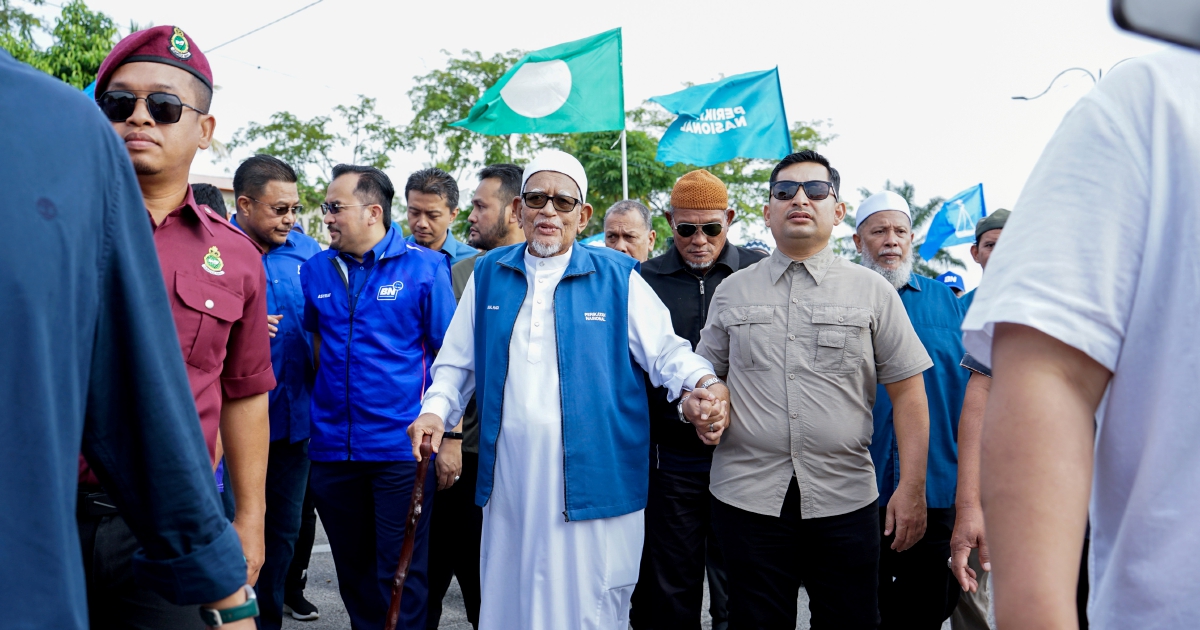
The landscape of Malaysian electoral politics continues to shift as two major political coalitions work behind closed doors to determine contest arrangements for the forthcoming Melaka state election. Tan Sri Abdul Hadi Awang, the president of Pas and a key figure within Perikatan Nasional, has publicly acknowledged that substantive seat negotiations are underway with Barisan Nasional, effectively confirming what many political observers have anticipated following recent coalition developments at the national level.
Malaysia's political configuration has undergone significant transformation in recent years, with both Perikatan Nasional and Barisan Nasional positioning themselves as major forces in state-level contests. The Melaka election represents a crucial test case for how these two power blocs might coordinate or compete in future electoral cycles. Perikatan Nasional, which currently commands considerable influence through its representation in federal government structures, brings considerable organisational capacity and voter reach. Barisan Nasional, despite electoral setbacks in previous cycles, retains deep organisational roots and established machinery throughout Malaysian states.
The willingness of these coalitions to engage in formal seat negotiations rather than proceed toward direct competition underscores the pragmatic calculations driving Malaysian politics. Such discussions typically involve complex considerations around which parties within each coalition will contest which constituencies, reflecting internal power dynamics and historical territorial strongholds. For Pas, which operates within Perikatan Nasional's framework, the negotiation process involves balancing its own strategic interests against broader coalition cohesion objectives. The party's presence in seat negotiations, through leadership statements, indicates its central importance to any eventual agreement.
Melaka holds particular significance within Malaysia's broader political narrative. As a relatively compact state with manageable electoral mathematics, outcomes there often carry disproportionate symbolic weight. Success or failure in Melaka can shape momentum heading into larger contests and influence intra-coalition relationships. The state has witnessed shifting political fortunes over the past decade, making any upcoming election inherently unpredictable. For both Perikatan Nasional and Barisan Nasional, maximising representation in this state becomes strategically important for demonstrating continued viability and electoral competence.
The mechanics of seat negotiations in Malaysia's context reveal much about how the country's political system actually functions. Rather than single parties competing independently across all constituencies, negotiations establish an agreed framework where coalition partners divide territory according to agreed principles. These agreements consider factors including party membership density, historical voting patterns, incumbent performance, demographic composition of constituencies, and internal coalition hierarchy. The public confirmation by Tan Sri Abdul Hadi that such negotiations are occurring signals these discussions have progressed beyond preliminary exploratory stages into more substantive bargaining.
For observers tracking political developments in the broader Southeast Asian context, Malaysia's coalition negotiations merit attention. The region witnesses various experiments with political alliances and competition frameworks, and Malaysia's approach—combining institutionalised coalition structures with periodic renegotiation—offers distinctive insights into managing multiparty democratic systems. The willingness of major coalitions to negotiate rather than pursue scorched-earth competition, while still advancing their respective interests, demonstrates a certain political maturity, though it also raises questions about democratic participation and voter choice.
The timing of these negotiations matters considerably. Political calendars in Malaysia involve both federal and state-level elections, with state contests often occurring when national political alignments remain fluid. Melaka's upcoming election thus occurs within a broader context of coalition adjustments and realignments at the national level. How Perikatan Nasional and Barisan Nasional resolve seat distribution in Melaka may establish precedents or reveal tensions that manifest in subsequent state elections or future federal-level arrangements. The state becomes a testing ground for coalition stability and compatibility.
Beyond the immediate participants, citizens across Melaka will ultimately judge the outcomes of whatever seat-sharing agreement emerges. The framework established through these negotiations will determine which constituencies receive competitive contests between coalition partners, which witness consolidated coalition representation, and which remain open to genuine inter-coalition competition. These arrangements shape electoral dynamics profoundly, influencing both campaign intensity and eventual voter choice architecture. Transparency around negotiated outcomes and their underlying rationale becomes important for maintaining public confidence in electoral legitimacy.
The confirmation by Tan Sri Abdul Hadi Awang that negotiations are ongoing represents an important data point in understanding Malaysia's political trajectory. It indicates that despite surface-level differences and periodic friction, major coalitions maintain institutional channels for coordination and compromise. Whether these negotiations conclude successfully, what timeframe emerges for resolution, and how the eventual seat allocation reflects relative coalition bargaining power will provide valuable insights into present configurations of Malaysian political strength. The Melaka election, once decided, will reveal whether negotiated frameworks translate effectively into electoral performance, offering lessons for subsequent contests across Malaysian states.

