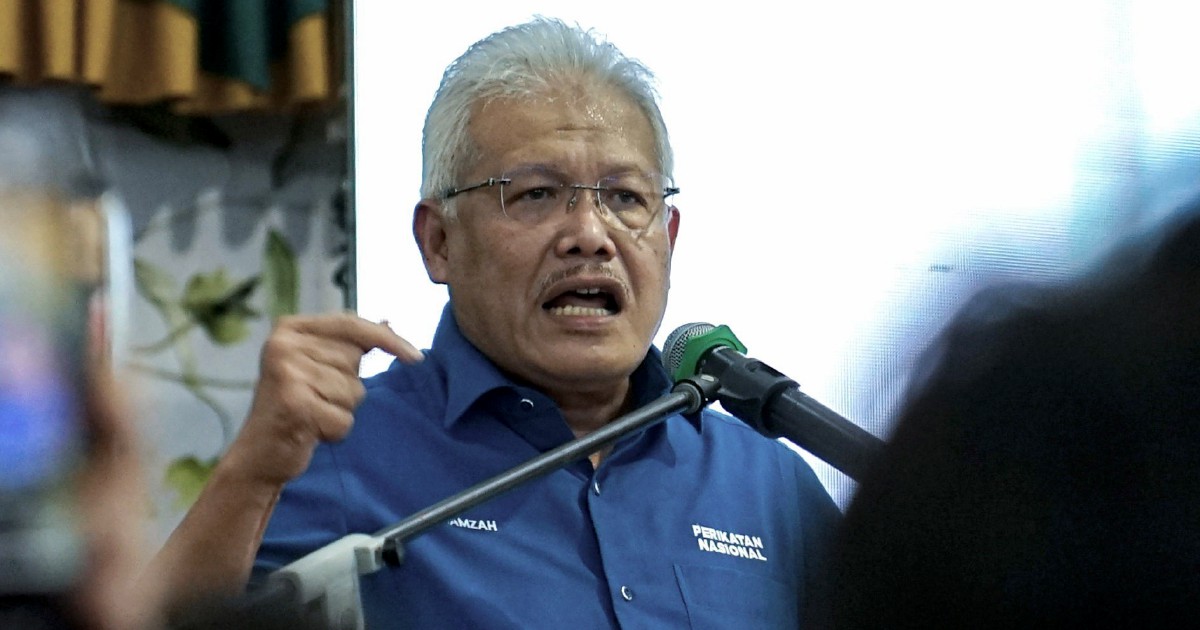
Perikatan Nasional (PN) has adopted the designation 'PBN' as shorthand for its electoral coalition with Barisan Nasional (BN) ahead of voting in Negri Sembilan, according to senior figures within the alliance. The newly minted acronym represents a strategic naming exercise designed to give coherent public identity to what has become an increasingly complex web of political partnerships across Malaysia's state legislatures and federal parliament.
The terminology emerged as both blocs seek to present a unified front to Negri Sembilan voters, despite their separate organisational structures and occasionally competing territorial interests. The adoption of 'PBN' follows a pattern observed in other recent Malaysian electoral contests, where pre-poll pacts between major coalitions have required clear branding to communicate voter preferences and manage supporter expectations. This particular formulation reflects both components equally, positioning neither as the dominant partner whilst making the arrangement immediately recognisable to the electorate.
Negri Sembilan has become a significant battleground precisely because neither PN nor BN commands overwhelming dominance within the state assembly. The 36-member legislature requires careful coalition management, and the formal crystallisation of this partnership through the 'PBN' nomenclature suggests both organisations view the contest as decisive for their respective trajectories in peninsular Malaysia. Previous state elections elsewhere have shown that clear alliance branding can marginally improve coordination messaging and reduce voter confusion about which parties are competing jointly versus separately.
The coalition arrangement between PN and BN carries broader implications for Malaysian politics beyond Negri Sembilan's borders. Both blocs have pursued different strategic paths nationally—PN positioning itself as an alternative to establishment politics whilst BN attempts to rehabilitate its image following consecutive federal election defeats. Their willingness to cooperate in specific states demonstrates pragmatic recognition that electoral mathematics often necessitate temporary unions between ideologically distinct partners. This practice has become normalised across the region, with similar arrangements visible in several other Southeast Asian democracies where coalition governments are the norm.
Historically, Negri Sembilan has alternated political control between major coalitions, reflecting its status as a genuinely competitive state rather than an entrenched stronghold. The introduction of the 'PBN' branding suggests both PN and BN view the next election as an opportunity to consolidate influence in a state that has increasingly become a bellwether for broader national sentiment. Component parties within each coalition maintain their individual identities but operate under the broader umbrella framework, a structure designed to minimise internal friction whilst presenting unified campaign narratives.
The mechanics of managing such partnerships require careful negotiation over seat allocations, campaign financing, and policy commitments. The public unveiling of the 'PBN' terminology indicates that these behind-the-scenes arrangements have reached sufficient maturity and agreement that leaders feel comfortable formalising the relationship through branded terminology. Malaysian voters have become increasingly sophisticated in parsing such alliance structures, particularly following the complex federal government coalitions formed after the 2018 and 2022 elections.
For Malaysian political observers, the 'PBN' designation serves as a useful indicator of coalition confidence and intended durability. Short-term tactical alliances are often presented without such formal naming conventions, whereas more substantial partnerships tend to receive clearer branding. The choice to invest in this specific acronym suggests both PN and BN anticipate this relationship extending beyond a single electoral cycle, at least within Negri Sembilan's political arena.
The Negri Sembilan election will test whether such pre-poll alliances can effectively mobilise voters across different demographic groups and regional constituencies. The state encompasses multiple distinct voter blocs, from the capital Seremban's urban electorate to rural constituencies in districts like Tampin and Kuala Pilah. Managing such diversity within a single coalition framework while maintaining distinct party identities represents an ongoing challenge for PN-BN coordination. The adoption of unified branding may help simplify messaging but cannot eliminate fundamental differences in party philosophy and voter appeal.
Regionally, Malaysia's coalition patterns increasingly resemble practices in other Southeast Asian democracies where multi-party systems necessitate creative alliance management. Thailand, Indonesia, and the Philippines all employ similar formulations, where political blocs negotiate and rebrand themselves continuously to maintain electoral relevance. Malaysian parties appear to be converging on this model, abandoning the previously dominant two-coalition structure in favour of more fluid alignments calibrated to specific electoral contests and state-level circumstances.
The successful implementation of the 'PBN' framework in Negri Sembilan may establish a template that PN and BN attempt to replicate in future contests, or it could serve merely as a one-off experiment if the alliance underperforms electorally. Either outcome will carry significance for Malaysian politics, indicating whether flexible coalition management can deliver electoral dividends or whether voters ultimately prefer clearer ideological delineation between competing blocs. The coming Negri Sembilan election will provide crucial data on which direction Malaysian electoral politics is heading.

