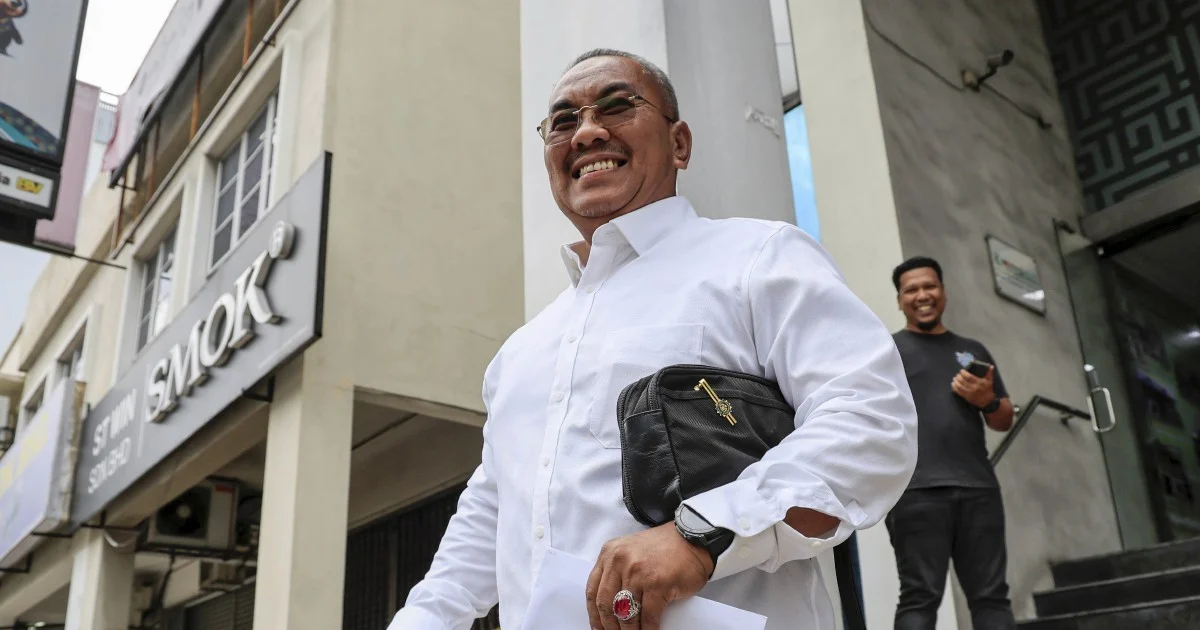
Perikatan Nasional has moved past a critical internal hurdle in preparing for the Johor state election, with the coalition announcing that exhaustive negotiations over seat distribution have now concluded. Datuk Seri Sanusi Md Nor, who oversees electoral strategy for the opposition bloc, confirmed on Tuesday that agreements have been reached across all contested constituencies, removing the primary structural impediment that could have fractured the coalition heading into campaigning.
The resolution of 34 overlapping seats represents a substantial negotiating achievement, particularly given the coalition's complex composition. Perikatan Nasional comprises multiple parties with entrenched territorial bases and competing ambitions at the state level, where electoral mathematics differ markedly from federal contests. The Johor theatre is especially significant because the state has historically been dominated by the ruling Barisan Nasional coalition, making any opposition breakthrough substantially more difficult than in other states where PN has gained traction.
Seat allocation disputes have plagued opposition coalitions across Malaysia for years, frequently exposing fractures between partners and weakening their electoral positioning. When component parties cannot resolve territorial claims beforehand, the resulting confusion on polling day generates tactical vulnerability that governing coalitions readily exploit. The fact that Perikatan Nasional has navigated this minefield suggests serious internal discipline, though whether that discipline will hold through the campaign remains uncertain.
Johor presents particular complexities because the state remains a Barisan Nasional stronghold with deep-rooted political structures and patronage networks that opposition parties must overcome. The state assembly comprises 56 seats, meaning any coalition hoping to form government must win at least 29 seats. Historically, the ruling coalition has dominated Johor politics for decades, though recent federal-level realignments and shifting voter sentiment have created potential openings for challengers.
For Perikatan Nasional, the Johor election represents both opportunity and vulnerability. The coalition has strengthened considerably at the federal level following the 2022 general election, but translating that momentum into state-level gains requires disciplined execution and unified messaging. Component parties within the coalition have sometimes pursued contradictory strategies at state level, potentially diluting their collective appeal. Johor's electoral architecture demands precisely the kind of coordinated effort that Sanusi's announcement appears to signal.
The resolution of 34 overlapping seats indicates that negotiations addressed not merely technical boundary disputes but genuine competition for attractive constituencies where multiple parties believed they could win. Such disputes typically involve PAS, Bersatu, and other coalition members each staking claims to constituencies where they have historical presence or perceive strong electoral prospects. The willingness to cede claims suggests either mutual confidence in alternative seat assignments or leadership pressure to maintain coalition cohesion.
From a Malaysian political perspective, the stability of opposition coalitions remains fragile despite apparent near-term agreements. History demonstrates that while pre-election arrangements may hold theoretically, campaign pressures, local dynamics, and personality conflicts frequently generate last-minute complications. Perikatan Nasional's announcement should therefore be read as confirming an accord rather than guaranteeing its implementation across all 34 constituencies.
The timing of this announcement carries strategic weight. By confirming seat allocations early, the coalition can pivot toward unified campaigning on policy substance rather than internal negotiation. This prevents Barisan Nasional from weaponising coalition divisions, a tactic the ruling coalition has deployed effectively in past contests. However, early announcements also allow government-aligned parties to study the allocation and target specific constituencies where opposition strength may be vulnerable.
Regional implications extend beyond Johor's borders. If Perikatan Nasional performs strongly in the state election, it will reshape the calculus of opposition politics across Malaysia and Southeast Asia more broadly. Conversely, a poor result would reinforce perceptions that the coalition's federal-level gains represent a temporary realignment rather than durable political restructuring. Johor's 56 seats thus carry significance well beyond the state's borders.
The coalition's ability to maintain this arrangement through the entire election cycle will depend substantially on individual party leaders' discipline and commitment to collective outcomes over individual party gains. Sanusi Md Nor's role as election director becomes crucial here—his capacity to manage tensions when they inevitably emerge during campaigning could determine whether Perikatan Nasional enters the post-election landscape strengthened or damaged by internal friction.
Beyond the immediate election dynamics, this announcement reflects the broader Malaysian political context of coalition-building. The country's first-past-the-post electoral system practically demands coalition arrangements, yet such arrangements remain chronically difficult to maintain. That Perikatan Nasional has moved past this particular hurdle does not guarantee campaign success, but it does remove one significant structural obstacle that could otherwise have undermined its Johor aspirations substantially.
As campaigning commences, attention will shift toward whether this internal accord translates into coordinated electoral performance or fragmentary efforts at constituency level. The true test of Sanusi's negotiating work will arrive not in press conferences but when votes are counted.