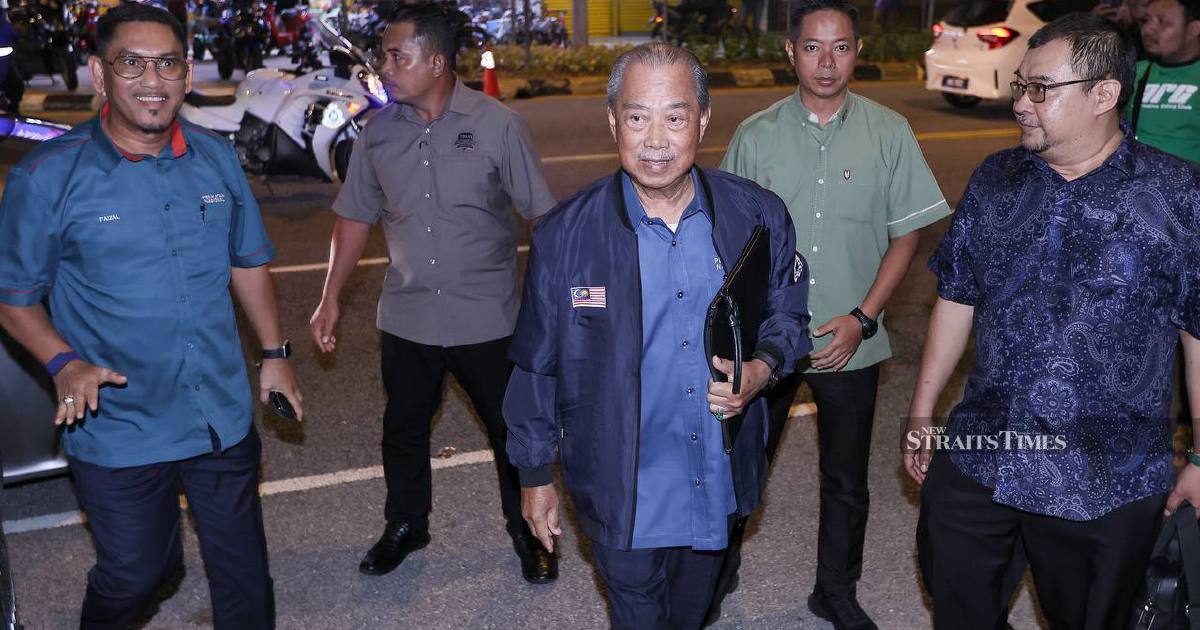
Perikatan Nasional's leadership convened an unscheduled Supreme Council meeting at the PAS headquarters in Kuala Lumpur on Monday evening, signalling intensified coordination among the opposition coalition's top echelon as it navigates an increasingly complex political landscape.
The emergency gathering brought together senior figures from across the three-party alliance—comprising PAS, Bersatu, and GemPar—underscoring the coalition's determination to present a unified front on matters requiring urgent deliberation. Such hastily arranged sessions typically indicate the coalescence has identified developments demanding immediate strategic response and collective decision-making at the highest levels.
For Malaysian observers tracking opposition dynamics, the timing and venue selection carry particular significance. Holding the meeting at PAS headquarters rather than a neutral location subtly emphasises the Islamist party's continuing influence within the PN framework, particularly given PAS's expanded parliamentary representation and institutional strength at both state and federal levels. This choice reflects the complex power dynamics within the coalition, where PAS has positioned itself as a central anchor following recent electoral performances that consolidated its standing as Malaysia's largest opposition party.
The convening of such meetings typically addresses matters ranging from parliamentary strategy and legislative priorities to intra-coalition coordination disputes and responses to government initiatives. In the current political environment, where the unity government comprising Pakatan Harapan, Barisan Nasional, and Sabah and Sarawak partners maintains a workable parliamentary majority, opposition groupings must carefully calibrate their responses to maintain internal cohesion while carving out distinctive policy positions.
Perikatan Nasional has faced recurring challenges in presenting coordinated messaging since its 2022 formation, with occasional friction emerging between constituent parties over resource allocation, candidate selection, and strategic priorities. The decision to convene an emergency session suggests leadership recognised an urgent need to synchronise positions, whether responding to specific legislative developments, addressing intra-coalition tensions, or preparing coordinated responses to anticipated government announcements.
For the broader Malaysian political context, PN's internal coordination mechanisms matter considerably. As the primary opposition force, the coalition's stability influences parliamentary dynamics, legislative scrutiny effectiveness, and the broader competitive landscape heading toward the next general election. Observers assess that maintaining coalition coherence requires constant engagement at senior levels, particularly when unexpected developments demand swift collective response.
The meeting also reflects PN's evolving institutional maturity as a coalition entity. Beyond its individual constituent parties, PN has developed its own decision-making structures and protocols, with the Supreme Council serving as the peak coordinating body for resolving strategic questions affecting the alliance's collective interests. The willingness to convene emergency sessions demonstrates the coalition treats this structural architecture as substantively important rather than merely ceremonial.
Geopolitically, PN's positioning carries implications extending beyond domestic Malaysian politics. As the leading opposition force in Southeast Asia's third-largest economy, the coalition's policy directions, particularly regarding economic management, foreign relations, and regional integration, attract attention from neighbouring governments and regional observers assessing potential future policy orientations.
Within Malaysian politics, PN's next strategic moves will likely prove consequential. The coalition must balance maintaining internal discipline with demonstrating constructive opposition that appeals to centrist voters while preserving its support bases. Emergency meetings at the Supreme Council level typically result in coordinated messaging and strategic decisions that ripple through parliamentary conduct, media engagement, and grassroots mobilisation efforts across the three component parties.
The convening demonstrates that despite occasional public disagreements and differing party cultures, PN leadership recognises that coalition survival requires functioning dispute resolution mechanisms and regular synchronisation. As Malaysia's political system continues evolving following the 2022 transition, opposition coalitions must innovate their own coordination mechanisms independently of government institutional support. PN's decision to invoke formal emergency procedures reflects this emerging reality.