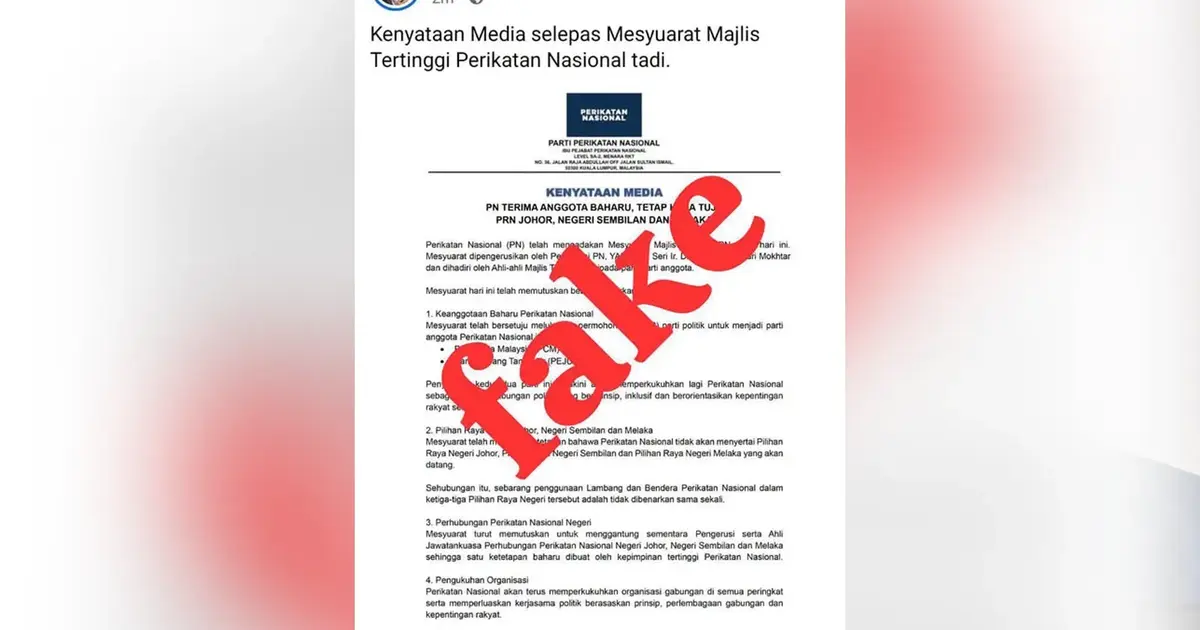
Perikatan Nasional has moved swiftly to discredit a controversial statement circulating among Malaysian political circles, which alleged that the opposition coalition plans to withdraw from participation in three state electoral contests. The coalition rejected the claims outright, characterising the document as false and inaccurate, signalling its determination to maintain its electoral ambitions across the country.
The emergence of such a statement comes at a particularly sensitive moment in Malaysian politics, when the balance of power between competing coalitions remains delicately poised. Electoral campaigns in individual states have become increasingly important battlegrounds, especially as major federal elections are not imminent. Any coalition's decision to bypass state-level contests would signal either internal fracturing or strategic reorientation, both of which carry significant implications for their longer-term political viability.
Perikatan Nasional, formed as an alternative to the long-dominant Barisan Nasional coalition, has positioned itself as a formidable challenger to the government. The coalition's presence in state elections remains crucial to its narrative of being a credible nationwide political force. Withdrawing from any electoral contest would undermine this positioning and potentially cede valuable ground to rival political organisations seeking to consolidate support at the state level, where governance directly affects citizens' daily lives.
The denial issued by PN reflects broader patterns in Malaysian politics, where misinformation and strategically planted false reports occasionally surface to test political opponents or gauge public reaction. The coalition's rapid response demonstrates the seriousness with which it treats its electoral presence and the importance of defending its reputation, particularly among supporters who expect consistent political engagement and commitment.
State elections in Malaysia serve as crucial stepping stones for national political ambitions. Success at the state level provides resources, institutional experience, and voter momentum that candidates and coalitions can leverage in federal contests. By engaging fully in these elections, coalitions maintain their organisational infrastructure and demonstrate to voters that they are serious contenders capable of governing at all levels. A decision to skip such contests would send contradictory signals about a coalition's strength and determination.
The three state elections referenced in the disputed statement would likely determine the political composition of several important regions in the country. Each state holds distinct demographic, economic, and cultural characteristics that influence voter behaviour. Perceptions that a major political coalition is withdrawing from these contests might galvanise certain voter segments while demoralising others, potentially reshaping electoral dynamics in unexpected ways.
Perikatan Nasional's coalition partners and member parties would also face reputational consequences from such a strategy. Individual parties within the coalition maintain their own bases of support and expectations from grassroots members. Abandoning electoral contests would require consensus across member parties, and such coordination failures or strategic disputes could become fodder for opponents seeking to portray the coalition as disunited or lacking clear direction.
The timing of such misinformation, whether accidental or deliberate, warrants scrutiny. Malaysian politics has witnessed increasing use of digital platforms to disseminate political narratives and counter-narratives. The rapid spread of a false statement suggests that someone with access to political circles felt motivated to test whether such messaging would gain traction or whether it might provoke revealing responses from PN leadership.
For Malaysian voters and observers seeking to understand the current political landscape, this incident underscores the importance of verification and critical engagement with claims made during electoral seasons. Political narratives can shift rapidly, and distinguishing genuine policy shifts from misinformation requires access to authoritative sources and awareness of the strategic motivations underlying different statements.
Perikatan Nasional's unequivocal rejection of the statement serves as a public commitment to its electoral strategy and its supporters. By dismissing the allegations as false and inaccurate, the coalition reinforces its messaging that it remains a cohesive, committed political force ready to contest elections at all levels of Malaysian governance. This stance is particularly important given the fractious nature of opposition politics in Malaysia, where questions about unity and durability constantly arise.
Looking ahead, PN's continued engagement across state elections will likely remain central to its effort to build momentum toward federal elections. The coalition's ability to perform credibly in state contests affects how voters perceive its capacity to govern nationally. Each electoral engagement provides visibility, demonstrates organisational capability, and allows the coalition to test campaign messages and refine its political platform in response to local concerns.