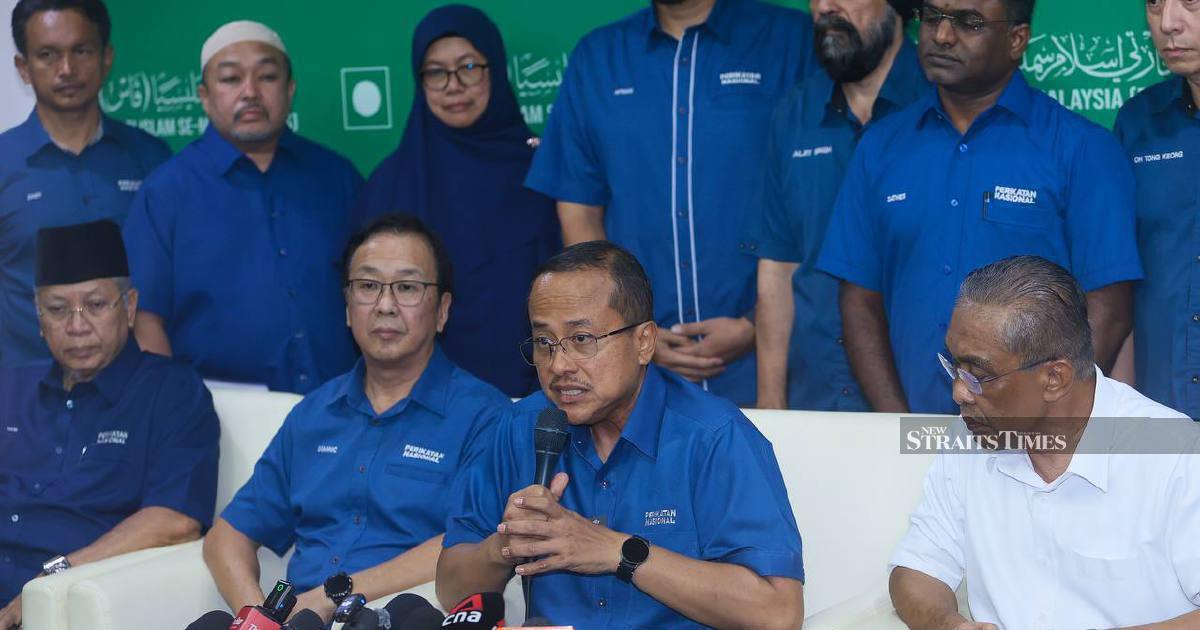
Perikatan Nasional has broadened its political footprint by formally admitting two new parties into the opposition coalition, according to an announcement by PN chairman Datuk Seri Dr Ahmad Samsuri Mokhtar following an emergency Supreme Council session in Kuala Lumpur. The expansion reflects the bloc's ongoing efforts to strengthen its organisational capacity and electoral appeal, though the timing remains strategically significant given Malaysia's fluid political environment and the persistent manoeuvring among various coalitions competing for parliamentary influence.
The decision to accelerate party recruitment at this juncture suggests that PN leadership is conscious of the political momentum needed to maintain relevance as an alternative governance platform. Since its emergence as a parliamentary force following the 2020 general election, Perikatan Nasional has positioned itself as distinct from both the federal government coalition and the main opposition pact, carving out a political space that appeals to voters dissatisfied with established power structures. Adding fresh membership strengthens its claim to represent a genuine nationwide movement rather than a mere assemblage of regional parties.
Yet the emergency convening itself signals underlying tensions within the coalition's ranks. The urgency of gathering party leaders suggests that pressing matters required immediate collective decision-making, a pattern increasingly common in Malaysian politics as coalitions grapple with maintaining unity while pursuing competitive strategies. The fact that an emergency session was deemed necessary—rather than allowing routine party expansion through standard procedures—indicates that senior PN figures perceived genuine need for swift consensus-building among key stakeholders.
Notably, the PN chairman's statement specifically highlighted what was not discussed during the meeting: issues surrounding Wawasan—presumably referring to the coalition's overarching political vision or strategic framework—and questions relating to the coalition's logo and visual branding. This deliberate omission from the discussion agenda raises intriguing questions about coalition management. Either these matters were deemed less urgent than formalising new party admissions, or they represent sensitive issues that PN leaders preferred to sidestep at this particular gathering, perhaps awaiting clearer consensus or external developments that might inform future decisions.
The unresolved Wawasan question is particularly noteworthy for Malaysian political observers. Vision statements and strategic frameworks serve as crucial anchors for multi-party coalitions, providing ideological coherence and helping member parties understand their collective purpose beyond electoral calculations. Perikatan Nasional's Wawasan—to the extent it has been publicly articulated—has attempted to balance Malay-Muslim party concerns with broader multiracial political participation, a delicate equilibrium that continues generating internal debate. Deferring substantive discussion on this foundational question suggests either that consensus remains elusive or that leadership prefers to allow such discussions to evolve organically across party platforms.
The logo issue, while seemingly cosmetic, carries political weight in Malaysian coalition dynamics. Visual identity matters considerably in electoral contests and public perception. Any rebranding effort would signal either fresh direction or reconciliation following internal disputes. That party leaders chose not to address logo matters at this emergency meeting implies either acceptance of the current brand or recognition that such aesthetic questions should not preoccupy urgent coalition business. This pragmatism reflects lessons learnt from previous Malaysian coalition experiences, where disputes over symbols and naming have occasionally overshadowed substantive policy discussions.
For Malaysian voters and political analysts, the expansion of PN's membership base through the addition of two new parties represents a measurable shift in the opposition coalition's structural composition. Each new member party brings its own grassroots networks, electoral machinery, and constituency bases, theoretically enhancing PN's capacity to contest elections across diverse regions. However, the actual electoral impact depends heavily on the newcomers' existing support bases and their integration into PN's campaign infrastructure. Bringing parties into a coalition structure differs fundamentally from converting them into effective, coordinated political vehicles.
Regionally, PN's ongoing expansion strategy carries implications for Southeast Asian politics, where opposition coalitions across the region face similar pressures to maintain relevance and expand influence. Malaysia's multiparty system, while sometimes fractious, offers lessons about coalition-building that resonate with neighbouring countries experiencing similar political fragmentation. PN's approach—gradual expansion combined with selective issue avoidance—mirrors tactics employed by other regional opposition groupings attempting to maintain internal cohesion while broadening electoral reach.
The relationship between coalition expansion and internal consolidation remains tension-filled. Admitting new parties requires extending influence and sharing resources, potentially diluting the voice of established members while complicating decision-making procedures. Yet failing to expand risks marginalisation as other coalitions grow. PN's leadership appears to favour the expansion approach, at least in the short term, accepting incremental growth while deferring thornier questions about fundamental coalition purpose and presentation until firmer consensus emerges.
Moving forward, observers will monitor whether PN addresses the deferred matters—Wawasan and logo questions—in subsequent meetings. The timeline for such discussions may depend on parliamentary schedules, electoral cycles, and developments within member parties. Until those foundational issues receive serious collective attention, PN's structural expansion will continue proceeding ahead of ideological alignment, a strategy that offers both opportunities and risks for this increasingly significant Malaysian political force.