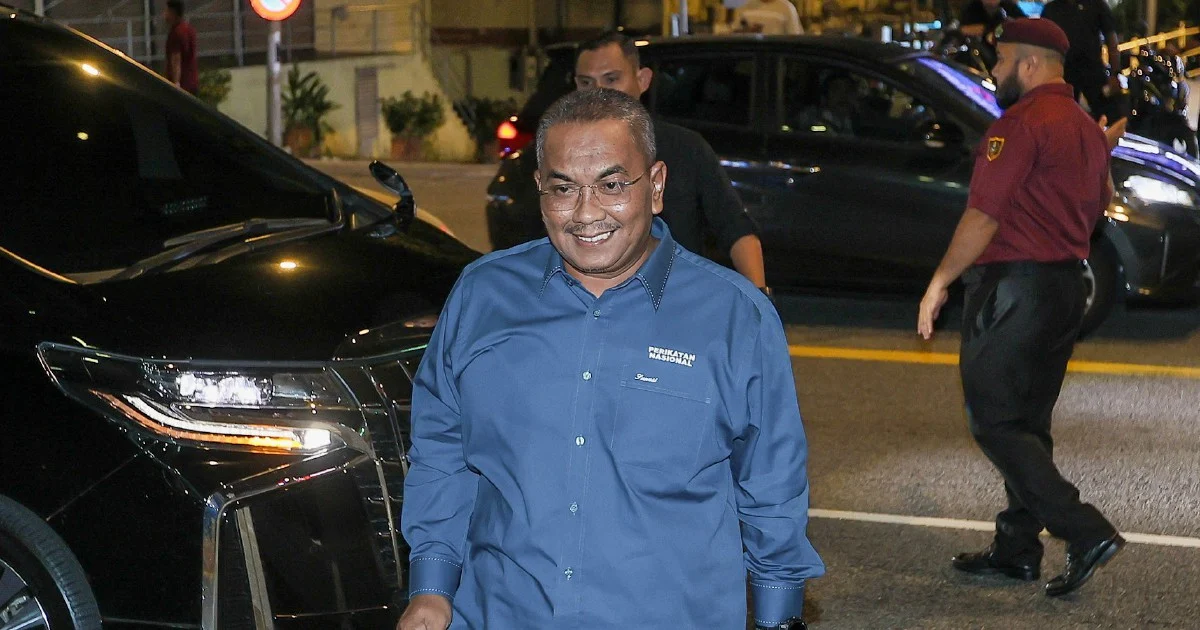
Perikatan Nasional has moved to quash mounting speculation about a potential electoral partnership with Barisan Nasional by confirming it will contest the forthcoming Johor state election exclusively under its own party logo. The clarification came from Datuk Seri Muhammad Sanusi Md Nor, who holds the position of election director for PN, signalling the coalition's intention to maintain its independent political identity in the crucial state ballot.
The announcement puts to rest weeks of rumour and conjecture within political circles about whether the two major opposition-turned-government coalitions might merge their campaigns ahead of the Johor polls. Such speculation had gained traction among observers tracking the shifting landscape of Malaysian politics, where electoral alliances have proven fluid and subject to rapid recalibration based on strategic considerations.
Sanusi's emphatic dismissal of the BN logo rumour represents a strategic positioning by PN leadership, particularly significant given the coalition's trajectory since the 2022 general election. PN's decision to maintain organisational autonomy suggests confidence in its own branding and voter appeal, even as the political terrain continues to evolve across the country's states and at the federal level.
The Johor state election holds particular importance within the broader Malaysian political context. As one of the nation's largest states by population and economic output, Johor's electoral outcome carries implications extending well beyond its borders, influencing regional power dynamics and potentially shaping calculations for future national elections. The state has historically served as a barometer of political sentiment, making its polls closely watched by strategists from all major coalitions.
Barisan Nasional's presence in Johor remains formidable, having dominated the state for decades through multiple election cycles. PN's insistence on contesting independently rather than adopting BN's electoral machinery or branding demonstrates the coalition's conviction that it can compete effectively on its own terms. This approach also preserves PN's distinctive political identity, which has proven resonant with significant segments of the electorate, particularly in states where the coalition has established strong organisational presence.
The timing of Sanusi's statement carries additional significance, coming at a juncture when Malaysian politics continues to undergo realignment following the 2022 general election. The rise of PN as a major political force has complicated traditional two-coalition dynamics, creating complex scenarios where multiple groupings contend for voter support across different electoral battlegrounds. By clearly delineating its independent status, PN signals to voters, party members, and potential coalition partners that its political direction remains self-determined.
For Johor voters, the confirmation offers clarity about which political banner each coalition will present, potentially sharpening the choice available to electorate members. The state's diverse constituencies encompass urban centres, industrial zones, and agricultural areas, each with distinct political preferences and policy concerns. PN's choice to field candidates under its own logo allows the coalition to tailor its messaging directly to these varied constituencies without filtering through the BN institutional apparatus.
The electoral logistics of maintaining separate party identities rather than operating through a merger framework carry practical implications for campaign organisation, candidate selection, and resource allocation. PN's election machinery has developed substantially since the 2022 general election, with the coalition establishing administrative structures and gaining operational experience across multiple states and parliamentary constituencies. Choosing to contest Johor independently allows PN to leverage this accumulated expertise.
Barisan Nasional's own positioning in Johor remains a significant factor in the state's political equation. As the historically dominant coalition in the state, BN continues to command substantial party machinery, grassroots networks, and voter loyalty patterns built over generations. The choice by PN to contest independently rather than seeking electoral accommodation with BN reflects confidence that the coalition can articulate a distinctive political vision appealing to enough Johor voters to achieve competitive performance.
The rejection of BN logo usage also carries symbolic weight within PN's constituent parties, particularly UMNO elements that have gravitated toward PN since its emergence as a political force. These party members and supporters may perceive greater alignment with PN's political direction than with BN's traditional positioning, making the independent contest strategy reinforcing of internal coalition cohesion.
Political observers will monitor closely how PN translates its stated intention to contest independently into concrete campaign performance across Johor's constituencies. The coalition's ability to translate strategic positioning into electoral gains will provide important signals about the trajectory of Malaysian politics heading into subsequent state and national elections, particularly regarding whether PN can sustain itself as a genuinely independent major force or whether it will eventually seek accommodation with established coalitions.