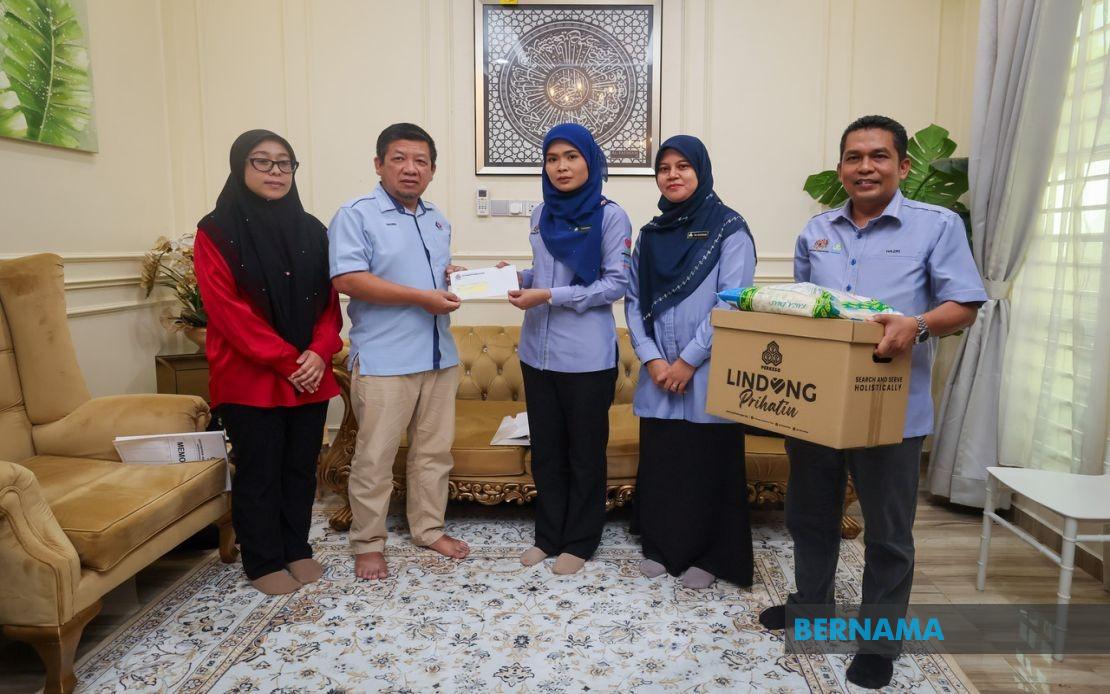
Malaysia's Social Security Organisation (PERKESO) has demonstrated its commitment to supporting workers across Kelantan by channeling nearly RM3.5 million in benefits to contributors and their dependants during the first half of this year. The substantial disbursement underscores the organisation's role in providing a crucial safety net for Malaysia's workforce, particularly in states like Kelantan where manufacturing and agricultural sectors employ significant numbers of workers exposed to workplace hazards.
According to Nor Aziemah Ismail, PERKESO's deputy director in Kelantan, the lion's share of distributed funds—totalling RM2.388 million—comprised Temporary Disablement Benefit (TDB) payments to workers who suffered workplace injuries. This programme, established under the Employees' Social Security Act 1969, recognises that many employees face financial hardship when accidents prevent them from working. The TDB scheme ensures that contributors maintain income security during their recovery period, reducing the risk of destitution during periods of involuntary unemployment caused by occupational injuries.
The TDB programme represents a foundational element of Malaysia's employment protection framework, offering workers peace of mind knowing that accidents incurred during their duties will not automatically trigger economic catastrophe. For families dependent on a single income earner, this benefit proves instrumental in bridging the gap between injury and return to productive work. The high payout volume in Kelantan reflects the reality of industrial activities across the state, from manufacturing facilities in established zones to smaller enterprises where safety infrastructure may be less comprehensive.
Beyond temporary incapacity benefits, PERKESO channeled RM73,000 in Dependants' Benefit payments to families who lost breadwinners to employment-related accidents during the same period. This component addresses the devastating consequences when workplace incidents prove fatal, ensuring that surviving family members receive financial support when they lose their primary income source. The Dependants' Benefit programme acknowledges the broader social responsibility employers and society share in protecting not just workers themselves but the entire households relying on their employment.
Funeral benefits, administered under a dedicated PERKESO scheme, generated nearly RM1 million in claims approval during the first six months of the year. Each eligible family receives RM3,000 to assist with funeral arrangements—a streamlined approach that recognises the immediate financial pressure families face when arranging burial rites. PERKESO's commitment to processing these claims within 24 hours, provided complete documentation is submitted, reflects an understanding that grieving families require swift financial support to conduct dignified funeral ceremonies without administrative delay.
A newer and increasingly significant dimension of PERKESO's coverage involves the 24-Hour Employment Injury Scheme, which extends protection beyond traditional working hours and workplace locations. This scheme fundamentally reshapes how occupational injury is understood, recognising that modern work-related risks extend beyond factory floors and office buildings. In Kelantan, the programme has approved nine claims involving sick leave benefit payments to contributors who suffered injuries under circumstances that would previously have fallen outside the scope of employment protection.
The breadth of scenarios covered under the 24-Hour scheme demonstrates evolving perspectives on workplace responsibility. Approved cases have included accidents occurring during motorcycle convoys—potentially work-related travel—and injuries sustained while transporting children to tuition classes, a responsibility increasingly common among employed parents managing dual work and family obligations. To date, the nine approved claims have generated RM1,300 in sick leave benefit disbursements, indicating that while individual payments may be modest, the scheme's value lies in providing coverage where none previously existed.
For Malaysian workers and their families, the Kelantan figures illustrate how social security mechanisms translate into tangible financial support during life's most challenging moments. The aggregate RM3.5 million represents not merely government statistics but real relief flowing to workers recovering from accidents, dependants adjusting to life without a wage-earner, and families managing funeral expenses. The distribution patterns suggest that workplace injuries remain a persistent reality requiring ongoing institutional attention and adequate funding.
The significance of these distributions extends beyond individual beneficiary circumstances to reflect broader labour market conditions across Kelantan. High TDB payments suggest active industrial sectors generating workplace risk, while dependant benefit claims indicate that despite safety improvements, fatal accidents continue occurring. PERKESO's flexibility in expanding coverage through schemes like the 24-Hour Employment Injury Scheme suggests policymakers recognise that traditional definitions of workplace injury increasingly misfit modern employment patterns where boundaries between work and personal life blur.
For Malaysian employers and business associations, these figures serve as a reminder that workplace safety investments yield benefits beyond accident prevention, as more injuries necessarily increase PERKESO claim volumes and employer contribution rates. Organisations achieving strong safety records reduce the likelihood of contributing to these benefit distributions while demonstrating genuine concern for worker welfare. The Kelantan data thus functions simultaneously as a social protection success story and a cautionary indicator of ongoing occupational risks warranting continued preventive investment.

