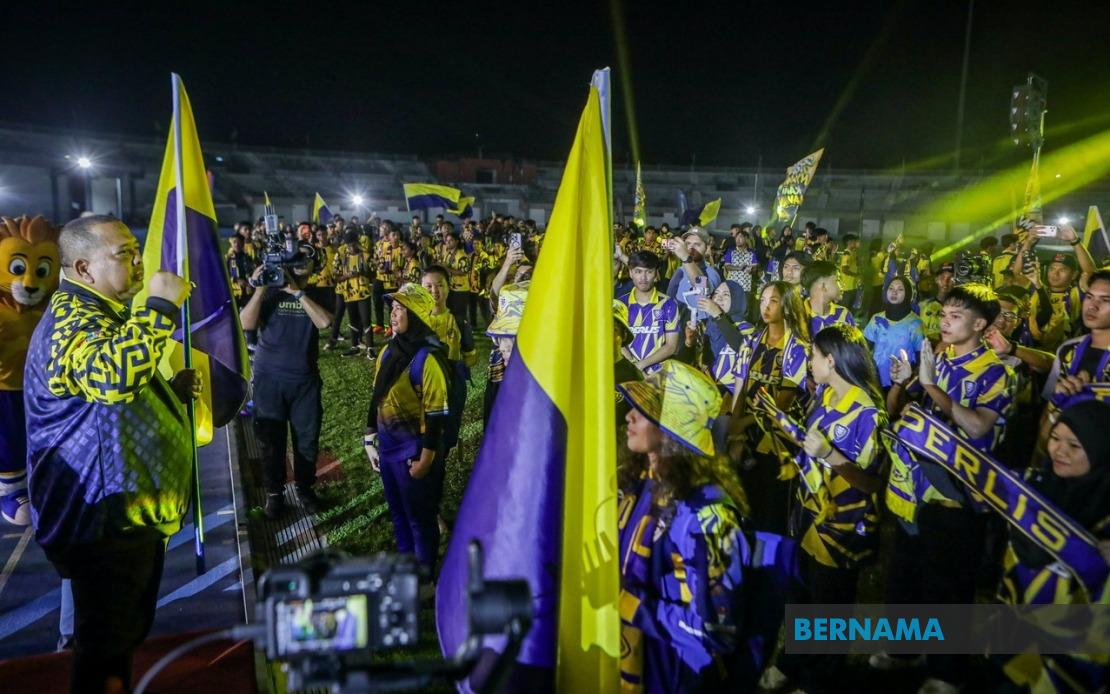
The northern state of Perlis has reached an unprecedented milestone in its sporting history by claiming 17 gold medals at SUKMA 2026, held in Selangor, marking a watershed moment for a state that has historically struggled to compete with larger, wealthier regions. This achievement represents not merely a numerical success but a tangible validation of the strategic investments and systemic reforms that Perlis has undertaken in recent years to professionalise its sports ecosystem and nurture emerging talent pools.
Menteri Besar Abu Bakar Hamzah made the announcement during a press conference following an Exco meeting in Kangar, emphasising that the result demonstrates the state government's deliberate, multi-year commitment to elevating Perlis as a genuine contender in national sporting competition. He attributed the breakthrough to a collaborative framework encompassing state athletes, coaching staff, sports associations, and the State Sports Council—a recognition that sustained performance gains require institutional coherence rather than isolated investment.
The gold medal haul forms part of a broader medal tally for Perlis at SUKMA 2026, where the contingent returned with a combined 42 medals: 17 gold, seven silver, and 18 bronze. This distribution suggests a competitive state across multiple disciplines rather than dominance concentrated in a single sport, a more durable foundation for future progress. By placing athletes across diverse medal categories, Perlis has created multiple pathways for developing elite performers and building spectator interest across varied sporting domains.
Among the standout performances referenced by Abu Bakar were record-breaking achievements in shot put, where Perlis competitors surpassed the previous games' benchmark, and a dominant showing by the state's weightlifting contingent, which captured the overall event championship at the Selangor-hosted games. These specific victories carry particular significance for a state seeking to establish identifiable areas of sporting excellence that can anchor its reputation and attract further resources and recruitment of young athletes.
The strategic focus outlined by the Menteri Besar signals that Perlis intends to consolidate these gains rather than treat the 2026 result as a one-off achievement. His explicit commitment to sustained emphasis on talent identification, high-performance training infrastructure, coaching development, sports science integration, and athlete welfare provisions indicates recognition that competitive sport operates within an ecosystem, not in isolation. States and regions that secure repeat success typically maintain continuous investment across these dimensions.
The financial dimension remains unresolved but consequential. Abu Bakar indicated that the state government is currently finalising incentive packages for athletes who delivered medals, with formal presentation ceremonies scheduled following the conclusion of Para SUKMA Selangor 2026. The timing and magnitude of these incentives will signal to the sporting community whether Perlis leadership views this performance as deserving substantial rewards—thereby encouraging future participation and commitment—or whether it treats it as a pleasant surprise warranting modest recognition.
For Malaysian sports observers, the Perlis result offers a template of how smaller, less economically dominant states can nevertheless achieve competitive parity at the national level through strategic prioritisation, institutional coordination, and patient investment. This carries implications for how other aspirant states might approach sports development, particularly those without the infrastructure advantages or historical sporting traditions of established powerhouses.
The context of SUKMA as a biennial competition means that Perlis now faces pressure to sustain and build upon this achievement at future editions. While 17 golds represents a historic peak, maintaining this position or advancing further will require the state to deepen its commitments across coaching infrastructure, sports medicine support, facilities development, and athlete compensation—all areas requiring sustained fiscal allocation and administrative focus.
Southeast Asian regional dynamics also merit consideration. As ASEAN nations increasingly compete for sporting prestige and use athletic performance as a soft power indicator, Malaysian states that demonstrate capacity to develop elite athletes contribute to the broader national profile. Perlis's breakthrough, while primarily of domestic significance, adds to Malaysia's demonstration of distributing sporting excellence beyond geographic or economic concentration.
The shot put record and weightlifting championship suggest that Perlis has identified niches where it can compete effectively, possibly leveraging particular physiological or technical advantages within its athlete pool. Sustained competitive success typically involves strategic focus rather than attempting to excel uniformly across all disciplines—a lesson that other emerging sporting regions have learned through trial and extended effort.
Looking forward, the key test will be whether this 2026 performance catalyses further structural improvements or remains a statistical outlier. Abu Bakar's statements suggest governmental commitment to continuity, yet such commitments often face fiscal pressures or political shifts. States that institutionalise sporting development within permanent administrative structures and secure multi-year funding commitments create conditions for sustained improvement; those relying on episodic attention typically experience performance volatility.
For Malaysian stakeholders across the sporting ecosystem, the Perlis result demonstrates that competitive hierarchies are not permanently fixed and that systematic investment can shift regional performance landscapes within a decadal timeframe. Whether this specific success becomes a launchpad for Perlis's long-term elevation or a memorable peak will depend substantially on decisions made in the coming months regarding resource allocation and structural commitment to sports development.

