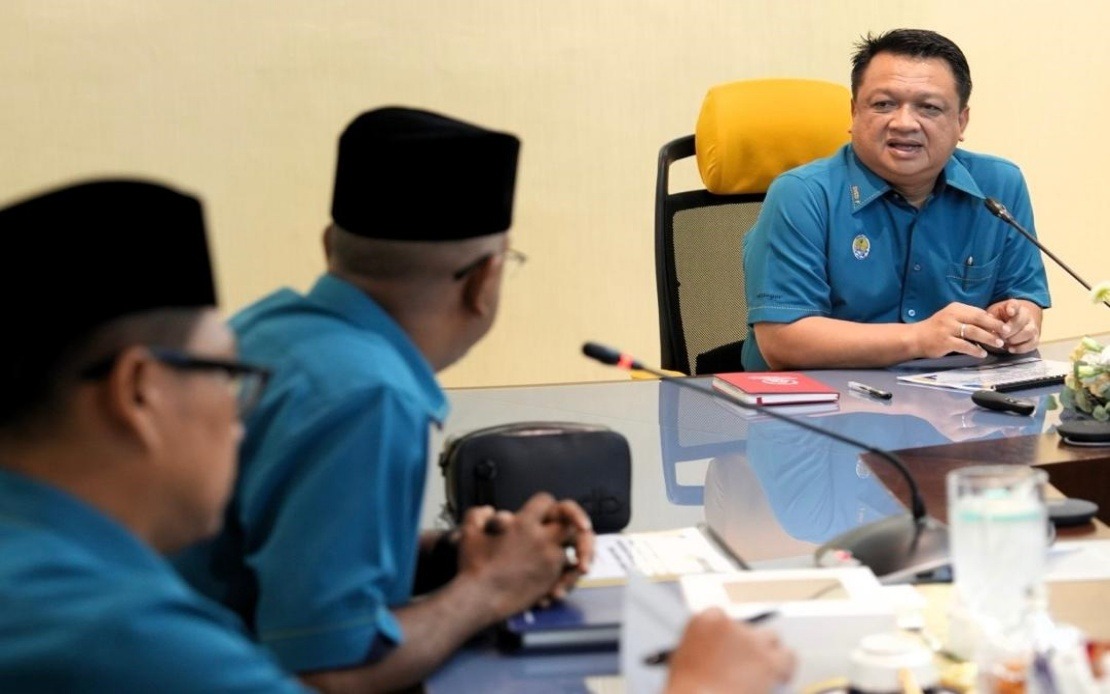
The Raja Muda of Perlis, Tuanku Syed Faizuddin Putra Jamalullail, has unveiled an ambitious vision to transform the state into Malaysia's premier testing ground for environmental sustainability initiatives. Speaking during an audience with Kangar Municipal Council officials at the Arau Royal Gallery, the royal proposed that Perlis leverage its compact geographic footprint to become a leader in renewable energy deployment and low-carbon urban development. The proposal carries significant implications for Malaysia's broader climate commitments and demonstrates how smaller states might accelerate the transition to sustainable economies more effectively than larger, more complex jurisdictions.
Central to this vision is the pursuit of zero-carbon status, an achievement that would position Perlis as a tangible demonstration of Malaysia's capacity to meet international climate obligations. The Raja Muda emphasised that successful implementation would signal the country's alignment with global efforts to combat climate change, a critical consideration as Malaysia navigates international expectations and investor scrutiny regarding environmental stewardship. For a state often overshadowed by more economically prominent neighbours, sustainability leadership offers a distinctive pathway to regional prominence and international recognition.
The Kangar Municipal Council, under president Affendi Rajini Kanth, has already advanced these ambitions through the development of the Green City Action Plan, a comprehensive strategic document approved in February. This plan represents a sophisticated approach to sustainable urban development, incorporating expertise from the Ministry of Economy, the IMT-GT Joint Business Council, ICLEI—Local Governments for Sustainability, and the Asian Development Bank. The involvement of multilateral development institutions underscores the seriousness with which these initiatives are being pursued and reflects international confidence in Perlis's potential as a model jurisdiction.
The sustainability framework explicitly targets the establishment of renewable energy infrastructure as its cornerstone. Solar photovoltaic systems are proposed for installation across government buildings, public facilities, and private structures throughout the state. Complementing solar deployment, biomass energy sources have been identified as additional renewable capacity contributors. This dual-track approach reflects recognition that sustainable energy transitions require technological diversity rather than dependence on single renewable sources, a lesson increasingly relevant for Southeast Asian economies seeking energy security alongside decarbonisation.
Transport represents another critical dimension of the Green City Action Plan's scope. Officials have outlined plans for a Low Carbon Transport Plan alongside the development of Micro-Mobility Zones and Non-Motorised Transport facilities. These initiatives acknowledge that reducing emissions requires reshaping how residents and workers move through urban spaces. By prioritising pedestrian infrastructure, cycling networks, and potentially shared micromobility systems, Perlis aims to shift transport patterns away from private vehicle dependency—a pattern that has intensified across Malaysia's urban areas and contributed substantially to rising emissions.
Waste management constitutes the third pillar of the sustainability agenda. A Material Recovery Facility with 80-tonne-per-day capacity is planned to enhance solid waste recycling rates and strengthen circular economy principles within the state. This infrastructure investment recognises that sustainability extends beyond energy and transport to encompass how societies manage resource consumption and waste generation. Effective waste recovery can simultaneously reduce landfill pressures, create employment opportunities in the recycling sector, and foster awareness of consumption patterns among residents.
Water resource management has been integrated into the sustainability framework through comprehensive rainwater harvesting systems planned across Perlis. This initiative reflects growing recognition across the region that climate change introduces unpredictable precipitation patterns, requiring communities to develop resilient water management strategies. Rainwater harvesting reduces dependency on conventional water supply infrastructure while building redundancy into essential services—a consideration particularly relevant for smaller states vulnerable to supply disruptions.
Disaster preparedness represents an often-overlooked dimension of sustainability that the plan addresses through a comprehensive State Disaster Management Plan and the strengthening of the Perlis Integrated Command Centre. Climate change intensifies extreme weather events and associated hazards, making disaster resilience an integral component of sustainable development. By institutionalising preparation mechanisms, Perlis acknowledges that environmental sustainability encompasses not only emissions reduction and resource efficiency but also the capacity to withstand and recover from climate-related shocks.
The proposed initiatives have been organised around five catalyst projects identified as drivers of broader transformation. This focused approach reflects practical recognition that comprehensive sustainability transitions require initial demonstration projects capable of generating measurable results and building political and public support for wider implementation. Success with early catalyst projects typically accelerates subsequent phases by demonstrating feasibility and generating constituencies invested in continuation.
Perlis's sustainability agenda aligns explicitly with the Sustainable Development Goals and Malaysia's greenhouse gas reduction commitments, situating the state within international frameworks while addressing domestic priorities. This alignment matters considerably for attracting development financing, international partnerships, and investor interest—resources increasingly essential for funding the infrastructure transitions sustainability requires. For Malaysia's regional standing, positioning a state as a sustainability leader contributes to national credibility on climate action within ASEAN and global forums.
The proposition to develop Perlis as a testing ground carries implications extending well beyond the state's boundaries. Success would generate replicable models and policy lessons applicable across Malaysia and throughout Southeast Asia, where comparable states and municipalities grapple with similar sustainability challenges. The relatively controlled environment of a smaller state permits systematic experimentation with policies and technologies subsequently adapted for larger populations and more complex jurisdictions.
Implementation timelines and funding mechanisms remain critical determinants of whether these ambitious proposals translate into tangible outcomes. The involvement of international development institutions suggests access to concessional financing and technical expertise, yet political commitment and domestic resource allocation will prove equally decisive. For Malaysian policymakers and regional observers, the Perlis initiative represents a significant test of whether aspirational sustainability rhetoric can achieve institutional embedding and practical results.

