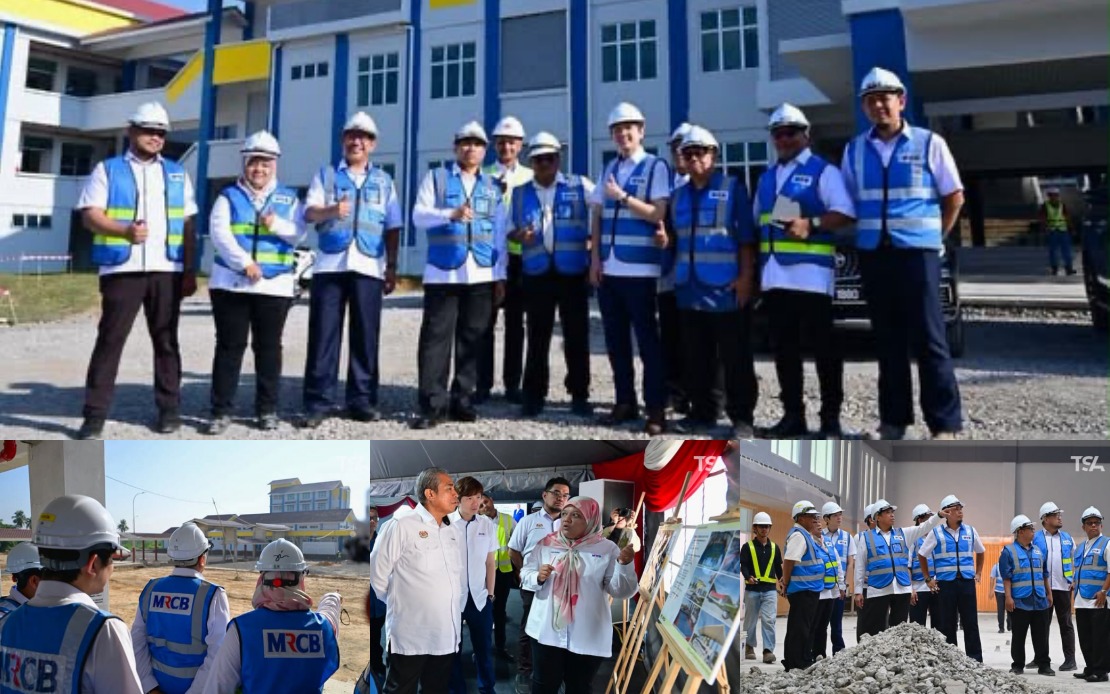
The Perlis Malaysia Sports School at Bukit Chabang in Padang Besar, dormant for over a decade, is expected to open its doors in January 2027 following accelerated construction efforts. Chief Secretary to the Government Tan Sri Shamsul Azri Abu Bakar expressed confidence in the timeline during a recent visit to the site, noting that the first phase of development has already reached between 85 and 90 percent completion. The project's revival represents a significant turnaround for an initiative that was effectively shelved since 2013, symbolising the government's renewed commitment to infrastructure delivery in Malaysia's northern region.
The transformation in project momentum stems directly from Prime Minister Datuk Seri Anwar Ibrahim's intervention in April 2024, when he directed that the school's construction be transferred to a capable government-linked company. This decisive action addressed what had become an institutional stalemate, clearing the path for meaningful progress where previous private sector arrangements had failed. Shamsul Azri attributed the recent acceleration to the resolution of longstanding obstacles that had repeatedly derailed earlier attempts. Contractor capacity issues and workforce shortages, which had plagued the project for years, have now been adequately resolved, he indicated during a visit to the construction site.
The sports school initiative carries particular significance for Perlis, Malaysia's smallest state by population. The facility is intended to become a premier training centre for young athletes, offering world-class infrastructure and coaching support to develop sporting talent from the northern corridor. For a state often overshadowed by larger neighbours, the school represents an opportunity to establish itself as a destination for sports development and youth excellence. The project's completion would also generate employment opportunities during construction and ongoing operations, potentially stimulating economic activity in the Padang Besar area.
Beyond the individual project, Shamsul Azri used the occasion to highlight broader government efforts to enhance administrative efficiency. He announced that the Government Service Efficiency Commitment Act 2025 came into full force on December 1, 2025, establishing a legal framework aimed at reducing bureaucratic obstacles and accelerating service delivery across the public sector. Unlike mere policy directives, this legislation creates enforceable obligations on government agencies to streamline processes and eliminate unnecessary red tape. The act reflects an acknowledgment that Malaysia's administrative machinery requires systematic reform to remain competitive and responsive.
The government's Bureaucratic Red-Tape Reform initiative, launched under the Public Service Reform Agenda in 2024, has already demonstrated measurable impact. A total of 439 reform projects have reached completion, generating estimated compliance cost savings of RM2.95 billion for both the general public and the business community. These figures underscore a deliberate strategy to lighten the regulatory burden that has historically constrained entrepreneurship and foreign investment. The reforms encompass diverse government departments and agencies, suggesting systemic rather than ad-hoc improvements to how public services operate.
The efficiency agenda carries particular relevance for Southeast Asia, where regulatory burden and bureaucratic delays remain persistent competitive disadvantages compared to other regional economies. Malaysia's explicit focus on streamlining public administration signals recognition that ease of doing business and responsive governance are essential to attracting investment and retaining talent. For Malaysian businesses operating regionally or internationally, faster government approvals and clearer administrative processes create tangible competitive advantages. Similarly, citizens and entrepreneurs benefit from reduced time navigating permit systems, licensing requirements, and regulatory compliance.
During his address at the Iltizam 2026 Convention at Universiti Utara Malaysia, Shamsul Azri also addressed concerns regarding civil servant involvement in political activities. He reiterated that government employees remain bound by established regulations prohibiting political participation, noting that no formal complaints have thus far been received on this matter. As Malaysian politics enters an increasingly intense phase with successive electoral cycles, clarifying the boundaries for public sector neutrality helps protect institutional integrity and public confidence in government impartiality. The reminder reflects ongoing tension between the rights of citizens and employees versus the requirement that state apparatus remain apolitical.
The Perlis sports school's journey from abandonment to imminent completion encapsulates broader patterns in Malaysian governance. The project's revival demonstrates that political leadership prioritisation can unlock stalled initiatives, though the 14-year gap also illustrates costs of previous institutional failures. Completing the facility on schedule would validate the government-ownership model and potentially establish a template for addressing other long-delayed infrastructure projects across the country. However, maintaining momentum through January 2027 requires sustained attention and adequate resourcing, particularly as contractor performance will be critical in final phases.
Looking ahead, successful completion of the Perlis Malaysia Sports School would provide not merely a facility but proof of concept for reformed governance approaches. The facility's operations will demonstrate whether government-managed infrastructure can deliver sustained excellence in athlete development and facility maintenance. For policymakers and administrators elsewhere in Southeast Asia, the project offers lessons in turning administrative reform into tangible outcomes. Meanwhile, for Perlis specifically, the school promises to elevate the state's profile within Malaysia's sports ecosystem and provide young athletes with training opportunities previously requiring travel to larger population centres.

