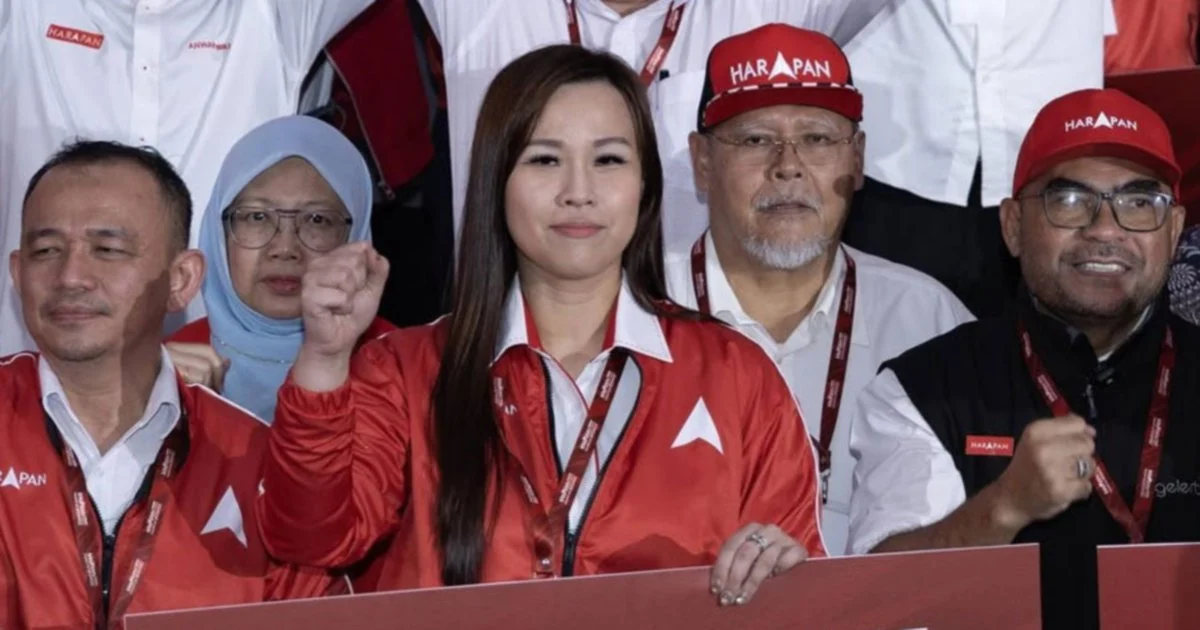
The political fault lines within Pakatan Harapan's Johor operations have fractured openly after Pasir Gudang's Amanah chapter declared it would withhold support for Sharon Teo, the coalition's candidate in the Permas state constituency. The decision, framed as a principled stand against what party leaders term a "parachute candidate", signals deepening tensions between coalition partners as they prepare for the state election campaign. The controversy illuminates broader questions about internal democratic processes within the opposition alliance and the mechanics of candidate selection that have plagued multiparty coalitions across Southeast Asia.
Amanah's position reflects frustration among grassroots party activists who view external candidate imposition as contrary to democratic principles. The term "parachute candidate" carries particular weight in Malaysian politics, denoting individuals parachuted into constituencies with limited organic connection to local party structures or community networks. Such appointments frequently trigger resentment among established cadres who anticipated the opportunity to shape the nomination process. In Permas, the Amanah chapter apparently felt sidelined in what should have been a consultative process, leading to the boycott decision as an expression of internal dissent.
The Permas seat represents a microcosm of larger strategic tensions within Pakatan Harapan's coalition framework. As a component member, Amanah possesses legitimate expectations regarding candidate selection protocols, particularly in constituencies where it maintains substantive organisational presence and membership bases. The unilateral selection of Sharon Teo, regardless of her qualifications or track record, bypassed customary consultation mechanisms that are supposed to bind coalition partners together. This administrative shortcut, while perhaps intended to expedite campaign preparations, has instead inflamed internal relations and undermined coalition cohesion at a critical juncture.
For Malaysian voters, such internal fractures carry tangible consequences. Coalition partners operating at cross-purposes cannot effectively coordinate campaign messaging, mobilise volunteer networks, or present unified positions on policy platforms. In Permas specifically, Amanah's boycott creates an awkward situation where voters encounter a coalition that appears divided on its own candidacy. This spectacle risks projecting weakness and intra-party dysfunction precisely when opposition coalitions need to project competence and unified governance vision to convince voters of their readiness to lead.
The incident also reflects how candidate selection processes remain one of the most contentious issues in Malaysian coalition politics. Unlike systems with primary elections or membership votes, Malaysian coalition arrangements typically depend on behind-the-scenes negotiations between party leadership and coalition coordinators. These opaque processes naturally breed grievance among those excluded from decision-making, particularly when external candidates are inserted without corresponding explanation or consensus-building. Amanah's public boycott represents an escalation from private complaint to open defiance, suggesting the party no longer views internal channels as effective remedies.
From a Johor-specific perspective, the controversy gains significance because the state represents a crucial electoral battleground where coalition strength directly determines government formation. Johor's historical pattern of competitive electoral contests means marginal differences in turnout and voter sentiment can determine whether constituencies swing between coalitions. Any division within Pakatan Harapan, even if isolated to single constituencies, theoretically risks cascading consequences across broader state-level dynamics. Voters observing coalition dysfunction may gravitate toward alternative options, potentially reshaping overall electoral arithmetic.
The timing of this dispute also warrants examination. Emerging during the pre-campaign period, when coalitions should be consolidating organisational capacity and messaging discipline, the Permas controversy suggests deeper structural problems remain unresolved. Coalition partners that cannot manage candidate selection disputes smoothly may struggle with more substantial governance challenges should they secure state power. Voters implicitly assess coalition viability partly through observing how internal differences are handled during campaigns. A pattern of public conflict and unresolved tensions transmits troubling signals about operational capacity and interpersonal trust among leadership.
Amanah's boycott decision also positions the party as defending grassroots democratic participation against perceived elitism. By refusing to campaign for an imposed candidate, the party appeals to its ideological base and members who value party democracy. However, this stance simultaneously complicates coalition effectiveness and hands opposition competitors tactical advantages. The calculation suggests Amanah leadership views the integrity argument as more important than short-term electoral optimisation in this particular instance, or alternatively, that internal dissent had become so pronounced that boycott represented the only viable option for preserving party credibility.
Sharon Teo's position as the designated candidate now exists in considerable shadow. Whether she possesses genuine credentials and community connections remains unclear from the available information, but the "parachute" label, once applied, is difficult to overcome. Even if Teo successfully campaigns and performs well, she operates with the disadvantage of colleague coldness and reduced volunteer support. Conversely, Amanah members who boycott may face consequences should she unexpectedly prevail, having positioned themselves against an ultimately successful campaign.
The Permas situation encapsulates recurring tensions within contemporary Malaysian coalition politics that extend beyond this single election cycle. Multiparty alliances require mechanisms for managing disagreement, accommodating partner interests, and building consensus around major decisions. When such mechanisms fail or bypass consultation protocols, informal rebellions and public disputes emerge as pressure release valves. For Pakatan Harapan and its competitors, questions about how to structure coalition governance in ways that respect partner autonomy while maintaining strategic coherence remain largely unresolved. The Permas case suggests these questions will continue generating friction throughout the Johor campaign and beyond.