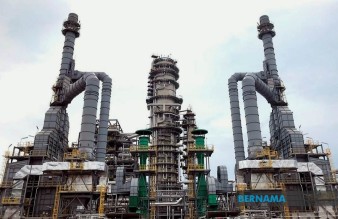
Malaysia's plan to establish a petroleum reserve deserves support, but policymakers must resist treating it as an isolated initiative divorced from the country's wider economic vulnerabilities, according to a leading economist who has offered a cautionary perspective on Prime Minister Datuk Seri Anwar Ibrahim's proposal to study creating such stockpiles as protection against global supply crises and geopolitical shocks.
Mohd Sedek Jantan, director of investment strategy and country economist at IPPFA Sdn Bhd, argues that energy security, while increasingly vital for Malaysia's manufacturing base and industrial production, represents merely one dimension of a multifaceted economic resilience challenge. The real risk, he suggests, lies in compartmentalising the petroleum reserve question as though disruptions will necessarily emanate from energy markets. History and current geopolitical trends suggest otherwise. Future shocks could equally originate from disruptions to critical mineral supplies, food imports, semiconductor availability, or digital infrastructure—sectors where Malaysia faces dependencies as significant as its reliance on petroleum-dependent economies for supplies.
This perspective carries particular weight in the Malaysian context, where the economy remains substantially exposed to import vulnerabilities. The country sources numerous essential food products from overseas suppliers, meaning that a severe disruption to global agricultural markets or trade routes could inflict comparable economic damage to an oil crisis, potentially affecting household purchasing power, consumer inflation, and social stability more directly than energy shortages might. Similarly, Malaysia's position within global semiconductor and electronics supply chains means that disruptions in these sectors could ripple through manufacturing with devastating speed. A petroleum reserve, standing alone, would leave these vulnerabilities untouched.
Mohd Sedek emphasises that stockpiling quantities of crude oil, while symbolically and practically meaningful, should not become the primary metric by which the initiative's success is measured. Rather, the true test involves whether establishing such reserves genuinely enhances Malaysia's capacity to absorb and recover from unforeseen economic shocks. This requires embedding the petroleum reserve within a coherent national framework that addresses multiple points of vulnerability simultaneously. Resilience, in other words, must be systemic rather than sectoral.
The economist identifies three critical pillars that should underpin any reserve strategy that policymakers pursue. First, government must articulate with precision the genuine purpose of a petroleum reserve, distinguishing sharply between using stockpiles to cushion legitimate supply disruptions and attempting to influence short-term commodity price movements for political or budgetary advantage. Strategic reserves justified on the former basis carry legitimacy; those employed for the latter represent poor stewardship of public resources. This distinction matters because it shapes both the size of reserves required and the governance mechanisms needed to prevent misuse.
Second, the framework governing reserves must incorporate sufficient flexibility to evolve as strategic circumstances shift. Today's dominant concern may be petroleum availability, yet the pressing challenge of 2030 or 2035 could involve critical minerals essential to battery production and renewable energy transition, or semiconductors critical to artificial intelligence and digital transformation. Rather than designing a petroleum-specific reserve with limited adaptability, Malaysia should architect an institutional approach capable of identifying emerging vulnerabilities and responding to them with dispatch. This requires building foresight and analytical capacity into government structures, enabling continuous reassessment of which sectors warrant priority attention.
Third, implementation demands rigorous commercial and fiscal discipline. The decision to establish or expand reserves must withstand scrutiny from cost-benefit analysis rather than proceeding on ideological grounds or in response to contemporary political pressures. Questions surrounding reserve size, funding mechanisms, storage infrastructure, and governance structures should all be resolved through evidence-based evaluation rather than assumption. This approach protects public finances while ensuring that taxpayer resources generate genuine economic returns through enhanced resilience rather than waste through poorly conceived reserves that sit unused or become corrupted through mismanagement.
The international experience offers instructive models worth studying as Malaysia develops its approach. Japan has constructed an approach to economic security that integrates strategic reserves with deliberately diversified supply chains, logistics networks designed for redundancy and resilience, and institutional coordination between government and private sector actors. Such integration proves more effective than reserves in isolation because it creates multiple buffers against disruption. A petroleum reserve that exists alongside fragile supply chains and weak logistics networks offers less protection than a more comprehensive strategy addressing all three dimensions.
Food security particularly demands priority equal to energy considerations within Malaysia's thinking, Mohd Sedek contends. The country's substantial dependence on food imports means that disruptions to global agricultural markets, shipping routes, or supplier nations could create immediate social pressures and inflationary impacts affecting ordinary households more visibly than energy shortages might. A reserve strategy that addresses petroleum but ignores food security leaves a critical flank exposed. Similarly, Malaysia's emerging role within advanced technology manufacturing means that securing reliable semiconductor supplies and protecting digital infrastructure warrant integration into the broader framework.
The economist acknowledges that strengthening energy security constitutes an increasingly important component of Malaysia's economic strategy, particularly given geopolitical volatility, supply chain fragmentation, and the transition toward renewable energy creating temporary supply uncertainties. However, positioning energy security as Malaysia's paramount economic concern risks misallocating scarce policy attention and public resources. The strategic imperative involves building genuine resilience across multiple domains simultaneously, using integrated frameworks that recognise interdependencies and feedback loops between different sectors.
Ultimately, Mohd Sedek suggests that Malaysia should treat the petroleum reserve proposal as an opportunity to construct something considerably more ambitious than oil stockpiles: a comprehensive national risk management framework capable of identifying and responding to evolving strategic vulnerabilities. This framework should function flexibly enough to accommodate emerging challenges while remaining grounded in rigorous analysis of actual risks and costs. Only through such comprehensive thinking can reserves contribute meaningfully to economic resilience rather than serving as symbolic gestures that create an illusion of security while leaving genuine vulnerabilities unaddressed.

