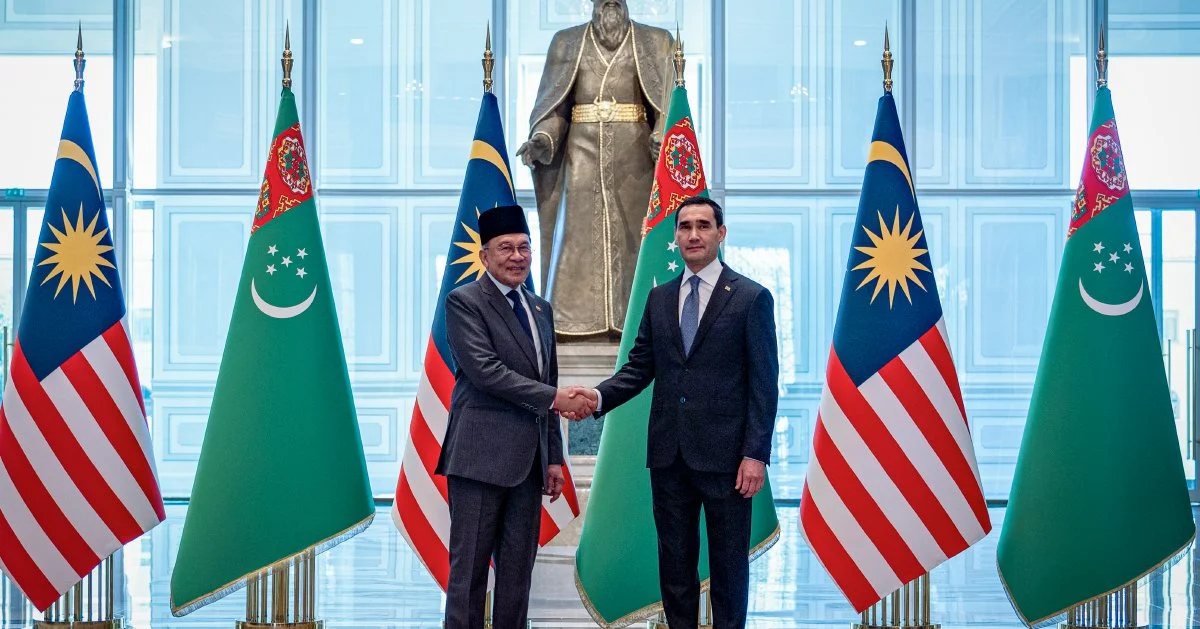
Malaysia's energy sector has gained significant momentum in Central Asia through Petroliam Nasional Bhd's (Petronas) growing footprint in Turkmenistan, marking a strategic advancement in bilateral relations following Prime Minister Datuk Seri Anwar Ibrahim's official visit to the oil-rich nation. The national champion's deepening involvement represents more than commercial interest—it signals Malaysia's intent to establish itself as a meaningful partner in one of Asia's most strategically important energy corridors.
Petronas has cultivated a substantial operational presence in Turkmenistan over many years, positioning itself as a trusted counterparty in the country's petroleum sector. This established foundation has proven instrumental in facilitating high-level government engagement, as exemplified by the Prime Minister's recent diplomatic mission. The company's technical expertise, project management capabilities, and track record of successful onshore and offshore developments across the region have earned it credibility with Turkmen authorities, creating a natural bridge for expanded state-to-state cooperation.
Turkmenistan's hydrocarbon resources remain among the world's most consequential. The country possesses significant proven oil reserves and ranks among the globe's leading natural gas producers, yet its ability to monetise these assets hinges critically on establishing stable, long-term partnerships with capable international operators. Petronas brings not only operational acumen but also experience navigating complex international energy markets, a skillset particularly valuable for Ashgabat as it seeks to diversify export routes and maximize revenue streams in an increasingly competitive global landscape.
The timing of the Prime Minister's visit signals deliberate strategic intent. Malaysia and Turkmenistan have historically maintained cordial but relatively modest diplomatic and commercial ties. By elevating engagement to the highest levels of government and anchoring discussions around Petronas's expanded role, both nations are signalling commitment to transforming their relationship from ceremonial cordiality into substantive partnership. This recalibration reflects broader Malaysian foreign policy objectives of strengthening ties across Asia and securing energy supplies for long-term domestic development.
Beyond hydrocarbon extraction and export, the Petronas-Turkmenistan collaboration creates opportunities for technology transfer, workforce development, and downstream value creation. Malaysian expertise in refining, petrochemical production, and liquefied natural gas infrastructure could prove highly relevant to Turkmenistan's ambitions to develop a more vertically integrated energy sector. Such cooperation could position Malaysian companies for lucrative engineering, procurement, and construction contracts, while simultaneously enhancing Turkmen capacity in value-added energy industries.
The geopolitical dimensions of this partnership merit consideration. Central Asia has become an arena of intensifying great power competition, with Russia, China, and Western nations all seeking to influence regional energy flows and political orientation. Malaysia's entry into deeper energy cooperation with Turkmenistan offers Ashgabat an alternative partner that brings technical capability without the historical baggage or strategic designs that complicate relationships with traditional energy sector players. For Malaysia, establishing itself as a reliable, non-aligned energy partner across Asia enhances its diplomatic influence and economic opportunities.
Investor sentiment toward Malaysian energy firms operating in frontier markets has historically been mixed. However, Petronas's institutional strength, government backing, and proven ability to execute projects in challenging environments provide a degree of confidence that might otherwise be absent. The company's involvement in Turkmenistan signals to international markets that substantial business opportunities exist within the country's energy sector, potentially attracting additional regional and international players who might otherwise have overlooked the market.
Turkmenistan's domestic energy consumption remains modest relative to its production capacity, making exports essential to economic viability. The country faces logistical challenges in reaching distant markets, particularly given geopolitical constraints affecting traditional pipeline routes through Russia and the Caucasus. Petronas's global trading network, access to Asian markets, and experience in unconventional energy solutions could provide Turkmen producers with new marketing pathways and improved realisation of commodity prices, directly benefiting government revenues and reinvestment in domestic development.
For Malaysian readers and investors, the significance extends to domestic energy security and long-term supply portfolio diversification. As Malaysia faces gradual depletion of its own petroleum reserves, establishing stable relationships with reliable producers in strategically accessible regions becomes increasingly important. Petronas's operations in Turkmenistan could secure preferential access to hydrocarbons, ensuring energy availability for Malaysia's growing economy and industrial sector across the coming decades, even as production from Petronas's traditional Southeast Asian fields gradually declines.
The partnership also reflects evolving Malaysian business strategy in emerging markets. Rather than competing on price or volume alone, Malaysian firms are positioning themselves as preferred partners by emphasizing reliability, technical capability, and genuine commitment to mutual benefit. This approach resonates particularly strongly with resource-rich nations seeking development partners who view them as long-term stakeholders rather than transactional counterparties.
Looking forward, the expanded Petronas presence in Turkmenistan is likely to catalyse additional bilateral engagement across multiple sectors. Energy partnerships frequently create momentum for collaboration in logistics, finance, professional services, and education. Malaysian financial institutions may establish closer relationships with Turkmen counterparts; Malaysian universities might attract Turkmen students; Malaysian consulting firms could secure infrastructure contracts. The relationship's multiplier effects could ultimately exceed the direct value of hydrocarbon transactions alone.

