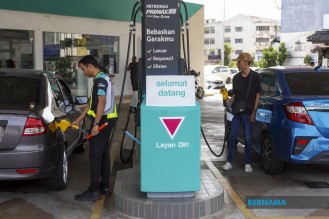
Malaysia's fuel supply situation remains secure for the coming months, with Petronas confirming that its extensive petrol station network will maintain adequate stock levels until August, according to Datuk Seri Azalina Othman Said, Minister in the Prime Minister's Department (Law and Institutional Reform). The assurance emerged during discussions at the National Economic Action Council meeting in late June, providing reassurance to lawmakers concerned about potential shortages amid volatile global energy markets.
The significance of this pledge cannot be understated when considering Petronas Dagangan Bhd's market dominance. As the publicly listed subsidiary through which Petronas distributes fuel nationally, the company commands approximately 50 percent of Malaysia's domestic fuel market. This commanding share means that supply stability at Petronas stations directly translates to overall national energy security. Any disruptions at this scale would create cascading effects across transportation, manufacturing, agriculture, and consumer sectors that depend on reliable fuel availability.
The government's response to energy market volatility has moved beyond simple monitoring. A dedicated Crisis Management Task Force, designated PPPK and operating under MTEN's purview, has been activated to maintain continuous oversight of the country's fuel, petroleum, and energy supply situation. This institutional apparatus represents recognition that global energy disruptions demand coordinated, systematic government intervention rather than reactive crisis management. The task force's mandate extends beyond supply tracking to encompass price stabilisation efforts and enforcement activities targeting smuggling and irregular market activities that could exacerbate supply shortages or fuel inflation.
The establishment of this task force underscores the broader context shaping Malaysia's energy strategy. The conflict in West Asia has triggered global energy supply concerns, creating uncertainty about crude oil availability and pricing across international markets. For an energy-importing nation like Malaysia, such geopolitical turbulence translates directly into operational challenges for refiners, importers, and retailers managing their commodity procurement and inventory strategies. By institutionalising crisis management, the government has signalled its commitment to maintaining domestic price stability and preventing artificial scarcity.
Beyond the August timeline, the government is actively diversifying crude oil sourcing to reduce exposure to West Asian supply disruptions. Procurement efforts are underway to secure crude supplies from alternative sources in West Africa and the Americas, contingent upon several critical factors. The suitability of crude oil grades—a technical consideration relating to sulphur content, viscosity, and other characteristics that determine processing requirements and product yields—must align with Malaysia's refinery specifications. Additionally, commercial terms negotiated with suppliers must prove economically viable relative to existing contracts and market benchmarks, ensuring that supply diversification does not inflate domestic energy costs.
This sourcing strategy reflects sophisticated energy policy thinking that balances security with economics. West African crude producers and Latin American suppliers represent geographically dispersed alternatives that reduce concentration risk. However, shipping distances, refinery compatibility, and price competitiveness all factor into procurement decisions. A shift toward crude from these regions would involve longer supply chains and potentially different logistics costs compared to traditional West Asian sourcing, yet the reduction in geopolitical vulnerability may justify such trade-offs.
The parliamentary question that prompted these clarifications originated from concerns about Petronas's earlier statement that supply guarantees extended only through June 2026. This discrepancy between the company's previous timeframe and the minister's updated assurance through August suggests either revised operational planning or refined communication about supply confidence levels. For Malaysian businesses and consumers accustomed to relative fuel price stability, such clarifications carry substantial weight in medium-term planning for transport operators, manufacturers, and households managing household budgets dependent on fuel pricing.
The implications extend across Southeast Asia's broader energy landscape. Malaysia's experience managing supply security amid global disruptions offers instructive lessons for regional neighbours facing similar vulnerabilities. The coordinated approach involving government oversight, industry coordination, and strategic diversification represents a model that could inform energy policy discussions across ASEAN nations similarly exposed to global commodity market volatility and geopolitical risk.
Looking forward, the August timeline serves as an intermediate checkpoint rather than a final resolution. The government's contingency planning and diversification efforts suggest preparation for scenarios extending beyond this date. However, the explicit communication of a three-month supply horizon indicates confidence in maintaining adequate inventory and access during this critical period. The true test of Malaysia's energy security framework will emerge as the global situation evolves and the government navigates commercial negotiations with alternative suppliers while maintaining domestic price stability and supply reliability that underpin economic activity and consumer welfare.

