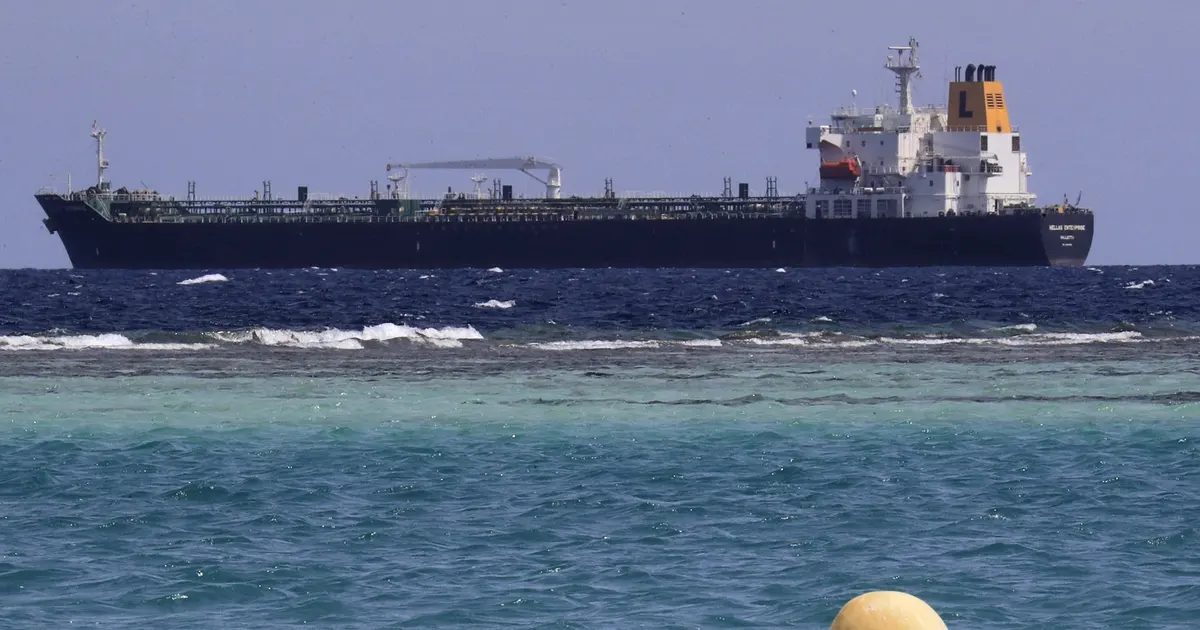
A liquefied natural gas carrier operated by Petronas has been authorised to proceed through the Red Sea, with the vessel scheduled to dock in Melaka in the coming weeks. Prime Minister Anwar Ibrahim characterised the clearance as evidence of Malaysia's success in maintaining measured diplomatic relations across competing global interests and regional power dynamics.
The approval represents a significant moment for Malaysia's energy sector, as the country's national petroleum company navigates the volatile waters of the Middle East amid heightened geopolitical tensions. The Red Sea corridor remains one of the world's most strategically crucial shipping routes, connecting Europe and Asia through the Suez Canal. Recent years have seen escalating security concerns in the region, making the safe passage of commercial vessels a matter of considerable importance to trading nations and energy exporters alike.
Anwar Ibrahim's comments reflect the government's broader emphasis on walking a diplomatic tightrope between major powers and regional actors. Malaysia has consistently sought to position itself as a nation capable of engaging constructively with diverse stakeholders—from established Western economies to regional Middle Eastern players to emerging Asian powers. This clearance for the Petronas vessel demonstrates the tangible benefits of such positioning, allowing Malaysian energy operations to continue uninterrupted despite the challenging security environment.
The timing of the vessel's approval carries particular weight given Malaysia's energy security needs and its reliance on international maritime commerce. Petronas, as a crucial revenue generator for the Malaysian government and employer of thousands across the country, depends on unimpeded access to global shipping lanes to maintain operations and export competitiveness. Any disruption to supply chains or shipping routes directly impacts the company's ability to deliver on energy contracts and maintain its standing as a major player in the global LNG market.
For Malaysian readers, the development holds practical significance beyond headline politics. Energy prices, petroleum product availability, and foreign currency earnings from oil and gas exports all connect to Petronas's operational capacity. When international tensions restrict shipping or force vessels into costly detours, the economic ripple effects eventually reach consumers and the broader economy through inflation, job losses, or reduced government revenues for public spending.
The Red Sea situation exemplifies why Malaysia's foreign policy approach matters in concrete ways. Unlike nations that take rigid ideological stances, Malaysia's pragmatic engagement with multiple actors—neither fully aligned with one bloc nor isolated from another—creates negotiating space. This flexibility has enabled the Petronas vessel to secure passage when ships from more polarised nations might face delays or restrictions.
The arrival in Melaka next month will be monitored as an indicator of whether the clearance represents a sustained pattern or a one-off approval. If regular transit becomes routine, it suggests that Malaysia's diplomatic efforts have genuinely reduced risks for its commercial operations. If this remains an isolated incident, it may indicate that broader security concerns continue to threaten passage through the Red Sea regardless of foreign policy positioning.
For the maritime industry throughout Southeast Asia, Malaysian success in maintaining shipping access offers a model worth studying. Singapore, as the region's largest port and a similarly neutral actor in geopolitical contests, faces comparable pressures. How Malaysia manages this Petronas operation could influence broader regional strategies for maintaining supply chain stability amid great power competition.
Anwar Ibrahim's emphasis on prudent foreign policy reflects lessons learned from Malaysia's historical experience. The country has long benefited from playing a moderating role in regional affairs, hosting dialogue forums, and maintaining working relationships across ideological divides. These investments in balanced diplomacy yield returns when specific challenges arise, as illustrated by the Petronas clearance.
Looking forward, the successful navigation of regional tensions by Malaysian vessels depends partly on continued political stability and diplomatic consistency at home. Changes in government direction or contradictory policy signals could undermine the carefully cultivated relationships that enable such clearances. This underscores why Malaysian political developments matter not just for governance and domestic affairs but for practical economic outcomes affecting citizens' daily lives through energy access and employment.
The Petronas situation also reflects evolving maritime security challenges that will likely intensify as geopolitical rivalry in Asia-Pacific deepens. Malaysia, situated on crucial trade routes and with significant maritime interests, must continuously refine its approach to protect national economic interests while avoiding entanglement in external conflicts. The forthcoming arrival of the Petronas vessel will offer early evidence of whether current diplomatic strategies remain effective in this increasingly complex environment.

