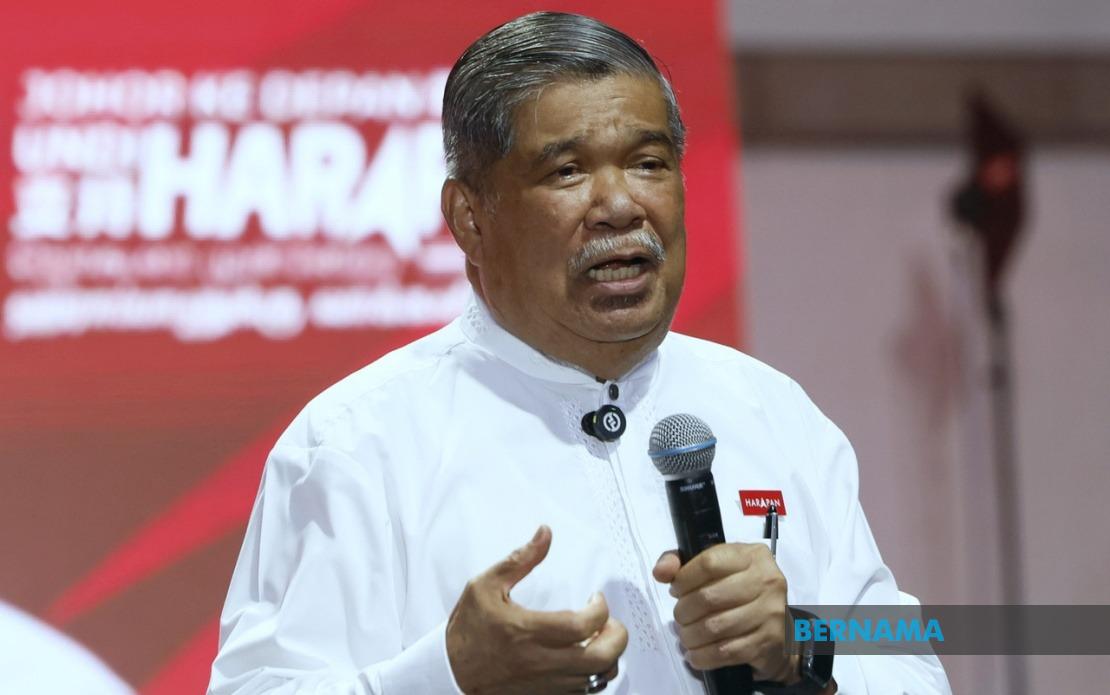
The Pakatan Harapan coalition has brushed aside PAS's tactical directive instructing party members to support Barisan Nasional candidates in constituencies where the Islamist party is not fielding its own contenders in the upcoming Johor state election. Amanah president Datuk Seri Mohamad Sabu, speaking at a PH gathering in Permas Jaya on July 1, insisted that the opposition bloc would proceed with its electoral campaign as originally planned, treating the manoeuvre as merely another political tactic rather than a genuine threat to its prospects.
The decision by PAS to explicitly endorse BN candidates in these uncontested seats represents a calculated attempt to consolidate anti-PH votes across the southern state. However, Mohamad Sabu characterised PH's composure in the face of such pressure as reflective of the coalition's fundamental confidence in its message and organisational capacity. By downplaying the significance of PAS's move, the Amanah leader sought to project an image of steady resolve among party cadres and supporters who might otherwise become demoralised by perceptions of a fractured opposition front.
Mohamad Sabu, who simultaneously serves as Malaysia's Minister of Agriculture and Food Security, grounded PH's resilience in what he described as the coalition's core competitive advantage: its commitment to multiracial and multi-religious collaboration. This framing transforms the election into more than a contest over seat distribution or ministerial portfolios. Instead, he positioned it as a broader choice about governance philosophy, arguing that political stability and sustainable economic growth depend on exactly the kind of inclusive, cross-community partnerships that distinguish PH from its rivals. This messaging carries particular weight in Johor, a state with significant Chinese and Indian minority communities alongside its Malay-Muslim majority, where appeals to unity can resonate powerfully.
The Amanah president issued a direct appeal to Johor voters to resist what he characterised as emotionally manipulative political appeals. Rather than allowing themselves to be swayed by appeals to racial or religious identity, Mohamad Sabu argued that citizens should evaluate candidates on tangible grounds: their demonstrated administrative competence, their track record of service to constituents, and their commitment to justice. This emphasis on performance-based evaluation implicitly challenges the notion that voters should automatically follow community or religious leaders' instructions on how to cast their ballots, a subtle rebuke of PAS's own directive to its followers.
Central to PH's campaign pitch is the argument that administrative cohesion between Johor's state government and the federal administration is essential for driving development initiatives. Mohamad Sabu specifically highlighted three areas requiring immediate attention: modernising the state's public transport infrastructure, enhancing facilities at key international checkpoints, and creating an environment conducive to inbound investment. By framing state-level politics through the lens of concrete developmental outcomes, PH attempts to elevate the campaign beyond factional rivalries and position itself as the custodian of pragmatic, forward-thinking governance.
DAP strategic director and Deputy Finance Minister Liew Chin Tong introduced a different analytical angle into the PH campaign narrative, focusing on voter participation rates as the crucial variable determining the election's ultimate outcome. Drawing explicitly on lessons from the 2022 Johor state election, Liew argued that depressed voter turnout, particularly among younger demographics, had historically benefited BN. He pointed to the specific disadvantage faced by Johor voters employed in Singapore who were unable to return home to vote during that previous contest due to COVID-19 travel restrictions, a factor that may weigh less heavily in the 2024 cycle but remains symbolically important in illustrating structural barriers to opposition mobilisation.
Liew's emphasis on youth voter participation reflects genuine concern within PH ranks about demographic trends that could undermine the coalition's electoral mathematics. Younger Malaysians often demonstrate lower propensity for electoral participation compared to older cohorts, a pattern that has historically advantaged BN's more established ground machinery. By explicitly naming youth voter turnout as the campaign's critical battleground, Liew effectively called on PH activists to prioritise outreach and mobilisation efforts targeting this demographic, transforming what might be viewed as a demographic disadvantage into a focused strategic challenge.
Diverting campaign discourse away from personalised political rivalry, Liew advocated for a policy-centred second phase of campaigning in which substantive proposals for improving citizen welfare would receive greater prominence than attacks on opposing candidates. This rhetorical repositioning serves multiple functions: it frames PH as the more mature, solutions-oriented political force; it provides substantive material for grassroots activists to deploy in conversations with undecided voters; and it subtly criticises BN for relying on transactional politics and patronage networks rather than forward-looking policy innovation.
The specific policy agenda that Liew outlined reflects acute awareness of the economic anxieties confronting Johor's residents, particularly those in younger age cohorts. He identified job creation at competitive wage levels as the paramount priority, explicitly acknowledging the reality that many Johoreans continue to seek employment across the causeway in Singapore due to superior remuneration and career prospects within that city-state. This candid recognition of Johor's position within a broader regional labour market positions PH as willing to confront uncomfortable truths rather than deflecting blame. The coalition proposes that coordinated federal-state action can reverse these trends by constructing a more dynamic local economy.
Beyond employment, Liew articulated a comprehensive catalogue of governance challenges requiring urgent attention: recurrent flooding problems, degraded drainage and river systems, preparations for managing an ageing population, and inadequate childcare infrastructure. This itemised list demonstrates PH's capacity for granular policy thinking and signals sensitivity to the diverse concerns of Johor's electorate across different life stages and circumstances. By treating governance as a technical challenge requiring professional management and cross-level coordination rather than as primarily a matter of factional competition, PH attempts to occupy rhetorical and strategic high ground.
Central to both Mohamad Sabu's and Liew's messaging is the argument that federalism itself requires alignment between state and national governments to function effectively. The construction of the Johor-Singapore Special Economic Zone represents the exemplary case of an initiative requiring precisely this type of synchronisation. Liew contended that close cooperation between federal and state administrations is non-negotiable for accelerating development projects of regional significance, a framing that subtly argues that voting for BN would actually obstruct rather than facilitate economic development by maintaining governmental friction across administrative levels.
The competitive terrain in this election involves all 56 Johor state seats, with polling scheduled for July 11 and early voting beginning July 7. The comprehensiveness of this contest—with both major coalitions fielding candidates in every constituency—contrasts sharply with the fragmentation evident in PAS's tactical directive, which itself reflects the complications of multi-party competition in Malaysian politics. PH's strategy of projecting organisational calm and policy coherence while PAS pursues more overtly transactional political manoeuvres may prove decisive in determining which coalition emerges with the mandate to govern the southern state.

