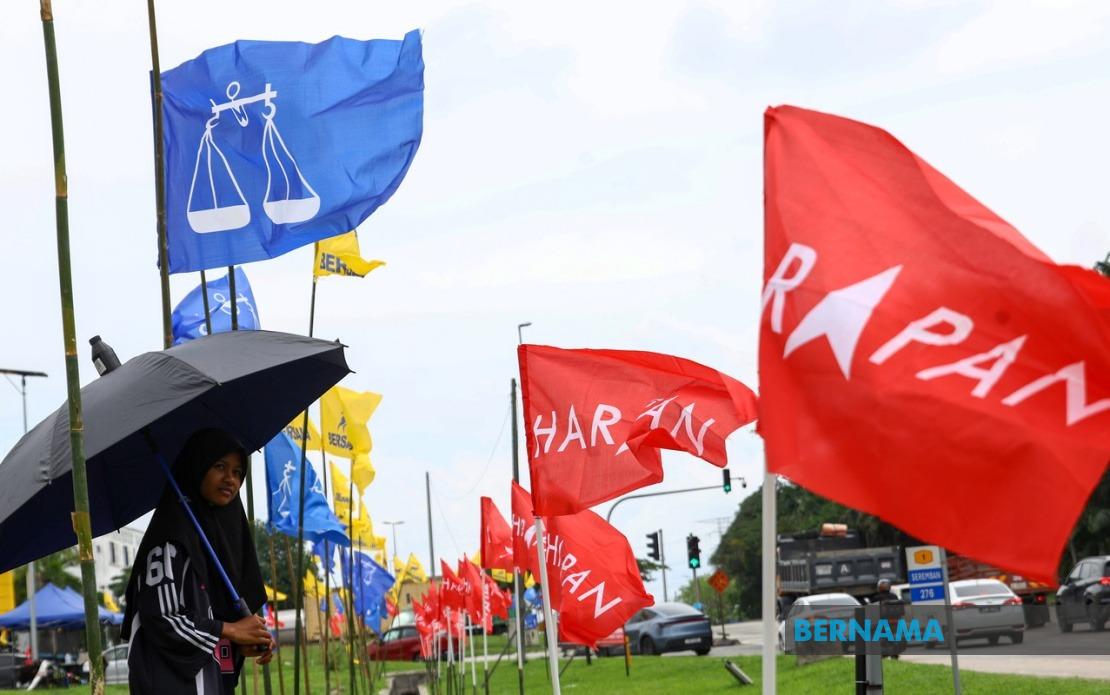
Pakatan Harapan's performance in the forthcoming Johor state election will determine whether the state maintains a healthy competitive political environment or risks sliding towards one-party dominance, according to DAP secretary-general Anthony Loke, who spoke at a party dinner in Kluang on July 3. The coalition leader framed the contest in terms of democratic governance, arguing that broad-based electoral success across multiple constituencies is essential to ensure adequate legislative oversight and institutional checks against executive overreach.
Loke's intervention highlights a fundamental concern about Malaysian state politics: the concentration of power in a single coalition can erode the parliamentary scrutiny that underpins democratic accountability. When one political force controls an overwhelming majority of state assembly seats, the capacity of opposition representatives to challenge government decisions, amend legislation, or investigate administrative shortcomings becomes severely constrained. This dynamic has played out in various Malaysian states over recent decades, with consequences ranging from reduced transparency to unchecked spending and resource misallocation.
The Johor state election, scheduled for July 11 with early voting on July 7, presents a significant test case for Malaysia's broader political realignment following the 2022 federal election. The state has traditionally been a Barisan Nasional stronghold, but shifting voter sentiment and inter-coalition competition have transformed the political calculus. Pakatan Harapan, comprising PKR, DAP, and Amanah, is contesting all 56 state assembly seats, signalling an ambitious effort to compete comprehensively across the state rather than ceding seats to rivals.
The coalition's strategy of fielding candidates in every constituency reflects confidence in its organizational capacity and voter appeal, yet also demonstrates the intense competition for legislative representation in Malaysian politics. With 172 candidates in total competing across the 56 seats, the election represents a three-way contest involving Barisan Nasional, Pakatan Harapan, and other contenders. This fragmented field means that seat distribution may not strictly reflect vote-share, a factor that complicates efforts to establish genuine multi-party legislatures.
Loke's emphasis on preventing single-party dominance carries particular weight given Malaysia's history of coalition politics. The absence of a strong opposition presence in state legislatures has been linked to reduced government efficiency and increased opportunities for patronage politics. When backbenchers and junior coalition members face no real threat of losing office to external rivals, incentives to perform effectively and represent constituent interests often diminish. Conversely, states with more balanced legislatures have sometimes experienced more robust public debate and faster policy responsiveness.
The democratic health of individual states remains crucial to Malaysia's overall governance quality because state governments control significant portfolios including land administration, local government, education policy coordination, and social services delivery. Poor state governance creates spillover effects affecting federal policy implementation and public service standards. A state legislature dominated by a single coalition with minimal opposition representation may struggle to hold the state administration accountable for service failures, budget mismanagement, or regulatory capture by special interests.
Packatan Harapan's positioning in Johor also reflects the coalition's broader strategy following its 2022 federal coalition with Barisan Nasional in the Unity Government framework. While that arrangement secured federal stability, state-level competition remains fierce and is evaluated separately by voters. The Johor election will test whether PH can establish itself as a credible alternative to BN at the state level, or whether its federal partnership has undermined its ability to mobilize opposition voters seeking meaningful electoral choice.
The presence of prominent DAP figures including deputy national chairman Nga Kor Ming and deputy secretary-general Steven Sim Chee Keong at the campaign event underscores the coalition's commitment of senior leadership resources to the Johor campaign. Such engagement typically indicates that the party views the state result as strategically important for its overall position and for validating its governance narrative to supporters concerned about its federal coalition arrangement with former rivals.
For Malaysian voters assessing the broader direction of state politics, Loke's arguments about checks and balances address a legitimate systemic concern. Electoral participation rates and seat distribution outcomes in Johor will provide important indicators about whether Malaysian voters continue to value competitive legislatures and whether entrenched dominant coalitions can be effectively challenged at the state level. The result will also influence expectations for other state elections in coming years and the broader trajectory of Malaysian competitive politics.

