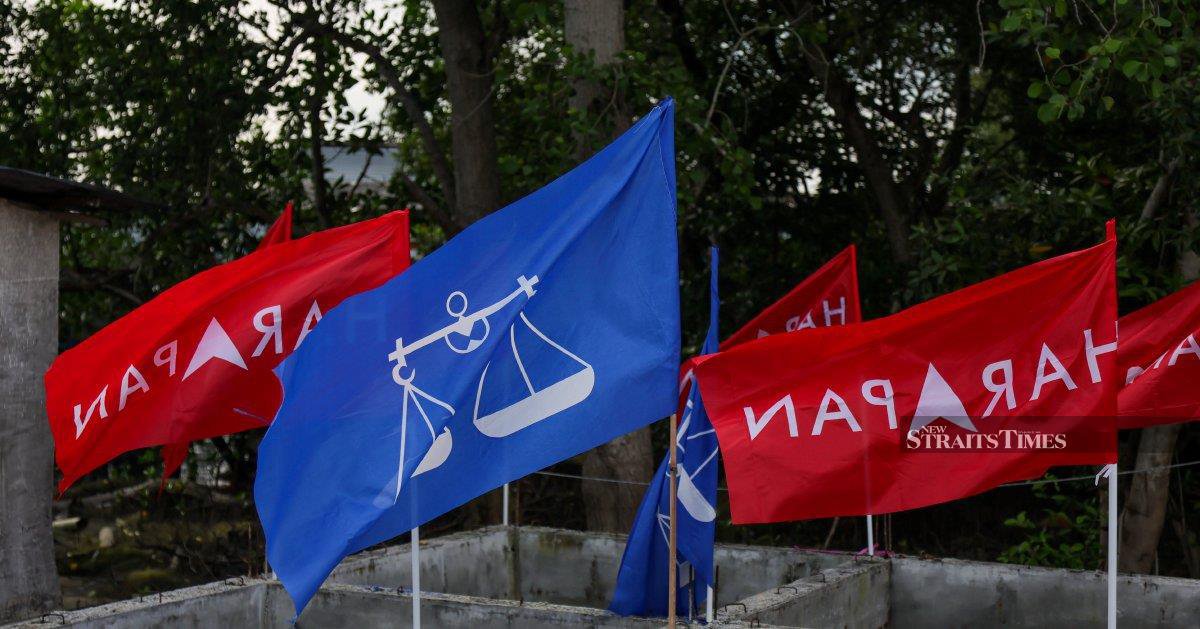
The Pakatan Harapan youth coalition has intensified political pressure on its coalition partners by formally calling for the wholesale resignation of all Barisan Nasional ministers and deputy ministers from the federal cabinet. The demand represents a significant escalation in intra-coalition tensions, with the youth wing accusing BN of fundamentally betraying the foundational principles underpinning Malaysia's unity government arrangement by openly collaborating with Perikatan Nasional in state-level electoral contests.
The confrontation centres specifically on BN's engagement with PN during recent state elections in Johor and Negri Sembilan. Rather than maintaining the unified electoral front that has characterised much of the post-2022 political landscape, BN has pursued independent electoral strategies in partnership with PN, actions that PH's youth leadership views as a direct violation of the unity government's core commitment to present a consolidated political front. This divergence highlights deep fissures within what was intended to be a stable governing coalition.
The unity government framework has been tested repeatedly since its establishment following the 2022 general election. It was designed to bring together traditionally opposed political forces—Pakatan Harapan, Barisan Nasional, and their various allied parties—under a shared commitment to stability and reform. However, the arrangement has always carried inherent tensions, as these coalitions maintain distinct ideological positions, competing power bases, and differing strategic interests across Malaysia's diverse political landscape.
BN's strategic pivot toward collaboration with PN, particularly in state elections where different electoral dynamics apply, reflects the coalition's attempt to maximise its political relevance in territorial strongholds. Johor, traditionally a significant BN bastion, and Negri Sembilan represent territories where BN's traditional power structures remain influential. By cooperating with PN rather than functioning exclusively within the PH-led framework, BN appears to be hedging its political bets and protecting its state-level influence, even at the potential cost of unity government cohesion.
For PH's youth wing, this represents an unacceptable compromise of principle. Youth movements across Malaysia's political spectrum have often served as pressure valves for more aggressive positioning than their parent parties officially adopt. By issuing this demand for wholesale resignations, the PH youth coalition is essentially signalling that patience with BN's dual allegiance has exhausted itself. The call also likely reflects generational frustrations within PH's organisational structure, where younger members have invested heavily in the unity government narrative.
The timing of this escalation carries significance for Malaysian politics. State elections in particular have become proving grounds where national coalitions test their cohesion. When coalition partners compete directly against each other at the state level while maintaining cabinet unity at the federal level, it creates profound contradictions. Voters and party activists alike struggle to understand the rationale, and it inevitably generates questions about the authenticity of the coalition arrangement itself.
From a broader perspective, BN's positioning also reflects institutional realities. As a coalition itself—comprising UMNO, MCA, MIC, and other member parties—BN operates with considerable internal autonomy. Individual member parties maintain their own electoral strategies and territorial ambitions. Binding BN collectively to a rigid PH-led electoral framework conflicts with these entrenched organisational practices. For UMNO in particular, maintaining political flexibility and state-level dominance has been central to the coalition's survival strategy.
The confrontation raises fundamental questions about whether Malaysia's unity government model can function sustainably when its component parts pursue divergent electoral strategies in state contests. Previous attempts at broad coalition governance in Malaysia have typically struggled when state and federal dynamics diverged. The current arrangement requires an unusual degree of restraint from all parties, particularly regarding the temptation to compete aggressively for state-level advantages.
For Malaysian political observers and citizens, this conflict underscores the fragility of elite political bargains constructed rapidly in response to electoral outcomes, rather than emerging from carefully negotiated institutional frameworks. The unity government was essentially an emergency arrangement following 2022, not a coherently designed governance structure. As electoral pressures mount and state contests arrive, the underlying contradictions are becoming increasingly visible.
The implications for stability are considerable. If PH youth pressure translates into formal party demands, and if BN ministers face genuine pressure to resign or if cabinet positions become contingent on electoral strategy alignment, the entire governing coalition faces potential destabilisation. Conversely, if the demand is dismissed without serious engagement, it signals that the unity government lacks mechanisms for resolving internal disputes constructively.
This clash also carries implications for Southeast Asia more broadly. Malaysia's political stability has historically underwritten regional confidence in ASEAN's institutional functioning. Extended periods of coalition instability or constitutional crises have ripple effects across the region. Investors, neighbouring governments, and regional organisations monitor Malaysian political cohesion closely as an indicator of broader stability patterns.
Moving forward, BN faces a choice between doubling down on its independent electoral strategies and accepting constraints on state-level autonomy in exchange for continued cabinet participation. Similarly, PH must decide whether it intends to enforce its unity government vision through disciplinary mechanisms or whether it will tolerate the flexibility that BN appears to view as essential. Resolution will likely determine whether this unity government endures as a functional governing coalition or gradually fragments under accumulated pressures.

