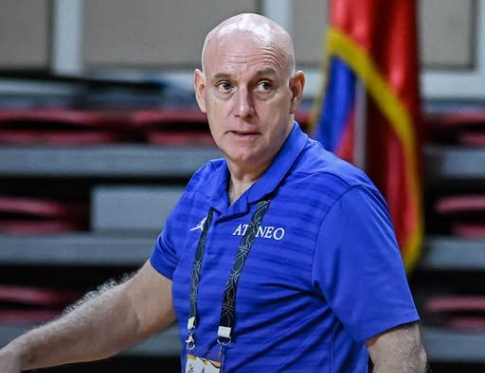
A prominent Philippine basketball coach and ten members of his support staff now face legal proceedings over the drowning deaths of two university players during what authorities characterise as a hazardous team-building activity. The Philippine National Police Criminal Investigation and Detection Group has recommended charges against former Ateneo de Manila University men's basketball head coach Thomas Anthony 'Tab' Baldwin and the others for violating the Anti-Hazing Act, following the deaths of players Rene Baterbonia and Divine Adili on June 8 in Dipaculao, Aurora.
The recommendation centres on whether the training session on that fateful day crossed legal boundaries from standard athletic conditioning into prohibited hazing practices. Philippine authorities have significantly broadened the definition of hazing under Republic Act No. 11053 beyond traditional initiation rituals to encompass forced physical exertion combined with environmental hazards. This interpretive shift means coaches and training staff can face serious liability even when drowning victims were not being subjected to deliberate aggression or abuse in the classical sense.
Besides Baldwin, the other individuals named in the recommendation include strength and conditioning coaches Grant Dearns and Ceasar Vicent Javellana Elumba, assistant coaches Dean Caesar B. Castaño, Sandro Nicholas Romero Soriano, and Reynaldo Jacinto, student managers Paolo Manuel Maceda Adevoso and Andrew Lorenzo Salud, physical therapist John Eric Quiambao Rueca, and utility personnel Aris Ramos Pronce and Joel Palmiano Rapa. A critical finding from investigators is that all eleven Ateneo team members present on the beach at Aurora bore collective responsibility, as none intervened to halt or question the activity despite its dangerous nature.
The sequence of events on June 8 reveals a pattern of escalating physical demands placed on the athletes. Players were awakened at 4am and required to complete a four-kilometre run before breakfast. Following this, they participated in intensely competitive physical games with punishments imposed on losing teams. By early afternoon, approximately twenty team members were taken into open seawater for a training activity scheduled between 2 and 2.30pm, precisely when the active high tide was expected to peak at 2.27pm. This timing, combined with known conditions of rip currents and strong waves, created what authorities describe as a hazardous environment for swimmers already fatigued from hours of preceding physical exertion.
Investigators argue that the activity served a selective purpose beyond general team conditioning. According to DILG legal officials, the Aurora session was designed to winnow candidates down to the final roster of seventeen players that would be submitted to the University Athletics Association of the Philippines, from a larger pool of twenty team members present. Under this framing, the training activity functioned as a prerequisite selection mechanism rather than inclusive team development, which aligns with the statutory definition of hazing as a practice imposed as a requirement for continuing membership or advancement within a group.
The legal interpretation being applied here represents a significant evolution in how Philippine authorities approach institutional responsibility. Rather than requiring evidence of deliberate humiliation or malicious intent, prosecutors argue that subjecting fatigued athletes to dangerous environmental conditions during selection activities constitutes hazing. This principle carries profound implications for university sports programmes across Southeast Asia, where intense conditioning and seasonal selection camps are routine practice. The expansion of liability extends from individual perpetrators to entire coaching hierarchies and support staff who may have tacitly approved or simply failed to prevent dangerous situations.
Baldwin, who previously served as head coach of the Philippine national basketball team and held a prominent position in local collegiate sports, released a video statement acknowledging responsibility for the deaths. His apology, nearly nine minutes in length and circulated through Ateneo's official channels, represents an implicit recognition of negligence even before formal charges were filed. This public acceptance of accountability contrasts sharply with potential courtroom defences centred on accident and unforeseeable circumstances.
The physical evidence gathered by the Philippine National Police provides additional context to the tragedy. Investigators found no weights or external objects attached to the bodies of either Baterbonia or Adili when they were recovered, ruling out deliberate attempts to cause drowning. This absence of direct murder indicators suggests that authorities are pursuing conviction on the theory of negligence through hazing practices rather than intentional killing. The distinction matters significantly for sentencing and reputational impact, though it does not diminish the gravity of the charges from the perspective of bereaved families or institutional accountability.
For Malaysian educational institutions and sports organisations, this case serves as a cautionary precedent regarding the scope of potential liability in athlete safety matters. Philippine anti-hazing legislation, while more explicitly protective than frameworks in some neighbouring countries, demonstrates how courts may interpret statutes to impose strict responsibility on authority figures when athletes are harmed during intense training activities. Athletic directors, coaches, and university administrators throughout the region should review their institutional practices, particularly regarding the timing and environmental conditions of demanding physical activities, the composition of supervision teams, and the mechanisms for emergency intervention.
The broader significance of this prosecution reflects growing public and governmental concern with institutional safeguarding in university sports. The deaths of Baterbonia and Adili triggered extensive media attention in the Philippines, public outcry over campus safety, and legislative discussions about strengthening protections for student athletes. Similar sentiment has emerged in other Southeast Asian nations following athlete deaths during training or initiation activities. This case will likely influence how courts in the region evaluate the responsibilities of coaching staff and university administrators when tragedies occur during supervised athletic activities.
The criminal process now moves to the Department of Justice for case evaluation and preliminary assessment. Philippine prosecutors must build evidence demonstrating not merely that the activity was hazardous, but that the coaching and administrative personnel consciously arranged conditions that prioritised selection outcomes over athlete safety. The outcome will establish important legal precedent for how hazing statutes apply beyond explicit initiation ceremonies to encompass training practices in mainstream athletic programmes. For Ateneo de Manila and Philippine university sports more broadly, the proceedings represent a significant institutional reckoning with athlete welfare standards and accountability structures.

