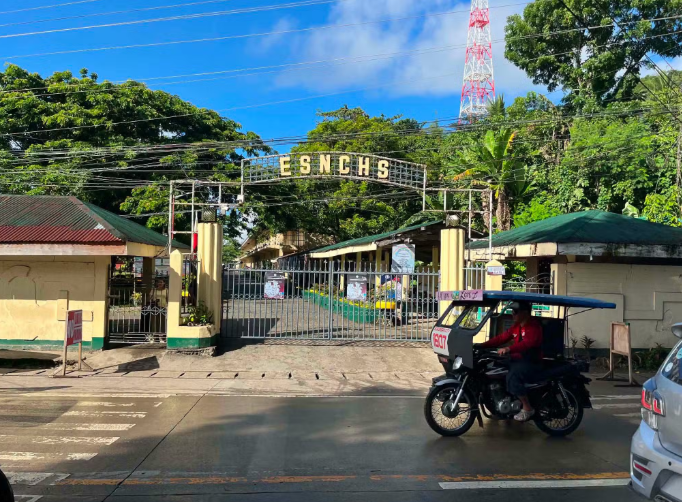
Eastern Samar National Comprehensive High School in Borongan City closed its doors to students on Friday following the emergence of threatening online posts, part of a troubling pattern of security concerns gripping educational institutions across the Philippines' Eastern Visayas region. The suspension came after circulation of an online post allegedly containing bomb and gun threats, reportedly traced to Grade 11 Kitchen Operations students at the sprawling campus, which serves as the province's largest public secondary school.
School authorities moved swiftly to protect the student population and staff once the threatening content came to light. Acting School Head Dean Ernest Paul Hermano issued an official statement confirming that the campus closure had been ordered upon recommendation from the Borongan City Police Station, with coordination involving both the municipal police and the Department of Education's local division office. The decision reflected a precautionary approach aimed at shielding thousands of students from any potential risk while security personnel conducted their assessment.
The police response was immediate and comprehensive. A Special Weapons and Tactics team was deployed to inspect the areas where the photographs allegedly associated with the threats had been taken, conducting a thorough sweep of the campus to rule out any physical danger. By mid-morning on Friday, Police Lieutenant Colonel Silver Cabanillas, the acting chief of the Borongan City Police Station, officially declared the school premises free from any credible bomb or gun threat following the completion of this security operation.
The incident gains particular significance given recent events that have deeply unsettled the region and the nation. Just two weeks earlier, on June 22, San Jose National High School in Tacloban City experienced a shooting that shocked the country—a student opened fire on campus, killing three fellow students and leaving twenty others injured. That tragedy prompted an immediate re-evaluation of security protocols across Eastern Visayas, with schools and local government units implementing stricter access controls, increasing police visibility, and reviewing emergency response procedures.
The timing of the Borongan threat illustrates how the trauma from the Tacloban shooting has fundamentally altered the security landscape in the region. Schools that might previously have dismissed such online posts as mere pranks now treat them with utmost seriousness, recognizing that school violence has ceased to be theoretical. The cascading effect of heightened anxiety means that even unverified threats now trigger full institutional responses, closure decisions, and major police deployments—a reflection of how profoundly a single violent incident can reshape institutional behaviour across an entire region.
Investigators have yet to identify who posted the threatening content, and the inquiry into the matter remains active. Authorities are working to determine whether the posts constitute genuine threats or misguided attempts at humour by students who may not have fully appreciated the consequences of their actions in this new climate of heightened sensitivity. The distinction carries real weight, as it will influence how the responsible parties are charged and whether educational interventions might be preferable to criminal prosecution for younger perpetrators.
The school's administration has emphasized its commitment to cooperation with law enforcement and its priority of maintaining a safe campus environment. In its statement, ESNCHS acknowledged that it takes all security threats with the utmost seriousness, framing the suspension and police cooperation as necessary components of its duty of care toward the students and staff under its responsibility. This messaging is important for reassuring parents and guardians who have grown considerably more anxious about their children's safety at school.
Eastern Samar National Comprehensive High School is no minor institution—it functions as the flagship secondary school for the entire province and serves thousands of students from Borongan City and surrounding municipalities. Its closure, even if temporary, affects a substantial portion of the region's student population and sends ripples through the broader educational community. For Malaysian observers, the situation underscores how vulnerability to school-based security incidents transcends borders and affects major educational institutions across Southeast Asia.
The broader pattern of recent incidents has prompted authorities to make a public appeal for responsible behaviour regarding unverified information circulating on social media. Officials are urging citizens to refrain from amplifying threats without verification and instead to report any security concerns directly to law enforcement agencies for proper assessment. This messaging reflects recognition that in an age of rapid information spread, unverified threats can spark panic and institutional disruptions even when they prove baseless, and that public responsibility in information-sharing is essential during heightened security concerns.
For educational systems across the Philippines and the wider Southeast Asian region, these incidents represent a sobering reality check. The question of campus safety has moved from administrative checklist to front-and-centre institutional concern, with schools now operating under the assumption that threats must be taken seriously until conclusively proven otherwise. The evolution from the pre-June 22 security posture to the current heightened state reveals how rapidly institutional culture can shift when a single act of violence shatters assumptions about the sanctuary that schools ought to provide. Whether this new baseline of vigilance represents a sustainable and proportionate response, or whether it reflects an overcorrection born of justified fear, will likely occupy policy discussions in Philippine education for months to come.

