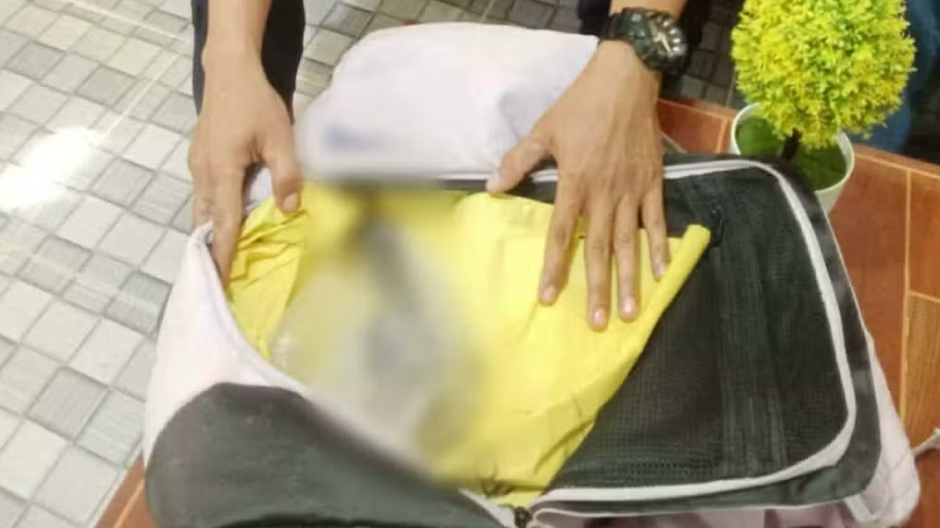
A .357-calibre revolver has been recovered from the school bag of a 14-year-old student in Pinamungajan, Cebu, following a surprise inspection conducted by school staff on Thursday. The discovery emerged around 3:50 pm when a teacher conducting a precautionary safety check of students' bags found the weapon. School authorities immediately notified police, who secured the weapon—identified as a Smith & Wesson Magnum revolver without ammunition—and began documenting the discovery.
Investigations have revealed that the firearm originally belonged to the teenager's grandfather and had been stored in a cabinet at the family residence. The minor, whose parents work outside the municipality and who was under his grandparents' care, allegedly removed the weapon from the cabinet and brought it to school on the day of discovery. The student has been handed over to the Municipal Social Welfare and Development Office pending the arrival of his parents or guardians, following standard procedures for minors involved in such incidents.
The incident unfolds against a backdrop of heightened security concerns across Cebu's educational institutions. The discovery comes weeks after a fatal shooting at a senior high school in Zamboanga left two people dead, prompting regional authorities to implement stricter safety protocols. In response, Cebu Governor Pamela Baricuatro directed police leadership to strengthen security measures across all public and private schools in the province, reflecting growing anxiety about weapons in educational settings throughout the Philippines.
Cebu Police Provincial Office Provincial Director Police Colonel Abubakar Udang Mangelen Jr subsequently rolled out a one-police-to-school deployment scheme, coordinating with local government units and school administrators to establish stronger police presence in educational facilities. This initiative complements existing security measures, including regular inspections and closer collaboration between law enforcement and school authorities. The intensified approach represents a significant shift in how provincial police are addressing school safety across the region.
The case underscores a critical vulnerability in household firearm management, particularly where minors have access to residential spaces. Police have renewed public reminders for firearm owners to properly secure weapons, emphasizing the importance of keeping guns in appropriate storage solutions that are inaccessible to children. This messaging carries particular weight in the Philippines, where debates over civilian gun ownership and safety protocols have intensified amid periodic incidents involving minors and unsecured firearms.
For Malaysian observers, the incident highlights challenges that extend beyond the Philippines. While Malaysia maintains stricter civilian firearm regulations than many Southeast Asian neighbours, the case serves as a cautionary reminder about the dangers of inadequate household weapon security and the importance of parental supervision, especially when children reside with elderly relatives who may be less attuned to contemporary safety risks. The incident demonstrates how security gaps can emerge in multi-generational households where responsibility for children may shift between working parents and grandparents.
The discovery through routine classroom bag inspection showcases an effective preventive approach that educational institutions across Southeast Asia might consider adopting or strengthening. Such checks, when conducted transparently and consistently, can serve as both deterrents and early warning mechanisms without requiring intrusive surveillance infrastructure. The success of the Pinamungajan school's protocol suggests that structured, teacher-led safety measures can complement police-led interventions.
As investigations continue, authorities are coordinating with the student's family to understand how the security breach occurred at the residential level. The incident raises questions about communication gaps between school systems and households regarding safety expectations and parental responsibilities. Educational institutions are increasingly expected to compensate for gaps in home-based safety protocols, placing substantial burden on teachers and administrators who must balance student welfare with practical operational constraints.
The broader regional context matters significantly. Cebu, as a major urban and commercial hub in the southern Philippines, has experienced recurring security challenges that affect both public safety perception and school environment management. The concentration of attention on school safety reflects not only the Zamboanga incident but accumulated concerns about gang activity, drug-related violence, and inadequate regulation of informal firearm possession in some areas. Schools have become focal points for demonstrating commitment to public safety, even when the actual statistical risk to students may be relatively modest compared to other social threats.
Moving forward, the case illustrates the necessity of multi-layered approaches to school security. Effective systems require sustained police presence, trained school personnel, regular inspections, community awareness about firearm safety, and robust procedures for handling incidents when they occur. The one-police-to-school scheme initiated by Cebu authorities represents an investment in preventive presence rather than purely reactive responses to crises, a model that other provincial governments across the Philippines and Southeast Asia may examine as school safety becomes an increasingly prominent political and social priority.

