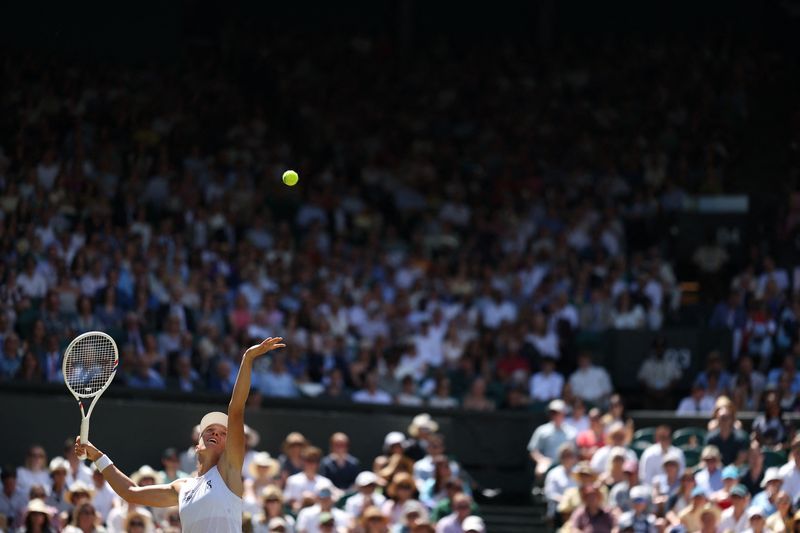
Alexandra Eala's impressive rise through the professional tennis ranks reached a new pinnacle on Saturday when the Filipino prodigy defeated Iga Swiatek, the reigning Wimbledon champion, in a thrilling third-round encounter at the All England Club in London. The 25-year-old Polish third seed succumbed 7-6(9) 6-2 in a match that showcased Eala's emerging potential on one of tennis's grandest stages, marking a significant breakthrough moment for the Southeast Asian competitor.
Swiatek's defence of her 2023 title began under considerable pressure after an underwhelming preparation period. Having suffered an early exit at the Bad Homburg warm-up tournament, the Polish player arrived at Wimbledon seeking to rediscover the form that had allowed her to conquer the sport's fastest surface just months earlier. Her path through the opening rounds had offered encouragement, with steady performances against Taylor Townsend and Karolina Pliskova establishing momentum, yet the third-round matchup against Eala would prove far more demanding than anticipated.
The opening set evolved into a brutal examination of both players' mettle, with neither competitor granting the other breathing room. At the net level that Swiatek requires to impose her dominance, neither player could establish clear control, and the tactical battle extended into a tiebreak where Eala's nerve held firm. The Filipino's powerful baseline stroke-making, a defining characteristic of her game, generated significant pressure from the outset, forcing Swiatek into passive positions and defensive returns. When Eala clinched the opening set 7-6(9) after that extended tiebreak, the momentum had shifted perceptibly in her favour.
Swiatek's emotional response to dropping the first set provided viewers with insight into the intensity and frustration of the contest. The defending champion's composure fractured visibly during transitions between sets, with audible frustrations directed toward her coaching box and a moment of racket contact with a chair underscoring her mounting anxiety. Such displays of frustration, while occasionally beneficial as emotional release, often signal a player's loss of tactical control and confidence. By contrast, Eala basked in the adulation of a crowd that had become thoroughly invested in witnessing her continued ascent, drawing palpable energy from the Centre Court atmosphere.
The second set unfolded as a dramatic reversal of fortune. Eala surged into a commanding 3-0 lead with two service breaks, her left-handed stroke patterns proving particularly awkward for Swiatek to counter from the baseline. The Filipino's ability to convert opportunities into immediate tactical advantages demonstrated the maturity increasingly evident in her performances against elite opponents. Each forehand crosscourt drive seemed to carry additional authority, while her defensive skills prevented Swiatek from establishing the rhythm necessary to launch a conventional comeback.
Although Swiatek managed to retrieve one service break late in the second set, her efforts proved insufficient to arrest the momentum that Eala had established. The Polish champion's late-match surge, which suggested a potential resurgence of her competitive instincts, failed to gain sufficient traction as Eala maintained composure during critical moments. When Eala delivered a forehand winner that effectively sealed the victory, the Polish player's title defence had officially concluded, ending her tenure as Wimbledon's reigning champion.
This victory carries special significance given the historical context between these competitors. Swiatek had suffered an unexpected defeat to Eala in Miami during the previous year, a loss that had prompted questions about consistency at the highest levels of competition. When the two met subsequently on the clay courts of Madrid, Swiatek exacted revenge, suggesting a reversal in their head-to-head dynamics. The Wimbledon result demonstrates that Eala's Miami victory was no aberration and that the Philippine star possesses the strategic and mental resources to overcome even the world's most accomplished competitors on their preferred surfaces.
For Malaysian and Southeast Asian tennis enthusiasts, Eala's breakthrough carries broader implications for the region's sporting profile on the international stage. The Philippines has historically produced competitive tennis players, yet reaching the second week of Grand Slam tournaments remains a distinctive achievement. Eala's progress beyond the third round places her among an elite group of Southeast Asian representatives who have consistently challenged the sport's established hierarchy. Her next opponent, 2024 Wimbledon runner-up Jasmine Paolini, presents another formidable examination, yet Eala's performance against Swiatek has demonstrated that she belongs in such elevated company.
The manner of Eala's victory also reveals something essential about contemporary women's tennis at the elite level. The sport has increasingly valued explosive baseline play, particularly the ability to dictate rallies from the back court through aggressive stroke-making. Eala's left-handed power baseline game aligns with this modern aesthetic, allowing her to generate competitive advantages that historically favoured different playing styles. Her ability to convert this power into accurate placement and tactical awareness, rather than relying solely on raw pace, suggests a player whose development has been thoughtfully guided toward sustainable success rather than momentary brilliance.

