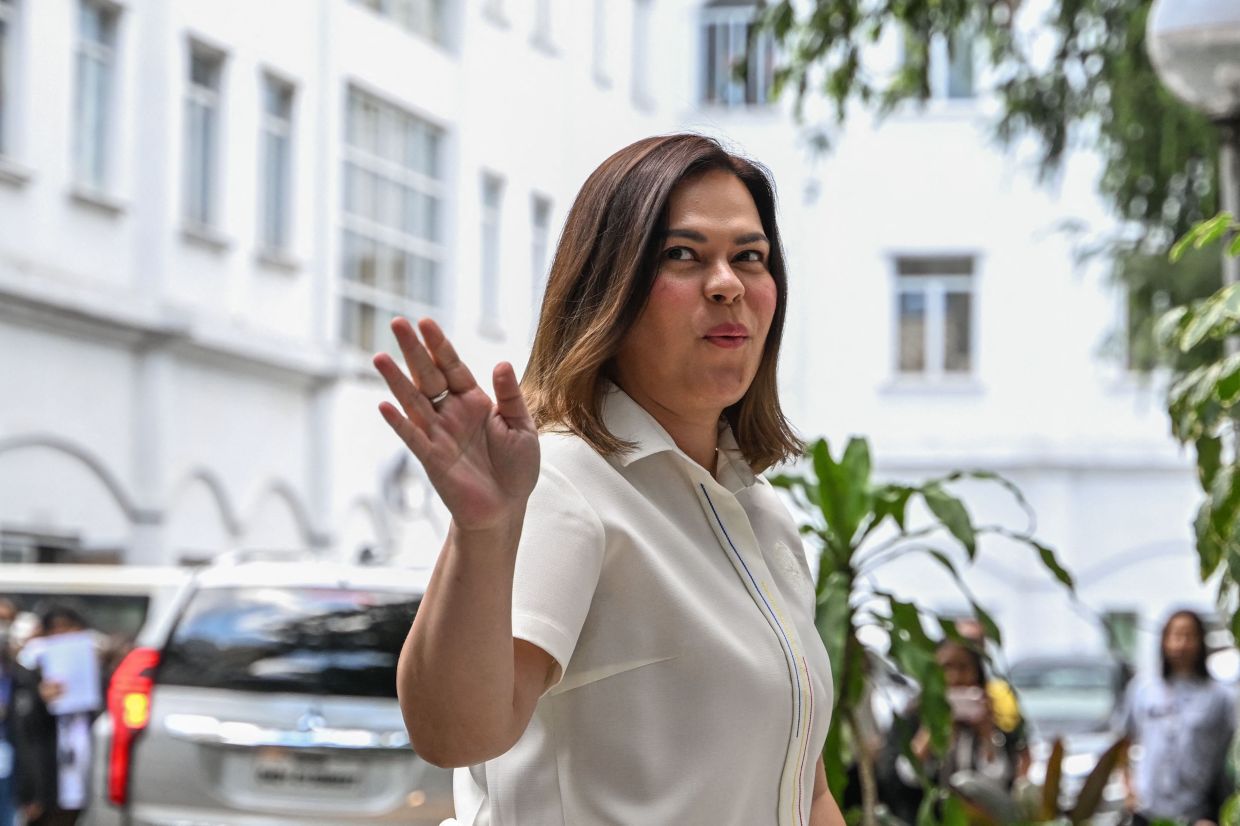
Vice President Sara Duterte has departed the Philippines for an extended foreign visit that will keep her outside the country through the end of July, according to confirmation from Malacanang on Tuesday. The presidential palace disclosed that President Ferdinand Marcos Jr, acting through the Office of the Executive Secretary, granted formal approval for the Vice President's international travel spanning two weeks, from July 16 through July 31. The timing of the journey coincides with ongoing impeachment proceedings against Duterte in the Philippine legislature, raising questions about the optics of her absence during the political crisis.
Palace press officer Claire Castro outlined the scope of Duterte's itinerary during a routine media briefing, characterizing the journey as a personal trip rather than an official state visit. The Vice President's route encompasses five destinations across Europe and the Middle East: Qatar, Germany, the United Kingdom, Northern Ireland, and the Netherlands. This multi-country tour suggests an extended family or diplomatic engagement rather than a brief holiday, though the palace has provided no detailed public explanation of the trip's purpose or specific engagements scheduled during her time abroad.
Current reporting indicates that Duterte is positioned in The Hague, the Dutch seat of government and home to numerous international institutions. Her presence in the Netherlands carries particular significance given that her father, former President Rodrigo Duterte, has been detained in the city since March 2024 pending trial proceedings before the International Criminal Court. The elder Duterte faces charges of crimes against humanity linked to his tenure as Davao City mayor and subsequent presidency, with allegations focusing on extrajudicial killings executed as part of his signature anti-drug and anti-crime campaigns spanning 2011 to 2019. His trial before the ICC is scheduled for November 30, a date that remains months away despite his current incarceration.
The circumstances surrounding former President Duterte's detention underscore the gravity of the international legal framework now constraining the Duterte family's political position. Philippine authorities arrested him in March 2025 following an International Criminal Court arrest warrant, formally transferring custody to The Hague to await prosecution. The charges carry profound implications not merely for the former leader but for his political allies and family members, including the Vice President, whose own legal and political standing has become increasingly precarious amid allegations of abuse of authority and budget misuse.
Sara Duterte's impeachment trial represents a domestic political reckoning that mirrors the international legal challenges confronting her father. The concurrent proceedings in Manila and The Hague reflect a broader erosion of the Duterte political dynasty's grip on power since Ferdinand Marcos Jr assumed the presidency. The Vice President's decision to proceed with foreign travel during her trial proceedings—rather than remaining in Manila to mount a vigorous defence—suggests either confidence in her legal team's courtroom capabilities or a calculated political withdrawal from immediate domestic confrontations.
Defence counsel Michael Poa provided limited comment regarding the Vice President's current location and plans for return, acknowledging her presence in The Hague while offering only vague assurances that she would arrive back in the Philippines "soon." The lack of specificity about her return date reflects either genuine uncertainty or a deliberate ambiguity designed to maintain political flexibility. Poa's brief statement before Tuesday's trial session revealed little about the substance of Duterte's defence strategy or anticipated courtroom developments, maintaining the information asymmetry that has characterised recent coverage of the impeachment controversy.
The approval of Duterte's international travel by President Marcos Jr raises questions about executive discretion and constitutional propriety in the Philippines. The decision to permit the Vice President's absence during an active impeachment trial reflects either confidence in legal procedure's adequacy or a measure of political tolerance between erstwhile allies whose relationship has deteriorated considerably. Marcos Jr and Duterte previously formed a governing coalition that secured their joint electoral victory, yet tensions have escalated dramatically as constitutional and legal pressures have mounted against the Vice President.
For Malaysian and Southeast Asian observers, the Duterte family's legal travails illustrate the vulnerabilities of political dynasties in the region and the increasing role of international legal mechanisms in constraining the absolute power once exercised by dominant leaders. The International Criminal Court's intervention in Philippine domestic affairs represents a significant expansion of supranational legal authority, with implications extending across the region to other nations where similar allegations of extrajudicial violence have occurred during authoritarian or semi-authoritarian governance periods.
Duterte's extended absence from the Philippines during her trial proceedings underscores the complex intersection of family loyalty and personal legal survival that shapes political behaviour within the Duterte dynasty. Her presence in The Hague near her father's detention facility suggests priorities extending beyond immediate courtroom defence in Manila, potentially reflecting efforts to coordinate family strategy amid cascading legal crises across multiple jurisdictions and institutional frameworks. The Vice President's international journey will conclude by July 31, at which point her return to the Philippines will determine whether momentum in her impeachment trial has shifted during her absence or whether her legal position has deteriorated further.

