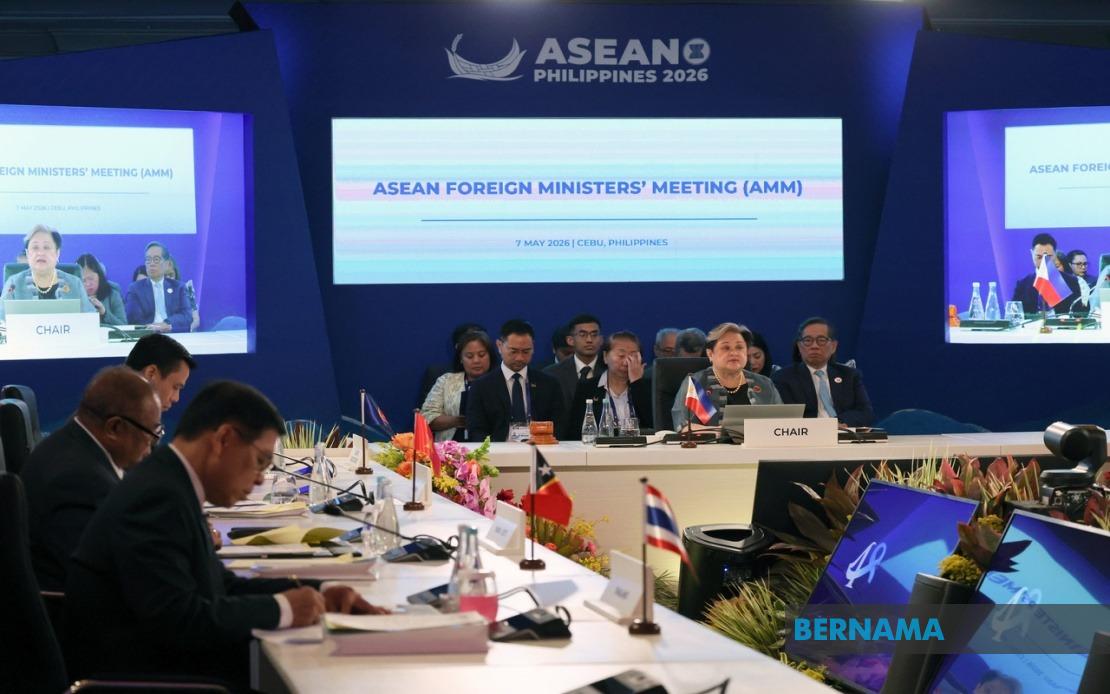
The Philippines has reinforced its commitment to ASEAN's Five-Point Consensus as the cornerstone framework for addressing Myanmar's political crisis, though it is now championing a more nimble and results-oriented approach to how member states execute the plan. Speaking during the bloc's current presidency, Philippine Foreign Affairs Secretary Ma. Theresa P. Lazaro articulated a position that aims to balance institutional loyalty to the consensus with acknowledgment that the Myanmar situation has evolved considerably since the framework was first adopted more than three years ago.
Lazaro's remarks reveal growing tension within ASEAN over how to translate a well-intentioned diplomatic blueprint into tangible progress. Several member states have begun questioning whether the consensus, as currently implemented, genuinely addresses the deteriorating humanitarian and security landscape in Myanmar. The Philippines' intervention suggests that ASEAN leadership recognises the need to calibrate its approach without abandoning the legitimacy that a unified framework provides the organisation. This distinction is crucial: the nation is not calling for wholesale rejection of existing policy, but rather for implementation strategies that reflect what is actually happening inside Myanmar rather than what diplomats hope might happen.
Adopted in April 2021 following the military coup that deposed civilian leader Aung San Suu Kyi, the Five-Point Consensus established five pillars for ASEAN intervention: an immediate halt to violence, inclusive talks involving all parties, appointment of an ASEAN Special Envoy to mediate, provision of humanitarian aid, and the envoy's direct engagement with all stakeholders. The framework represented a delicate compromise reflecting ASEAN's preference for consensus-building and respect for member sovereignty. However, nearly four years on, progress against these benchmarks remains marginal, with violence continuing, dialogue channels largely frozen, and humanitarian access severely restricted by Myanmar's junta.
The Philippines' proposal to rethink implementation methods opens space for ASEAN to pursue more aggressive diplomatic tactics or explore engagement with non-state actors like the National Unity Government and People's Defence Force without formally abandoning the consensus. This approach allows member states to appear unified internationally while adapting tactics regionally. For Malaysia and other nations bordering Myanmar or hosting refugee populations, this flexibility offers potential pathways to address immediate humanitarian concerns and cross-border stability without waiting for comprehensive political settlement.
A critical dimension of this recalibration concerns Myanmar's participation in ASEAN forums. Since the coup, ASEAN has restricted Myanmar's representation to lower-level officials, barring top junta leaders from summit attendance. Lazaro indicated that restoring full representation depends on demonstrable progress in three specific areas: de-escalation of violence, advancement of inclusive dialogue, and meaningful humanitarian assistance delivery. This conditional framework creates incentives for Myanmar's military government while preserving ASEAN's diplomatic leverage. The annual Leaders' Review process, which Lazaro emphasised, provides regular opportunities to reassess Myanmar's standing and adjust ASEAN's engagement posture accordingly.
Malaysia's complementary statement in late June further illuminates the strategic direction emerging within ASEAN. As a frontline state managing significant Myanmar refugee populations and cross-border security challenges, Malaysia's Foreign Minister Datuk Seri Mohamad Hasan stressed the importance of engaging all relevant parties—military government, opposition groups, and armed organisations—simultaneously. This multi-stakeholder engagement approach reflects pragmatic recognition that sustainable peace requires participation from the military junta regardless of ASEAN members' political preferences. Malaysia's willingness to work with Myanmar's military government, the rival National Unity Government, the People's Defence Force militia, and ethnic armed organisations represents an implicit acknowledgment that compartmentalising engagement limits diplomatic effectiveness.
The tension between maintaining institutional coherence and pursuing flexible tactics reflects deeper challenges confronting ASEAN as a diplomatic organisation. The bloc's foundational principle of non-interference and consensus decision-making, while enabling member unity, often constrains its capacity to respond decisively to crises. Myanmar presents a test case: can ASEAN preserve its consensus framework while adapting operational approaches to improve outcomes? The Philippines' position suggests an emerging consensus that the answer is yes, provided member states distinguish between unchanging principles and malleable implementation.
For regional security and stability, this recalibration carries significant implications. Myanmar's instability directly affects Thailand, Laos, and Bangladesh through refugee flows, armed group movements, and organised crime networks. Malaysia faces particular vulnerability given its large Myanmar migrant worker population and maritime smuggling concerns. Southeast Asian nations increasingly recognise that waiting for comprehensive political resolution in Naypyidaw while humanitarian conditions deteriorate creates escalating risks. The more flexible approach endorsed by the Philippines and Malaysia prioritises immediate stabilisation objectives that protect regional populations, even if broader political transformation remains distant.
However, pragmatism carries its own risks. If ASEAN adapts the Five-Point Consensus too dramatically, it risks legitimising military rule through normalised engagement while genuine political reform recedes. Myanmar's junta has shown little genuine commitment to dialogue or power-sharing, instead consolidating control through systematic violence against civilian populations and opposition forces. Overly flexible engagement might reward intransigence rather than incentivising meaningful change. The Philippines and other ASEAN members must carefully calibrate how much operational flexibility serves legitimate regional interests versus simply enabling the status quo.
The Philippines' stewardship of ASEAN during this critical period will substantially influence how the organisation balances these competing imperatives. By explicitly linking Myanmar's diplomatic standing to measurable progress on violence reduction, dialogue expansion, and humanitarian access, Manila has proposed accountability mechanisms that could provide credibility to the adaptive approach. These annual review points offer opportunities to demonstrate that flexibility serves concrete objectives rather than simply allowing ASEAN to avoid difficult decisions about Myanmar's behaviour.
Looking ahead, the success of this recalibrated approach will depend on whether ASEAN member states maintain unity in implementation while genuinely pursuing the three priority outcomes. If member states use the flexibility to pursue contradictory Myanmar policies reflecting individual national interests, ASEAN's collective leverage dissipates entirely. Conversely, if Manila can orchestrate coordinated, differentiated engagement—with various members contributing distinct diplomatic resources toward shared objectives—the modified framework might generate better results than rigid, formulaic implementation of the original consensus. For Myanmar's suffering population and neighbouring states managing spillover effects, the difference between these scenarios is substantial.

