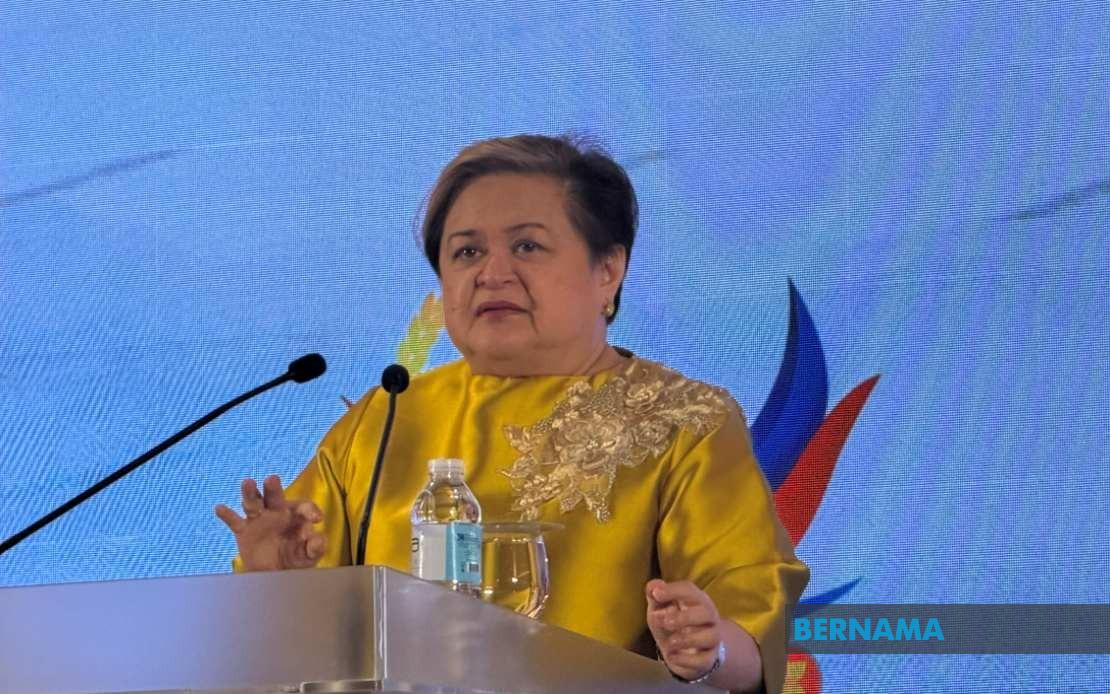
The Philippines has issued a direct appeal to its ASEAN neighbours to reinforce protective measures around vital maritime passages, citing the vulnerability of Southeast Asia's economies to disruptions in global shipping and energy flows. Foreign Affairs Secretary Ma. Theresa P. Lazaro raised the alarm during a recent interview in Kuala Lumpur, emphasising that the region's deep reliance on open trade routes leaves it dangerously exposed to the kind of shocks already destabilising other parts of the world.
Lazaro's intervention reflects growing anxiety within ASEAN capitals about the fragility of the systems sustaining regional prosperity. She pointed specifically to recent turmoil in the Strait of Hormuz as a cautionary example, illustrating how disruption to a single critical chokepoint can ripple outward with devastating consequences. When shipping lanes face blockades or heightened security risks, the immediate effect is soaring energy costs, but the cascade of secondary impacts proves far more damaging. Rising fuel prices feed inflation across entire economies, food imports become prohibitively expensive, and manufacturing competitiveness erodes as supply chains fracture and lead times extend. For ASEAN nations, many of which depend heavily on food imports and rely on global markets for manufacturing exports, such scenarios represent an existential economic threat.
The Philippines argues that ASEAN's particular vulnerability stems from the region's deep integration into global trade networks. Unlike more self-sufficient economies, Southeast Asian nations cannot easily insulate themselves from external shocks. Their factories depend on just-in-time components delivered through predictable shipping routes; their populations rely on food imports flowing through the same corridors that carry electronics and machinery. Any meaningful disruption cascades rapidly through interconnected supply chains, raising operational costs, creating production bottlenecks, and diminishing the region's competitive edge in global markets. The concern is not merely hypothetical but rooted in recent experience, as pandemic-era port closures and subsequent shipping crises demonstrated how quickly regional prosperity can evaporate.
Beyond the immediate economic dimensions, Lazaro emphasised that maritime security directly affects energy independence and food security, two foundational pillars of national stability across the region. Most Southeast Asian nations import significant quantities of oil and liquefied natural gas through international waters; disruptions threaten not only energy prices but potentially energy availability itself. Food security concerns carry similar weight, particularly for nations with large populations and limited arable land. The interconnection between maritime stability, energy supply, and food security means that what appears to be a shipping problem quickly becomes a political and social crisis when citizens face fuel shortages and rising food prices.
To address these interconnected vulnerabilities, Lazaro outlined a comprehensive framework centring on active preparedness and structured cooperation among ASEAN members. The approach encompasses maintaining freedom of navigation across the Strait of Malacca, the South China Sea, and other critical passages; building resilience into supply chain architecture through diversification and redundancy; and establishing mechanisms for coordinated energy security across the bloc. Trade facilitation improvements and enhanced connectivity infrastructure would reduce shipping times and costs, making the region less susceptible to price shocks. The proposals reflect a recognition that individual nations cannot adequately protect their interests acting alone; only through collective action can ASEAN shape the maritime environment to its advantage.
A particularly significant dimension of the Philippine proposal involves establishing institutional frameworks for crisis communication and coordination. Lazaro advocated for developing protocols enabling rapid information-sharing and joint decision-making at the foreign ministers' level when maritime crises emerge. Such mechanisms would allow ASEAN to respond cohesively rather than scattering efforts across fragmented national responses, amplifying the region's voice and capacity to influence outcomes. During the recent Special ASEAN Foreign Ministers' Meeting addressing West Asia developments, Lazaro specifically proposed formalising these communication channels, recognising that delays in coordinated response during crises invariably result in worse outcomes for the region.
The information-sharing and early warning architecture that Lazaro outlined would function as an advance detection system, allowing ASEAN to identify emerging threats before they fully materialise. Improved technical cooperation among maritime agencies, coast guards, and port authorities would strengthen the region's ability to manage incidents and prevent minor incidents from escalating into full-blown crises. Intelligence sharing on threats ranging from piracy to geopolitical tensions would enable nations to coordinate protective measures and adjust shipping patterns proactively rather than reactively. Such transparency mechanisms also serve a confidence-building function, reassuring trading partners and investors that the region maintains situational awareness and possesses plans for managing disruptions.
Among the concrete deliverables under the Philippines' 2026 ASEAN Chairship is the establishment of an ASEAN Maritime Centre, positioned as a hub for coordination on ocean-related issues. The centre would consolidate expertise and serve as a focal point for developing regional responses to maritime challenges, whether environmental, security-related, or economic. By creating a dedicated institutional space, the Philippines seeks to elevate maritime cooperation from an occasional diplomatic topic to a standing priority with permanent administrative capacity. The centre would facilitate knowledge transfer between countries, standardise best practices across the bloc, and provide technical support to smaller or less-resourced ASEAN members seeking to enhance their maritime capabilities.
The broader significance of Manila's initiative lies in its recognition that ASEAN's regional autonomy and economic stability increasingly depend on protecting the maritime commons. As geopolitical tensions rise globally and major powers contend for influence in Asian waters, the region faces dual pressures: external actors seeking to control or influence critical sea lanes, and internal vulnerabilities stemming from economic interdependence and limited national capacity to project protective power across vast ocean expanses. By mobilising ASEAN institutions and coordinating member-state efforts, the Philippines attempts to reclaim collective agency over the maritime environment that sustains regional prosperity, ensuring that no single external power can weaponise shipping routes or energy flows to coerce the region. The approach acknowledges that maritime resilience represents not merely a technical or economic concern but a foundation for regional autonomy and geopolitical relevance.

